





A Desert in the Himalayas
The term 'desert' usually brings to mind scorching hot sand dunes, but Spiti Valley is a cold desert. A desert is defined by its lack of precipitation, not its temperature. Spiti lies in a rain-shadow zone, shielded by the towering Pir Panjal and Great
Himalayan ranges. These mountains block moisture-laden monsoon clouds from reaching the valley, resulting in a starkly beautiful, arid landscape with minimal rainfall and cloud cover. While the rest of India experiences monsoon season, Spiti remains overwhelmingly dry and sunny, a key reason for its clear skies.
The High-Altitude Advantage
Much of Spiti Valley is situated at altitudes above 3,500 metres (around 11,500 feet), with many popular villages like Kibber and Langza exceeding 4,200 metres. At this elevation, you are above a significant portion of the Earth's atmosphere. This thinner air causes less distortion and turbulence, which is why stars appear to burn steadily instead of twinkling. Professional astronomical observatories are built at high altitudes for this very reason; it's like getting a clearer, sharper view of the universe without the atmospheric haze that plagues lower regions.
Why Low Humidity is Key
The valley's cold desert climate means the air holds very little moisture. This extremely low humidity is a crucial factor for exceptional celestial observation. Water vapour in the atmosphere absorbs and scatters starlight, which reduces the transparency and contrast of the night sky. Humid air can make faint objects like distant galaxies and nebulae completely invisible. In Spiti's dry air, this effect is minimized. The result is a transparent, crisp sky that allows the faintest light from deep space to reach your eyes, revealing the Milky Way in breathtaking detail.
The Absence of Light Pollution
Spiti's remote location and sparse population create the final ingredient for its perfect night skies: true darkness. With no major cities for hundreds of kilometres, the valley is free from the light pollution that washes out the stars for over 80% of the world's population. The small, scattered villages in Spiti have minimal outdoor lighting, often relying on solar power. A short walk away from any settlement plunges you into a profound darkness classified by astronomers as Bortle Class 1 — the darkest possible rating. In such pristine conditions, the night sky is not just black with a few stars; it's a dense, brilliant tapestry of light.
What You Can Actually See
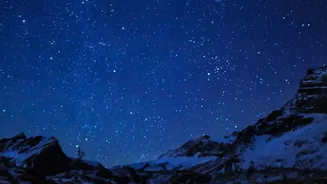
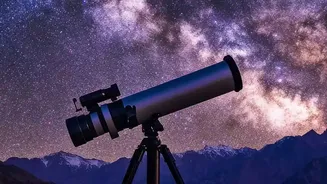
This unique combination of factors means that on a clear, moonless night in Spiti, the cosmos comes alive. The Milky Way is not a faint smudge but a brilliant, structured band of light arching across the entire sky. With the naked eye, you can spot distant objects like the Andromeda Galaxy, our closest galactic neighbour. Meteor showers become spectacular events, and constellations are so densely packed with stars that they can be hard to identify for first-time viewers. This clarity and depth make it a premier destination for amateur stargazers and professional astrophotographers alike.