







What Exactly Is the Code Change?
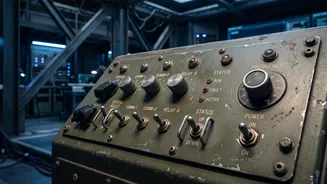
The change stems from a recent, mandatory update to security protocols that govern a wide range of military hardware. Driven by regulations like Section 889 of the National Defense Authorization Act (NDAA), these updates are designed to harden American
systems against cyberattacks and espionage. Section 889 specifically prohibits the use of certain foreign-made telecommunications and surveillance components, a rule that now extends deep into the software supply chain. This has forced a wave of software patches on systems across the U.S. military and its allies, some of which were designed long before today's cyber threats were ever conceived. The Missile Defense Agency's recent call to use AI to overhaul aging code highlights the urgency and complexity of this modernization effort. While intended to secure the arsenal, forcing new code onto old platforms is an inherently risky process.
The Decades-Old Arsenal in Question
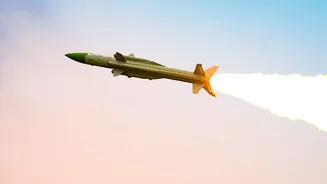
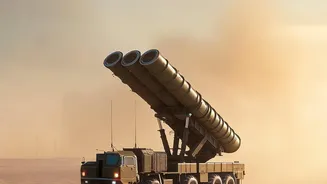
The weapons affected are not museum pieces; they are the workhorses of the U.S. military and its regional partners. This includes fleets of F-15 and F-16 fighter jets, M1 Abrams tanks, and crucial defensive platforms like the Patriot missile system. Many of these systems, first designed in the 1970s and 80s, have been continually upgraded. However, their core architecture remains rooted in a different technological era. The Patriot missile system is a classic example. A software bug in its 24-bit internal clock—a rounding error that grew over time—caused a catastrophic failure during the 1991 Gulf War, leading to the deaths of 28 Americans. That incident serves as a stark reminder that in military hardware, small software flaws can have devastating consequences. These are the very systems now deployed at bases across the Middle East, forming a defensive shield against Iranian assets.
A Double-Edged Sword
These legacy weapons remain in service for good reason: they are proven, reliable, and available in large numbers. Allies are trained on them, and a robust global logistics chain exists to maintain them. But the new code requirement presents a difficult trade-off. On one hand, failing to update the software leaves these systems vulnerable to modern electronic warfare and cyber-infiltration, a known specialty of adversaries. On the other hand, applying rushed or inadequately tested patches could introduce new, unforeseen bugs. Could a security update meant to protect a radar system accidentally degrade its ability to track incoming drones or missiles? This process of 'jailbreaking' old, proprietary systems to force them to work with modern software is now an acknowledged Army strategy, but it's fraught with risk. Every software update creates a new 'attack surface'—an opportunity for something to go wrong, whether by accident or by enemy design.
The Strategic Implications for the Iran Conflict
In the context of the current war, this technical issue becomes a major strategic concern. Iran, ranked as a top-20 global military power, has invested heavily in asymmetric capabilities, including sophisticated drones, missiles, and cyber warfare units. U.S. and allied forces in the region rely heavily on systems like Patriot batteries and naval destroyers equipped with Aegis combat systems for defense against just such threats. A latent software flaw in these defensive shields could create a window of vulnerability that Iran could exploit. The questions facing commanders are stark: Can we trust the newly patched software under combat conditions? Has the update been tested against every possible scenario? And do our adversaries know something about our code that we don't? A software failure during a high-stakes missile defense engagement could be just as decisive as a kinetic strike.