




The Burning Problem with EV Batteries
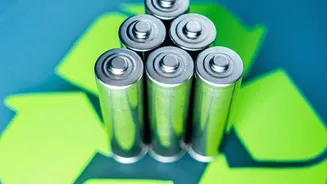
At the heart of nearly every electric vehicle is a lithium-ion battery. These power packs are marvels of engineering, but they have a well-known vulnerability. Inside each battery, a thin, porous membrane called a separator keeps the positive cathode
and negative anode from touching. In most current designs, this separator is made of plastic. The problem is that these plastics can shrink and melt when temperatures climb, which can happen during fast charging or due to a malfunction. If the separator fails, the electrodes can make contact, causing a short circuit. This can lead to a dangerous phenomenon known as thermal runaway, where the battery heats up uncontrollably, potentially resulting in a fire or explosion that is notoriously difficult to extinguish. This safety concern remains one of the key hurdles for wider and more confident consumer adoption of electric vehicles.
An Unlikely Hero: Lignin
The breakthrough solution comes not from a high-tech lab synthesising new plastics, but from farms and forests. Scientists are turning to lignin, a natural polymer that gives plants and trees their rigidity. Lignin is a major byproduct of the paper and pulp industries and is also abundant in agricultural waste like corn stover and sugarcane bagasse. Globally, tens of millions of tonnes of lignin are produced as waste each year, much of which is simply burned for low-value energy. Researchers saw potential in this overlooked resource. By processing this organic waste, they have been able to engineer it into a material that can perform a crucial role inside a battery. This approach is part of a growing movement to create a circular economy, turning industrial waste into valuable, high-performance products.
How Farm Scraps Prevent Fires
The science behind the safety improvement is both simple and elegant. Researchers at Michigan State University developed a method to transform lignin into an ultrathin film to serve as the battery separator. Unlike the plastic separators that can fail at temperatures around 100 degrees Celsius, the lignin-based version proved to be incredibly robust. Tests showed it remained stable without shrinking or melting at temperatures up to 300 degrees Celsius. This high thermal stability means that even under extreme conditions that would cause a conventional battery to fail, the lignin separator holds its ground, keeping the electrodes safely apart and preventing the short circuit that triggers fires. The natural structure of lignin, rich in aromatic carbon rings, makes it an ideal precursor for creating stable carbon materials perfect for battery applications.
More Than Just a Safety Upgrade
While enhanced safety is the main prize, using lignin offers a cascade of other benefits. Firstly, it offers a significant boost in performance. In a surprising discovery, researchers found that the lignin film also improved the battery's cycle life, meaning it could withstand more charge and discharge cycles before degrading. Secondly, it’s a major win for sustainability. Upcycling a common waste product reduces landfill and creates a greener supply chain for a green technology. Finally, there is the economic advantage. Lignin is abundant and inexpensive, a stark contrast to the highly engineered and often costly materials used in battery manufacturing today. By replacing a synthetic component with a low-cost, readily available biowaste, the overall cost of producing EV batteries could be significantly reduced, making electric vehicles more affordable for a wider market.
From the Lab to the Highway
While this innovation is incredibly promising, you won’t find lignin-powered batteries in your next car just yet. The technology, which is now patent-pending, is still in the research and development phase. One of the key challenges scientists are working to overcome is lignin's naturally insulating nature, which can impede the flow of ions within the battery. Researchers are experimenting with different chemical treatments and creating carbon composites to enhance its conductivity. The journey from a successful lab experiment to large-scale commercial production is long and requires further refinement and testing to ensure reliability and performance in real-world conditions. However, the proof of concept is a monumental step forward, paving the way for a future where EV batteries are not only powerful but also inherently safe and truly sustainable.