








The City That Never Cools Down
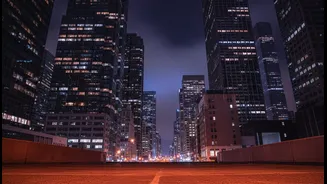
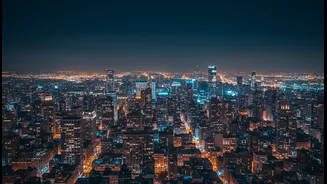
This phenomenon is called the Urban Heat Island (UHI) effect. It explains why our cities are significantly warmer than surrounding rural or semi-rural areas. While a village might enjoy a cool breeze at night, a dense urban core can remain several degrees
hotter. The reason lies in the very fabric of our cities: the replacement of natural, cooling landscapes like forests and fields with heat-absorbing concrete, asphalt, and tightly packed buildings. These materials fundamentally alter the energy balance, creating a bubble of warmth that envelops the city.
Our Buildings Are Giant Heat Sponges
Think of concrete and asphalt as thermal batteries. Throughout the day, these dark, dense materials absorb huge amounts of solar radiation. Unlike natural surfaces that use processes like transpiration to release moisture and cool the air, concrete and masonry just soak up the heat. This property is known as high thermal mass; the material can store a lot of heat energy without its own temperature rising dramatically at first. By late afternoon, the city's infrastructure has effectively 'charged up' with thermal energy, waiting for the sun to go down to begin its slow release.
When Midnight Still Burns
The real danger begins after sunset. As the air temperature drops, the heat stored in buildings and roads starts to radiate back into the environment. This process, sometimes called the 'thermal flywheel' effect, is why your bedroom walls can feel warm to the touch hours into the night. This relentless nocturnal heat is particularly hazardous because it robs our bodies of the chance to cool down and recover from daytime heat exposure. This sustained thermal stress elevates the risk of heat exhaustion, heatstroke, and cardiovascular events like stroke, as the body struggles to regulate its core temperature.
India's Concrete Jungles on the Boil
In a country like India, with its sprawling metropolises and intense summer heat, the UHI effect is a major public health concern. Rapid urbanisation in cities like Mumbai and Delhi has replaced cooling natural cover with heat-trapping infrastructure, exacerbating the problem. Studies have shown significant temperature differences between highly built-up areas and greener parts of the same city. This not only makes life uncomfortable but also places immense strain on energy grids as the demand for air conditioning soars, driving up costs for households and businesses.
Designing a Cooler Tomorrow
The good news is that since this is a problem of design, it has design-led solutions. Cities around the world, including in India, are exploring ways to mitigate the UHI effect. Key strategies include increasing green infrastructure like parks, urban forests, and green roofs, which provide shade and evaporative cooling. Another promising approach involves using 'cool' materials, such as reflective paints and coatings for roofs and pavements, which absorb less solar energy. Thoughtful urban planning that promotes airflow and incorporates water bodies can also make a significant difference, helping to build more resilient and liveable cities for the future.