





Plan Your Menu, Perfect Your List
The secret to a stress-free Sadhya is planning. Before you even think about shopping, sit down and create your menu. A traditional Sadhya can have over 24 dishes, but you don't need to make them all. Focus on a few essential 'must-haves' like Sambar,
Avial, a thoran, and a payasam, then add one or two other personal favourites. Once your menu is set, create a detailed grocery list, checking your pantry for what you already have. This simple step prevents impulse buys and ensures you don’t forget a key ingredient. To make it even more efficient, group items by category: vegetables, lentils, spices, and dairy.
Shop Smart, Not More
With your list in hand, aim to shop a few days in advance for non-perishable items. For fresh produce, buying local and seasonal ingredients not only ensures better flavour but also supports local farmers. Resist the temptation of bulk offers unless you are certain you will use everything. While it's easy to get caught up in the festive rush, stick to your list. Some items like pappadam, banana chips, and pickles can be bought ready-made to save significant time and effort, allowing you to focus on the main dishes. Grated coconut, a staple in most dishes, can often be bought frozen to streamline your prep work.
The Art of Prep and Staggered Cooking
Don't try to cook everything on Thiruvonam itself. Many elements of the Sadhya can be prepared in advance. You can make pickles and tangy chutneys like Puli Inji three to four days ahead, as their flavours improve over time. The day before, tackle tasks like chopping vegetables for Avial and Sambar, making the payasam, and preparing the paste for various curries. Grating coconut and preparing different coconut pastes in bulk can be a huge time-saver. By staggering the cooking process, you turn a monumental task into a series of manageable steps, leaving only the final assembly and fresh dishes for the main day.
Serving Sadhya: A Lesson in Portion Control
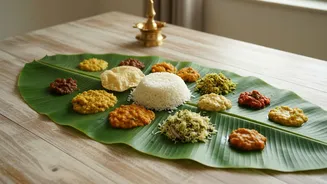
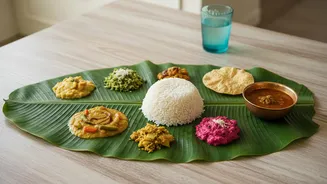
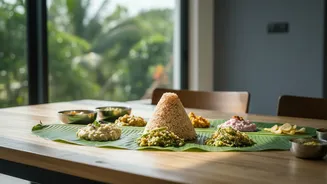
The traditional way of serving Sadhya on a banana leaf is a masterclass in mindful eating. The placement of each dish is deliberate. Pickles and saltier items are placed on the top left corner, encouraging you to take only small amounts. The main vegetable dishes are served on the upper half, while the lower half is reserved for the rice. Start by serving a small amount of rice. The meal is eaten in courses—first with parippu and ghee, then Sambar, and later with lighter curries like Rasam or Pulissery. This pacing naturally prevents you from getting too full too quickly. Instead of piling your leaf high, take small initial portions of everything; you can always have a second helping of your favourites.
Enjoying the Feast Without Overindulging
When the feast is laid out, it’s easy to overeat. A simple trick is not to arrive at the meal completely ravenous. Having a light, protein-rich breakfast can help you make more mindful choices during lunch. Prioritise the vegetable dishes like thoran and avial, which are rich in fibre, before focusing heavily on the rice. When it comes to the delicious fried items like banana chips and pappadam, treat them as accompaniments rather than snacks, enjoying one or two instead of mindlessly finishing the pile. And for the grand finale, the payasam, savour a small portion. If multiple types are served, take just a tasting spoonful of each to enjoy the variety without the calorie overload.
Embrace Leftovers, Eliminate Waste
A well-planned Sadhya aims to have just enough, but leftovers can happen. The principle of zero-waste is deeply embedded in many Onam traditions. Plan for how you might use any extras. Leftover rice can be turned into a delicious curd rice for dinner. Extra Avial or Thoran can be used as a filling for dosas or chapatis the next day. Storing leftovers properly in airtight containers and refrigerating them ensures they stay fresh. By thinking creatively, you can honour the food and effort that went into the feast, ensuring nothing goes to waste.