







Beyond the Daily Forecast
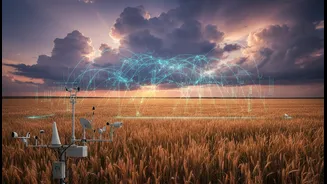
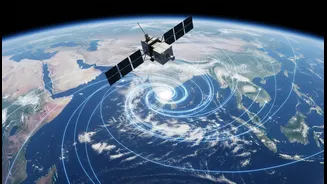
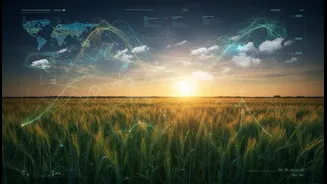
Traditional weather forecasts provide a general outlook for a district or region. Artificial intelligence (AI) models, however, are a significant leap forward. By processing vast amounts of data—including satellite imagery, historical climate patterns,
humidity, and wind speeds—these systems can generate forecasts with greater accuracy and detail. Unlike older methods that relied on physics-based equations alone, AI models learn from historical data to recognize complex weather patterns, making their predictions faster and more precise. This allows them to not only predict rain but also to forecast crucial variables like soil moisture and temperature.
The Power of Hyperlocal Predictions
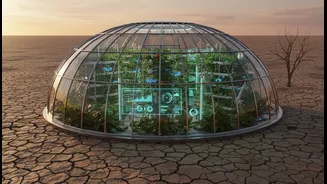
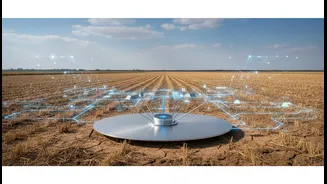
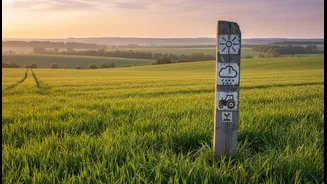
The key advantage of AI models is their ability to provide hyperlocal forecasts. Instead of a prediction for an entire district, a farmer can get a forecast specific to their own field. This level of granularity is revolutionary for decision-making. For instance, knowing the precise rainfall and evaporation rates for a specific plot of land allows for optimized irrigation, saving water and reducing energy costs. It helps farmers plan activities like planting and harvesting to avoid adverse weather, which can maximize crop quality and reduce post-harvest losses. Some studies show that this kind of precision agriculture can increase yields by 15-20%.
Smarter Planning for Better Yields
With more accurate, long-range forecasts, farmers can make strategic decisions that were previously impossible. AI models can help predict the onset of the monsoon season up to a month in advance, giving farmers enough time to adjust their planting strategies. In 2025, an AI-powered forecast correctly predicted a pause in the Indian monsoon, and this information was delivered via SMS to 38 million farmers, helping them adapt. These insights allow for better crop selection based on anticipated weather, optimized timing for fertilizer application, and more efficient use of resources. Farmers using AI-driven advisories in one case study reported a 20% increase in yield and a 15% reduction in crop loss.
Anticipating Pests and Disease
Weather conditions are a major factor in the outbreak of crop pests and diseases. AI weather models can predict the specific temperature and humidity conditions that favour the spread of these threats. This provides an early warning system, allowing farmers to take preventative measures rather than reacting after the damage is done. By optimizing the timing of pesticide applications—for example, not spraying right before a heavy rain washes it away—farmers can reduce chemical usage, save money, and improve the effectiveness of their crop protection strategies.
The Challenges of Adoption
Despite the immense potential, bringing this technology to every farm in India has its hurdles. A significant challenge is the digital divide; many rural areas still lack reliable internet connectivity, and digital literacy among farmers can be low. The high upfront cost of sensors and other hardware can be a barrier for small and marginal farmers, who make up the majority of India's agricultural sector. Furthermore, there is a need to build trust in the technology and ensure that the advice provided is accessible, often requiring translation across different languages and literacy levels. Overcoming these structural and technological barriers is crucial for ensuring the benefits of AI are distributed equitably.