




Why Traditional Crackers Were Banned
For years, the festive joy of Diwali was often followed by days of smog and hazardous air quality across India. Traditional firecrackers were a major contributor to this problem. They are manufactured using a cocktail of harmful chemicals, including heavy
metals like lithium, arsenic, lead, and mercury. The key ingredient, however, was often barium nitrate, a metal salt used as an oxidiser to make fireworks burn intensely and produce vibrant colours. When burst, these crackers release a dense cloud of toxic particulate matter (PM2.5 and PM10) and harmful gases like sulphur dioxide, which can trigger severe respiratory issues, particularly for children and the elderly. Following several legal challenges, including a landmark 2018 case, the Supreme Court of India banned firecrackers containing barium salts and other toxic chemicals, paving the way for a regulated alternative.
What Makes a 'Green' Cracker Different?
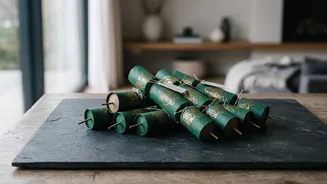
Green crackers are not 'eco-friendly' in the way an electric car is; they still produce sound and light, and they are not pollution-free. Instead, they are reformulated products designed to be less harmful. Developed by the Council of Scientific and Industrial Research-National Environmental Engineering Research Institute (CSIR-NEERI), these crackers have a modified chemical composition. The primary goal is to reduce particulate matter emissions by at least 30% compared to their conventional counterparts. This is achieved by removing banned chemicals, reducing the amount of raw material in each shell, and sometimes adding dust suppressants like zeolites or water vapour-releasing agents that help settle pollutants faster. They are also designed to be quieter, with noise levels typically capped around 110-125 decibels, compared to the 160 decibels or more from traditional crackers.
The Crucial Chemical Distinction
The single most important difference lies in the absence of banned chemicals, most notably barium nitrate. This compound is a major source of the fine particulate matter that hangs in the air after bursting. Green cracker formulations replace it with less harmful alternatives like potassium nitrate or a reduced quantity of other oxidisers. Three main types of green crackers have been developed: SWAS (Safe Water Releaser), which releases water vapour as a dust suppressant; STAR (Safe Thermite Cracker), which uses less potassium nitrate and no sulphur; and SAFAL (Safe Minimal Aluminium), which uses magnesium instead of aluminium. This shift in chemistry is at the heart of the regulatory framework, aimed at mitigating the worst health impacts of festive celebrations.
How to Identify a Genuine Green Cracker
As the market has been flooded with counterfeits, identifying authentic green crackers is essential. Regulators have mandated two key features on the packaging of all legal green crackers. First, look for the official CSIR-NEERI green logo. This logo certifies that the manufacturer has a formal agreement with NEERI to use their approved formulations. Second, and more importantly, every box of genuine green crackers must have a scannable QR code. When you scan this code with your smartphone, it should lead to a page confirming the product’s manufacturing details, its licence, and its certification as a green cracker. Be cautious of fakes: a QR code that leads to a broken link, a company’s generic website, or just an image is a major red flag. Always buy from licensed sellers and avoid loose crackers sold without original packaging.
The Role of Regulatory Bodies
The framework governing firecrackers involves multiple agencies. The Supreme Court sets the overarching legal precedent, banning harmful chemicals and permitting only green crackers. CSIR-NEERI is the scientific body that develops and certifies the chemical formulations for green crackers. However, the primary enforcement and licensing authority is the Petroleum and Explosives Safety Organisation (PESO). PESO, which operates under the Ministry of Commerce and Industry, is responsible for ensuring that manufacturers adhere to the approved formulations and safety standards before granting them a licence to produce and sell fireworks. Local police departments are then responsible for enforcing the rules on the ground, including cracking down on the sale of prohibited firecrackers and ensuring that bursting times and noise limits are followed.