


A New Era of Cosmic Chemistry
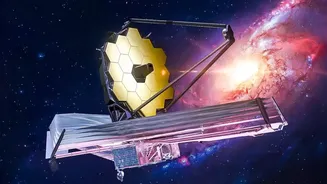
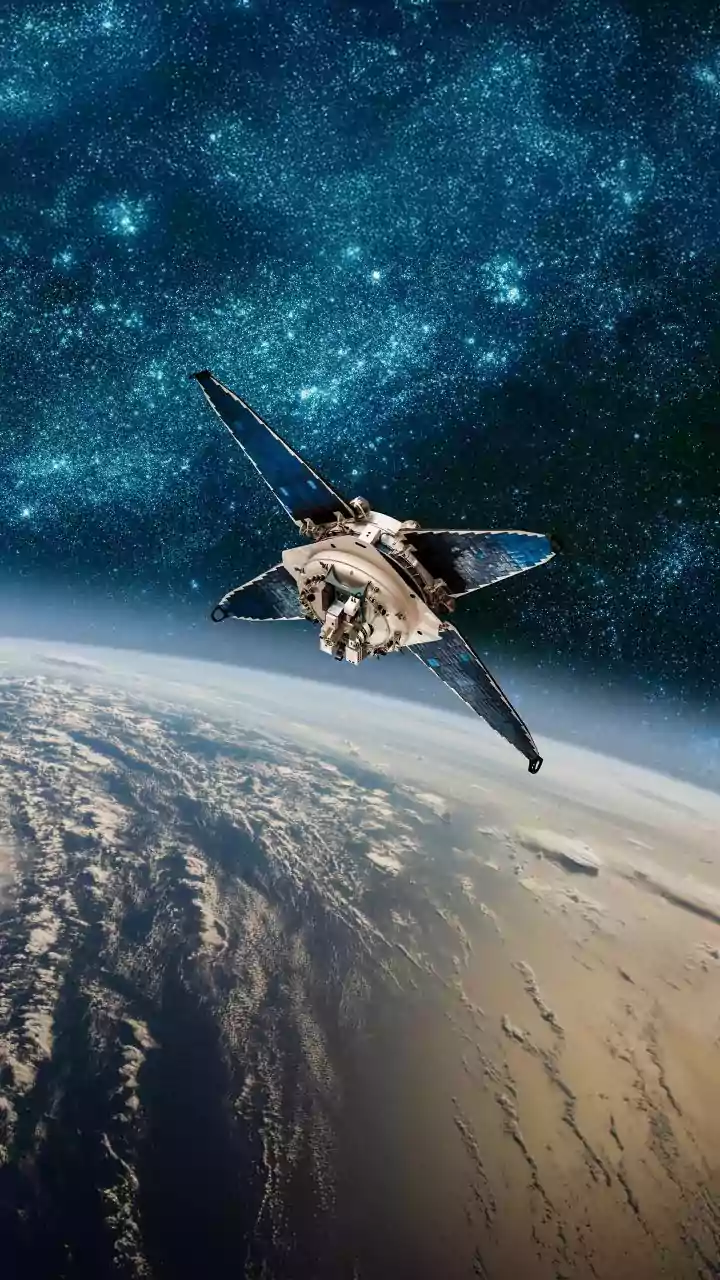
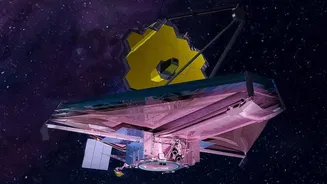
Since its launch, the James Webb Space Telescope has been hailed as a revolutionary tool for astronomy, and it is now living up to that high expectation. Unlike its predecessors, JWST is designed with an unparalleled sensitivity to infrared light. This
allows it to perform a kind of cosmic chemical analysis on planets hundreds of light-years away. By capturing the light of a star after it has filtered through the atmosphere of an orbiting planet, a technique known as transit spectroscopy, scientists can identify the molecules present in that alien sky. The telescope essentially decodes the atmospheric recipe of these worlds, and finding water is a landmark achievement that previous telescopes struggled to accomplish with such clarity. Before JWST, many attempts to study the atmospheres of smaller planets resulted in flat, featureless readings, likely obscured by high-altitude clouds or haze. Webb’s powerful instruments can cut through the noise, giving us our first truly meaningful glimpse into these remote environments.
The Worlds with Watery Skies
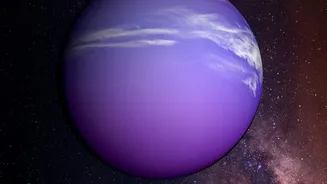
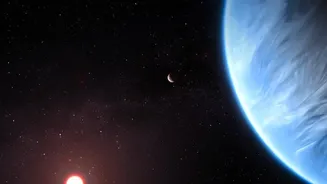
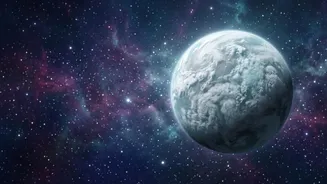
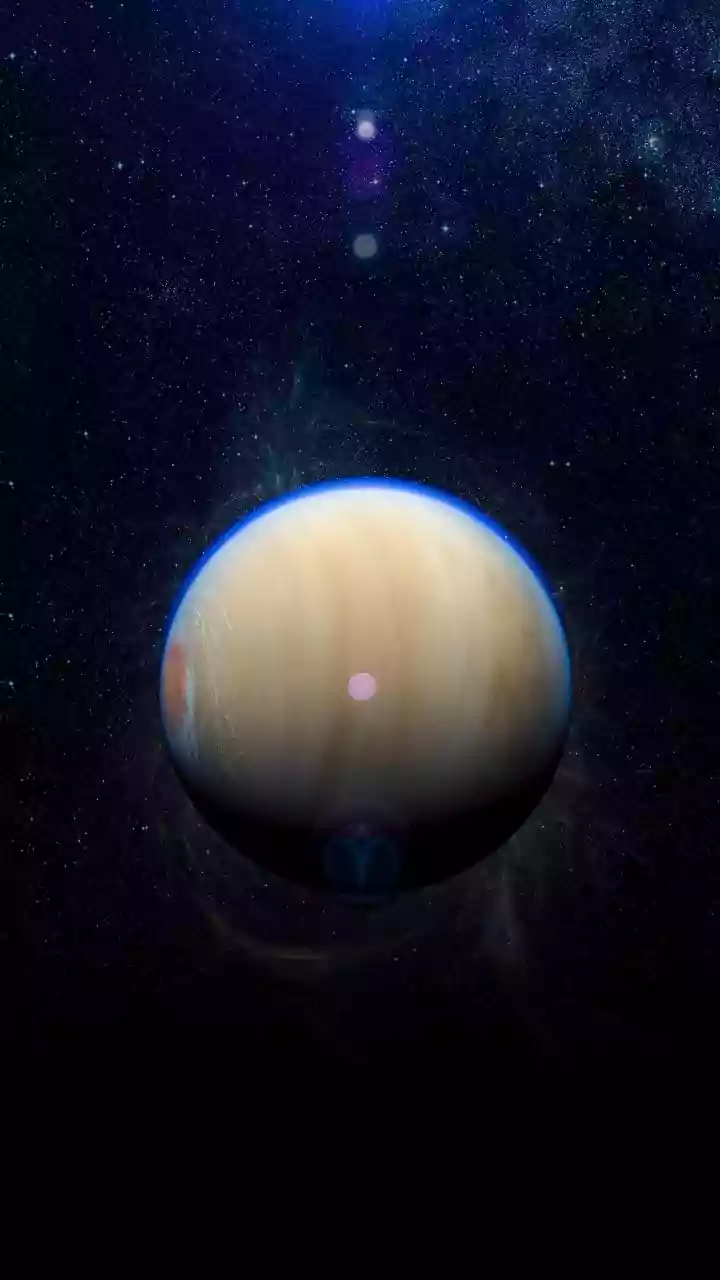
Recent findings have centered on a variety of exoplanets, none of which are Earth-twins, but all of which are fascinating. One such world is PDS 70, a system 370 light-years away where planets are still in the process of forming. JWST detected water vapour in the inner disk of this system, the very region where rocky, Earth-like planets are expected to assemble. This suggests that the raw materials for water-rich planets are present from the very beginning. Other detections include planets like WASP-18 b, a massive 'ultra-hot Jupiter' ten times more massive than our own Jupiter, and TOI-421 b, a 'sub-Neptune' about 244 light-years from Earth. While these gas-rich giants are not habitable themselves, finding water in their atmospheres proves the telescope’s capability. It’s the ultimate proof-of-concept for the technology that will one day be used to scrutinize smaller, rockier worlds.
How Webb 'Sees' the Vapour
Detecting a molecule across interstellar distances sounds like science fiction, but it hinges on a clever use of light. When an exoplanet passes in front of its host star, a tiny fraction of the starlight shines through the planet's atmospheric fringe. Different gas molecules absorb specific wavelengths, or colours, of light. Water vapour, for example, leaves a unique and identifiable signature in the light's spectrum. JWST's highly sensitive spectrographs, like the MIRI (Mid-Infrared Instrument) and NIRSpec (Near-Infrared Spectrograph), are precision-engineered to capture these minute dips in starlight and translate them into a chemical inventory. This method is so precise that scientists can not only confirm water's presence but also begin to estimate its abundance and search for other key molecules like methane and carbon dioxide, which were also detected on planets like WASP-80 b.
Water, But Not As We Know It
The discovery of water vapour is a monumental scientific achievement, but it's crucial to manage expectations. Finding water vapour in an atmosphere does not mean we've found liquid oceans or extraterrestrial life. Many of the planets where water has been detected are incredibly hostile. For example, GJ 486 b is a rocky exoplanet with a surface temperature of 430 degrees Celsius, far too hot to be habitable. Another world, the gas giant WASP-18 b, has temperatures so extreme they would break water molecules apart. The presence of water vapour in these environments is more a testament to the abundance of hydrogen and oxygen in the universe. While these specific worlds are not candidates for life, these findings help scientists understand the diversity of planetary atmospheres and refine their models of planet formation.
The True Significance of the Discovery
The real story here is not just that we've found water, but that we now have the technology to find it with astonishing regularity and precision. Each detection of water vapour on a gas giant or a scorching-hot super-Earth is a critical dress rehearsal for the main event: analyzing the atmospheres of temperate, Earth-sized rocky planets. Scientists consider these early findings a game-changer, demonstrating that the JWST can conduct the deep investigations needed to search for biosignatures—the chemical hints of life. As one researcher noted, this is the first time we can show that planets with water-rich atmospheres truly exist around other stars, a vital step toward characterizing worlds that could be genuinely Earth-like. The search is just beginning, and the James Webb Space Telescope is the instrument leading the charge into this exciting new frontier.