



The Classic White: Rice Flour
The foundation of traditional rangoli has always been simple and meaningful: rice flour. Using coarsely ground rice flour provides a brilliant white that makes colours pop and offers a satisfying texture for creating clean lines. Traditionally, using
rice flour was also seen as an offering to tiny creatures like ants and birds, beautifully symbolising coexistence with nature. For a pure white, simply use plain rice or gram flour. This biodegradable base is easy to work with and serves as a perfect canvas for your festive art.
Golden Hues with Marigold Petals
Fresh flower petals are a wonderful way to create vibrant, fragrant, and completely natural rangoli. Marigolds, with their bright yellow and orange tones, are a festive favourite. You can use the petals whole to fill in larger sections of your design or create a beautiful floral carpet. For a powdered colour, dry the marigold petals in the sun and then grind them into a fine powder. This creates a stunning, fragrant yellow-orange colour that adds a traditional and auspicious touch to your rangoli.
Colours from Your Kitchen
Your own kitchen pantry is a treasure trove of natural pigments perfect for rangoli. Turmeric powder is a readily available and brilliant yellow. For red and pink shades, you can use kumkum or beetroot powder, made by drying and grinding beetroot. To get a natural green, blend spinach or moringa leaves into a paste, sun-dry it, and grind it into a powder. These kitchen ingredients are not only safe and non-toxic but also add a layer of authenticity to your festive decorations.
Creating Coloured Rice Flour
If you prefer the texture of powders but want a full spectrum of colours, you can create your own dyed rice flour. Start with a base of finely ground rice flour mixed with a bit of salt for better texture. To create different shades, mix the flour with natural colourants. For example, blend beetroot juice for red, turmeric for yellow, or spinach juice for green into separate batches of flour. Knead the mixture well until the colour is even, then spread it out on a tray to dry completely in the sun, which may take a couple of days. Once dry, grind the coloured lumps back into a fine powder, ready for your design.
Textural Beauty with Pulses and Grains
For a unique, multi-dimensional rangoli, incorporate various pulses and grains. Lentils, beans, and different types of rice offer a wonderful variety of natural colours and textures. You can use yellow lentils (moong dal), red kidney beans (rajma), and green mung beans to fill in different sections of your pattern. These materials are especially effective for creating bold, rustic, and earthy designs that add a different kind of visual appeal compared to fine powders. They are also completely biodegradable.
Designs Using Leaves and Petals
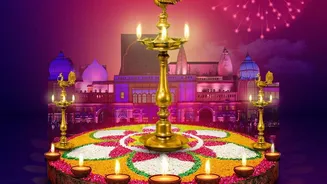
Beyond powders, whole natural elements can create stunning rangoli art. Mango leaves, considered auspicious, can be used to form borders for your design. Arrange rose petals, jasmine, and other colourful flowers to form beautiful mandalas and floral patterns. You can even float petals in a shallow bowl of water with a diya in the centre for a simple yet elegant decoration. This approach is not only visually appealing but also fills the air with a gentle, natural fragrance, enhancing the festive atmosphere.