








From Smart Home to Intelligent Home
For years, the 'smart home' has been a collection of disparate gadgets: a smart thermostat here, a video doorbell there, a speaker that can tell you the weather. It's a reactive system. You give a command, and it responds. But the shift we're on the cusp
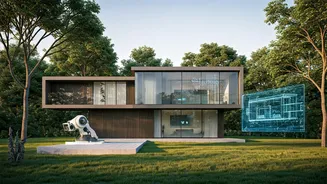
of is far more profound. We are moving from the 'smart home' to the 'AI home'—an intelligent, predictive, and holistic ecosystem. The AI home doesn’t just wait for your instructions; it learns your habits, preferences, and even your emotional state. It understands that you like the curtains to open slowly with the sunrise, that you prefer warmer light on a rainy day, and that the house should cool down 30 minutes before you typically get home from the gym. This isn't about more devices; it's about more integrated, ambient intelligence woven into the very fabric of your home.
The AI as Architect and Designer
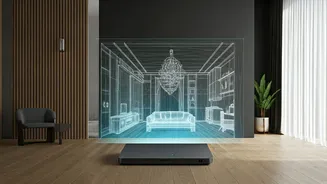
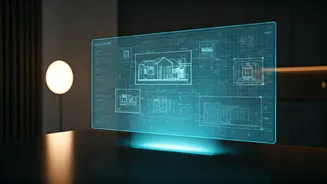
The most significant change will happen before the first brick is even laid. The 'design conversation' of 2026 won't just be between you and your architect; it will involve an AI partner. Using generative AI, architects and designers can input a family's needs, lifestyle patterns, local climate data, and even desired emotional outcomes—like 'a sense of calm' or 'a space that encourages creativity'. The AI can then generate hundreds of floor plans, material combinations, and spatial arrangements optimized for those parameters. It can simulate how natural light will fall in a room throughout the year or model acoustic properties to create quiet zones for work and social zones for family. This makes hyper-personalized, high-performance design accessible beyond the ultra-wealthy, democratizing architecture that truly serves its inhabitants.
Your Home, Your Wellness Partner
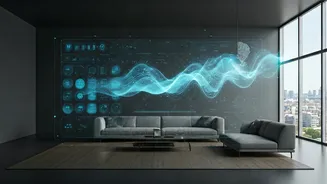
The future AI home is poised to become one of our most powerful wellness tools. Imagine a house that actively works to improve your health. Sensors, far more sophisticated than a smartwatch, will be embedded in the environment. They can monitor air quality and automatically activate purifiers or circulate fresh air. Lighting systems will sync with your circadian rhythm, promoting alertness during the day with cool, bright light and easing you into sleep with warm, dim light at night. The home could even detect early indicators of illness through subtle changes in your routine, sleep patterns, or even the sound of your cough, and suggest a telehealth consultation. It's not about being watched; it's about being cared for by an environment designed to foster well-being.
The New Aesthetic: Dynamic and Responsive
What does an AI home look like? The answer is: anything you want it to, and it might not look the same tomorrow. The aesthetic is no longer static. We'll see the rise of 'dynamic surfaces'—walls that can change colour, texture, or display digital art based on the time of day, the occasion, or your mood. Furniture will become modular and kinetic, reconfiguring itself from a workspace during the day to a lounge area in the evening. This isn't about cluttering our homes with screens. Instead, technology will disappear into the background, integrated seamlessly into materials. The new luxury won't be about owning a specific expensive object, but about living in a space that is fluid, personal, and responsive.
The Necessary Conversation: Privacy and Purpose
Of course, this vision of the future brings critical questions to the forefront. For a home to be this intuitive, it needs an immense amount of data about its occupants. Who owns this data? Where is it stored? How is it protected from misuse or cyber threats? These are the crucial guardrails that the '2026 design conversation' must establish. The goal cannot be technology for technology's sake. The push for AI homes must be balanced by a fierce commitment to privacy, user control, and ethical design. The challenge for designers and tech companies will be to create systems that are both deeply personalized and fundamentally secure, ensuring the home remains a sanctuary, not a surveillance space.