




The Culinary Hug You Need
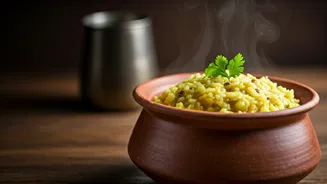
There are foods you eat, and then there are foods you feel. Kadhi belongs firmly in the second category. It’s the culinary equivalent of a warm hug from a beloved grandparent, a gentle reassurance that everything will be alright. Served steaming hot,
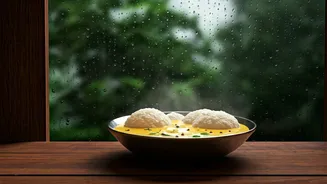
its soupy, silky texture and mellow tanginess are engineered for comfort. Whether it's a rainy monsoon afternoon, a day when you’re feeling under the weather, or a lazy Sunday when you crave a taste of home, Kadhi answers the call. It’s a dish that doesn’t demand your attention with overpowering spices or complex layers. Instead, it quietly and confidently soothes, filling your kitchen with a familiar, comforting aroma and your stomach with a sense of profound well-being.
The Magic of Dahi and Besan
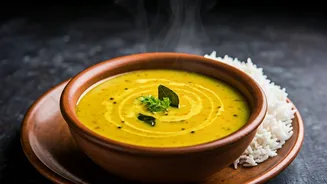
At its heart, Kadhi is a beautiful testament to the genius of Indian home cooking—creating something extraordinary from the most basic ingredients. The foundation is a simple mix of yogurt (dahi) or buttermilk (chhaas) and gram flour (besan). This duo forms the soul of the dish. The yogurt provides a creamy base and a signature tang, its sourness determining the final character of the Kadhi. The besan acts as a magical thickening agent, transforming the watery yogurt into a velvety, luscious curry that clings lovingly to a spoon. This base is a blank canvas, ready to absorb the flavours of the tadka (tempering) and whatever other delights are added. It’s a simple partnership that delivers an incredibly complex and satisfying mouthfeel, proving that you don’t need a pantry full of exotic items to create culinary magic.
A Journey Across India in a Bowl
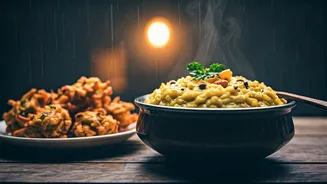
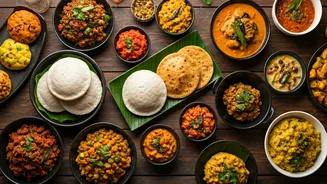
To say you’ve had ‘Kadhi’ is like saying you’ve seen a ‘tree’. The question is, which one? Every region in India has its own beloved version, each a delicious reflection of local tastes. The Punjabi Kadhi is perhaps the most famous, a thick, sour curry bobbing with soft, fluffy besan pakoras (fritters) that soak up all the flavour. Travel west to Gujarat, and you’ll find a completely different personality. The Gujarati Kadhi is thinner, lighter, and famously has a delicate balance of sweet and sour, often perfumed with curry leaves, ginger, and a hint of jaggery. Head to Rajasthan, and the Kadhi becomes spicier and more robust, typically made without pakoras but with a fiery tadka of red chillies and asafoetida. Then there’s the Maharashtrian version, Takachi Kadhi, a light and digestive drink-like preparation often served with meals. This incredible diversity is Kadhi’s superpower—it’s a single dish that tells a thousand different stories of home.
The Perfect Comfort Pairing
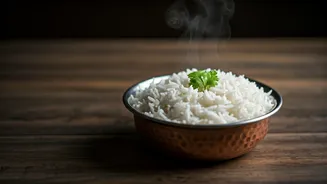
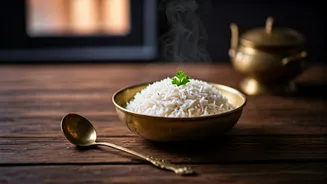
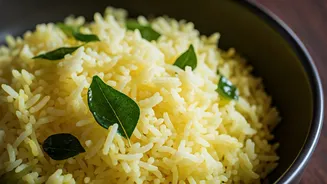
A great comfort food is often defined by its companions, and Kadhi is no exception. The quintessential pairing is a mound of fluffy, steaming white rice. There is an almost sacred ritual to pouring hot Kadhi over rice, watching it pool and seep into every grain. The simplicity of the rice allows the nuanced flavours of the Kadhi to shine, creating a partnership that is greater than the sum of its parts. Each spoonful is a perfect mix of soft grain and silky curry. In North India, especially with Punjabi Kadhi, it is just as often enjoyed with fresh rotis, used to scoop up the thick gravy and pakoras. And for the ultimate comfort meal, nothing beats Kadhi served alongside Khichdi, a simple rice and lentil porridge. This combination is the peak of nourishing, easily digestible, and soul-satisfying food—often the first thing an Indian mother will make for a loved one who needs a little extra care.