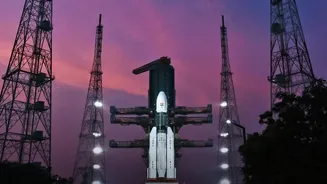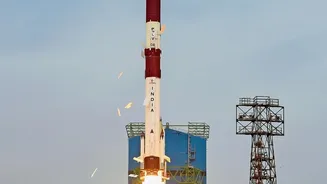






A Partnership Reaching for the Stars
The foundation of this evolving relationship is built on key strategic agreements. India's signing of the Artemis Accords and its active participation in the U.S.-India initiative on Critical and Emerging Technology (iCET) represent a significant policy
shift. The Artemis Accords, a U.S.-led framework for responsible lunar exploration, aligns India with a global coalition focused on returning to the Moon and beyond. This move signals a departure from India's traditional stance of strategic non-alignment in space, positioning it as a key partner in future international deep-space missions. The iCET framework further solidifies this by fostering collaboration in high-technology sectors, with space being a primary pillar. These agreements are not just diplomatic handshakes; they are designed to facilitate tangible cooperation, from joint spaceflight to commercial partnerships.
Fueling the Private Sector Engine
While international cooperation provides the external push, a simultaneous revolution is happening within India. For decades, the Indian space program was synonymous with the Indian Space Research Organisation (ISRO). However, landmark policy reforms in recent years have opened the final frontier to private enterprise. The creation of the Indian National Space Promotion and Authorisation Centre (IN-SPACe) in 2020 was a game-changer. Acting as a single-window agency, IN-SPACe is tasked with promoting, authorising, and supervising the activities of non-governmental entities, effectively bridging the gap between ISRO and the burgeoning startup ecosystem. This has allowed ISRO to refocus on core research and development while enabling private players to access its state-of-the-art facilities and expertise. This internal liberalisation has created fertile ground for the seeds of U.S. collaboration to grow.
The Tangible Benefits of Collaboration
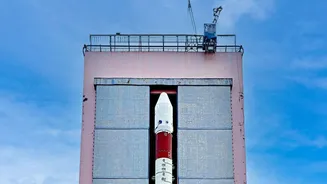
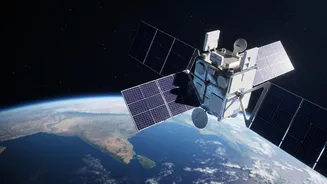
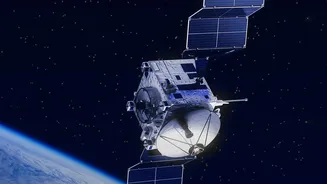
The India-U.S. partnership translates into direct advantages for India's commercial space ambitions. One of the most significant collaborations is the NASA-ISRO Synthetic Aperture Radar (NISAR) mission, which successfully launched in 2025. This joint satellite, which provides high-resolution, all-weather data of the Earth's surface, showcases the potential for deep technological integration. Furthermore, the collaboration extends to human spaceflight, with ISRO astronauts set to receive training at NASA's Johnson Space Center for a joint mission to the International Space Station. This provides invaluable experience and credibility. For Indian startups, this high-level government cooperation offers a 'halo effect,' boosting their profile on the global stage and making them more attractive to international investors. The proposed 'Space Innovation Bridge' under the INDUS-X initiative aims to directly foster partnerships between U.S. and Indian startups.
Indian Startups Take Flight
The new environment is already yielding impressive results. The number of Indian space startups has surged from a handful to over 400 in recent years. Companies like Skyroot Aerospace, which is developing its Vikram series of launch vehicles, and Agnikul Cosmos, known for its 3D-printed rocket engines, are at the forefront of this private-sector push. Dhruva Space is making strides in satellite technology, while Pixxel is building a constellation of hyperspectral Earth-observation satellites. These companies are no longer just component suppliers to ISRO; they are developing end-to-end capabilities, from building rockets to deploying satellite constellations. The success of these ventures is a testament to the combined impact of domestic policy reforms and the new opportunities unlocked by international partnerships.
Challenges on the Horizon
Despite the momentum, the path ahead is not without obstacles. Integrating with U.S.-led technological standards, as outlined in the Artemis Accords, could present challenges given India's historically different technological trajectories, some of which were based on Russian designs. There are also questions regarding data sharing, particularly data generated by NASA's commercial partners, which may not be fully open. For the commercial sector to truly flourish, it will require sustained investment, a clear and stable regulatory framework, and the ability to compete in a crowded global market. While government initiatives can open doors, the long-term success of India's commercial space industry will depend on its ability to innovate and deliver cost-effective solutions at scale.