



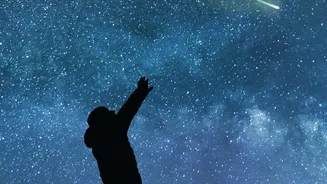
The Perseid Meteor Shower: August's Celestial Fireworks
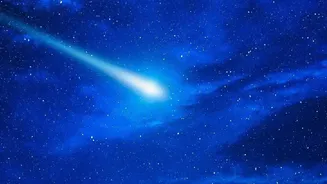
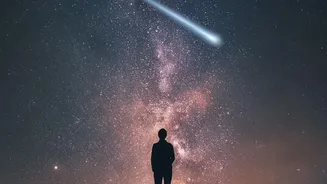
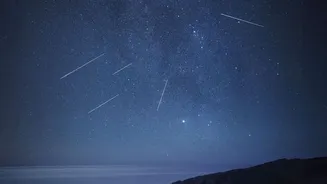
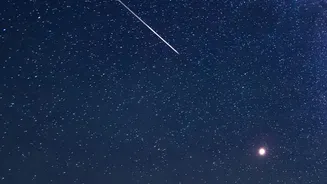
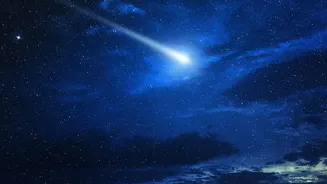
The main event for August is the annual Perseid meteor shower, considered one of the best of the year. This shower is caused by debris left behind by Comet Swift-Tuttle, and Earth passes through this stream of particles every summer. For 2026, the shower peaks
on the night of August 12-13. What makes this year exceptionally good for viewing is that the peak coincides with a new moon, ensuring the sky will be perfectly dark and free from lunar glare. Under ideal conditions, away from light pollution, observers can hope to see between 50 and 100 meteors per hour. The best viewing time in India is expected to be in the pre-dawn hours of August 13, roughly between 2 a.m. and 4:30 a.m. IST, when the shower's radiant point in the constellation Perseus is high in the sky.
Hanle, Ladakh: India's Premier Dark Sky Reserve
For the ultimate stargazing experience, no place in India compares to Hanle in Ladakh. Officially designated as India's first Dark Sky Reserve, this remote, high-altitude region offers some of the clearest and darkest skies in the world. Located within the Changthang Wildlife Sanctuary at an altitude of over 4,500 meters, Hanle is virtually free of light and air pollution, making it a prime location for both professional and amateur astronomers. During the Perseids, the Milky Way is so brilliant here it can cast a faint shadow, and shooting stars streak across a canvas crowded with thousands of stars. Local villagers have even been trained as astronomy guides, offering an immersive experience for visitors.
Spiti Valley, Himachal Pradesh: A High-Altitude Desert Escape
Another exceptional choice for mountain lovers is Spiti Valley in Himachal Pradesh. Like Ladakh, Spiti is a cold desert region that lies in a rain shadow, meaning it receives minimal monsoon rain and boasts many clear nights during the August Perseid shower. The valley's high altitude and sparse population ensure dark skies, especially from villages like Kaza, Kibber, and Langza. The dramatic landscape of ancient monasteries and rugged mountains provides a breathtaking backdrop for the celestial display. Imagine watching meteors blaze across the sky reflected in the serene waters of Chandratal Lake, a popular spot for campers and stargazers.
Rann of Kutch and Thar Desert: Celestial Plains
You don't need to head to the Himalayas to find dark skies. The vast, flat expanses of the Rann of Kutch in Gujarat and the Thar Desert in Rajasthan offer incredible viewing opportunities. In the Rann of Kutch, the immense white salt desert creates a surreal environment; on a moonless night, the stars can seem to reflect off the ground below. Similarly, venturing out to the Sam Sand Dunes near Jaisalmer in the Thar Desert provides a sky largely untainted by city lights. Many desert camps in these areas offer specific stargazing experiences, sometimes complete with telescopes, making it an accessible option for many.
Pro Tips for the Perfect Viewing Experience
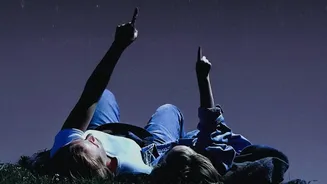
To make the most of the meteor shower, a little preparation goes a long way. First and foremost, you don't need a telescope or binoculars; the naked eye is best for spotting the wide streaks of meteors. Find a location far from city and street lights with a wide-open view of the sky. Give your eyes at least 20-30 minutes to fully adapt to the darkness—and avoid looking at your phone screen, as its bright light will ruin your night vision. Dress warmly, as even summer nights can get chilly, and bring a comfortable reclining chair or a blanket to lie on. Finally, be patient. The show is best enjoyed over a couple of hours, allowing you to settle in and witness the sky's rhythm.