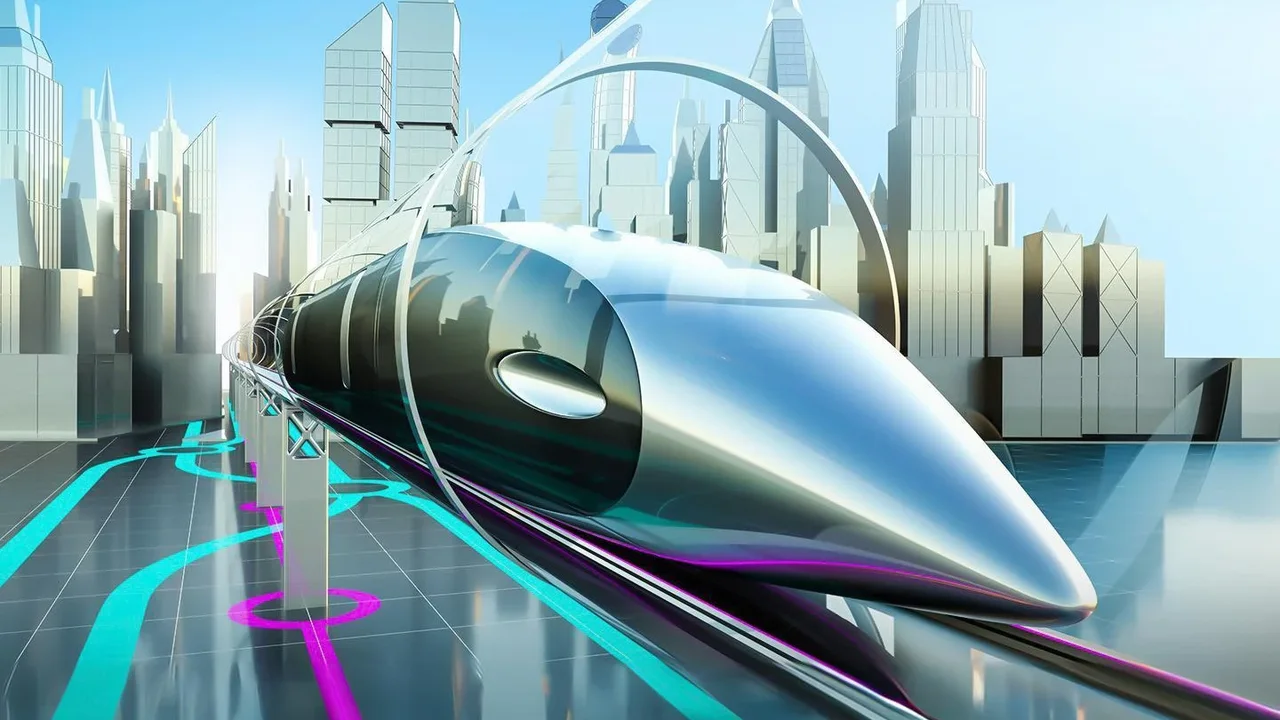






The Allure of the 'Fast' Train
In the daily rush of urban Indian life, the word 'fast' is a powerful magnet. We are naturally drawn to the promise of a quicker journey. A new metro line boasting a 20-minute trip across town seems infinitely better than a bus that takes 40 minutes.
But this is where we often fool ourselves. We fixate on the 'in-vehicle time'—the time spent actually moving—and conveniently forget the other crucial parts of the journey. This psychological blind spot means we might celebrate a high-speed train, even if we spend 15 minutes standing on a crowded platform waiting for it, negating much of its advantage. Studies on commuter satisfaction consistently show that waiting time, especially when it's unpredictable, is a major source of stress and frustration. It feels like wasted time, far more so than the time spent moving towards our destination.
The Commuter’s Real-Time Equation
To become a smarter commuter, you need to think like a logistics expert. Your total travel time isn't just one number; it's a simple sum of four distinct parts: 1. Access Time: The time it takes to walk from your home or office to the bus stop or metro station. 2. Waiting Time: The time spent at the stop or platform until your transport arrives. This is the most variable and often underestimated part. 3. In-Vehicle Time: The actual duration of the ride itself. This is the number most apps and schedules highlight. 4. Egress Time: The time it takes to walk from your final stop to your actual destination. True convenience is only achieved when the sum of these four parts is minimised, not just one of them. A route is only as strong as its weakest link, and often, that weak link is a long and uncertain wait.
A Tale of Two Commutes: Metro vs. Bus
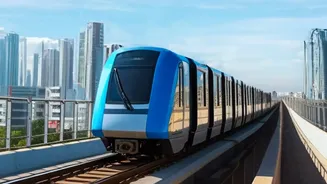
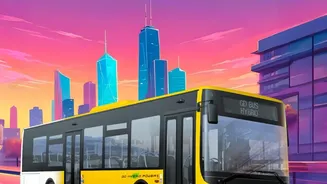
Let's put this into practice with a common scenario in cities like Delhi or Bengaluru. Imagine you need to travel a distance that takes 20 minutes by the new, air-conditioned metro or 35 minutes by an older, but reliable, city bus. On paper, the metro is the clear winner. But let's add the waiting time. The metro, being a high-capacity system, runs every 12 minutes during your travel time. The bus, however, is on a high-frequency route and arrives every 4 minutes. Let's assume access and egress times are equal. Route A (Metro): 12 minutes waiting + 20 minutes travel = 32 minutes total. Route B (Bus): 4 minutes waiting + 35 minutes travel = 39 minutes total. In this scenario, the metro is still faster. But what if the metro frequency drops to every 18 minutes in off-peak hours? The total time becomes 38 minutes, almost identical to the bus. And if you just miss the metro, your wait could be the full 18 minutes, making the 'slower' bus the much faster option. Frequency is a critical component of convenience.
Why Waiting Feels Worse
The negative impact of waiting goes beyond the simple maths of the clock. Research shows that people perceive waiting time as being longer than it actually is, especially if the waiting environment is unpleasant—a stop with no shelter from the sun or rain, for example. A ten-minute wait can feel like twenty. This is because waiting is passive time, whereas travel time is active. When you're on a bus or train, even if it's slow, you are making progress. When you are standing still, you are simply in limbo. Furthermore, unreliable services with long wait times erode confidence in the entire public transport system. Knowing a bus comes every 5-7 minutes allows for a 'walk up and go' approach, which feels liberating. Having to plan your departure around a train that comes every 20 minutes makes the journey feel more restrictive.
Becoming a Master of Your Commute
So how do you apply this knowledge? Start by auditing your own travel. For one week, time your entire journey door-to-door, not just the ride. Make a note of your waiting times. You might be surprised to find that your 'fastest' route isn't so fast after all. Leverage technology. Real-time transit apps are invaluable, not for their travel time estimates, but for showing you exactly where your bus or train is, helping you minimise waiting time at the stop. Consider a hybrid approach. Perhaps taking an auto-rickshaw to a high-frequency bus corridor is better than walking to a less frequent metro station. The goal is to shift your mindset from chasing speed to eliminating wasted time. By focusing on the total journey, you can reclaim valuable minutes and reduce the daily stress of getting around.