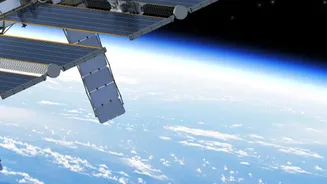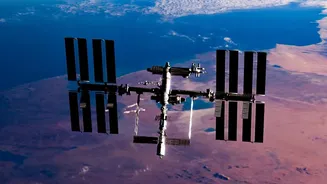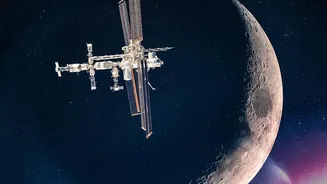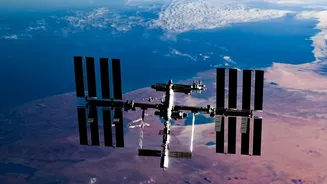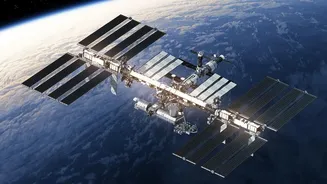






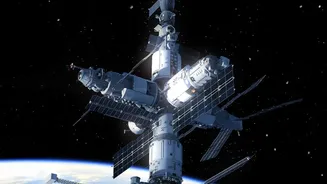
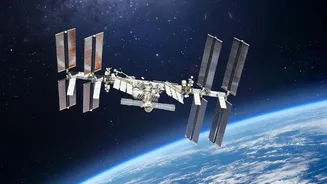

The era of the International Space Station (ISS), a symbol of global cooperation and a constant human outpost in orbit for decades, is drawing to a close. As NASA plans to deorbit the aging station around 2030, a new space race is heating up.
The End of an Era for the ISS
Since November
2000, the International Space Station has been continuously inhabited, a sprawling laboratory in the sky that has hosted groundbreaking research in fields from medicine to materials science. However, after more than three decades in orbit, the station's systems are aging and its maintenance costs are rising. Recognizing this, NASA and its international partners have committed to operating the ISS through 2030, after which it will be carefully deorbited to crash into a remote area of the Pacific Ocean known as Point Nemo. This planned retirement marks a pivotal moment, ending the first chapter of permanent life in low Earth orbit and setting the stage for what comes next.
NASA's New Strategy: From Owner to Customer
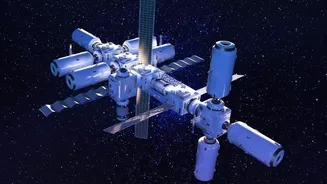
Instead of building another government-owned and operated station, NASA is pioneering a new model for human activity in low Earth orbit. Through its Commercial Low Earth Orbit Destinations (CLD) program, the agency is fostering the development of private space stations. The strategy is to transition from being a landlord in space to becoming just one of many customers. NASA will purchase services and crew time from these commercial platforms, saving taxpayer money that can be redirected toward deep space exploration missions under the Artemis program, including the Lunar Gateway and eventual missions to Mars. The agency has already invested hundreds of millions of dollars to stimulate the design and development of these new orbital outposts, betting that the private sector can innovate and operate more efficiently.
The Contenders: A Field of Private Pioneers
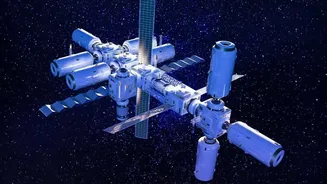
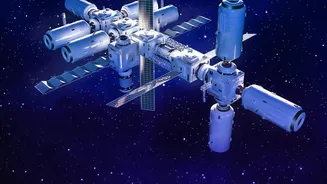
Several companies are at the forefront of this new commercial push. Axiom Space has a unique approach, planning to first attach its own modules to the ISS starting as early as 2026. When the ISS is retired, Axiom's connected segments will detach and become a free-flying independent station. Another major player is Starlab, a joint venture between US-based Voyager Space and European aerospace giant Airbus. They plan to launch their entire station on a single flight of a super heavy-lift rocket like SpaceX's Starship, aiming for operations before the ISS is decommissioned. Then there is Orbital Reef, a concept from Blue Origin and Sierra Space, envisioned as a 'mixed-use business park' in space designed to host commerce, research, and tourism for up to 10 people. Finally, startup Vast aims to be the first to launch a standalone commercial station, with its Haven-1 module targeting a launch in early 2027.
Building a New Economy in Orbit
These next-generation stations are not just about continuing the scientific work of the ISS. They represent the foundation of a true low Earth orbit economy. Potential applications are vast and varied. In-space manufacturing could produce everything from flawless fiber optics to 3D-printed human organs, unconstrained by gravity. Research that was once the exclusive domain of national space agencies will become accessible to private companies, universities, and even individuals. Beyond science, these platforms are being designed with commercial activities in mind. This includes space tourism, with companies like Hilton partnering with Starlab to design more comfortable crew quarters. Axiom Space is even developing orbital data centers, creating the beginnings of a cloud computing network in space. The goal is to create a bustling ecosystem of multiple orbiting platforms serving a diverse range of customers and purposes, fundamentally changing humanity's relationship with space.