



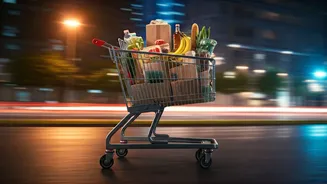



From Price Tags to Time Savings
For decades, retail battles were won on price and selection. Today, a third, arguably more powerful, force is at play: convenience. This isn't just about being fast; it's about being effortless. 'Convenience as currency' means consumers are increasingly
willing to trade their money to save time and mental energy. A recent report highlighted that over 70% of Indian consumers would stick with quick commerce platforms even without discounts, signalling a structural shift from price-seeking to time-seeking behaviour. This evolution redefines value, turning seamless checkouts, one-click ordering, and ultra-fast delivery from perks into baseline expectations. It’s a fundamental change in the retail value equation, where the ultimate prize is a frictionless customer journey.
The Rise of the 10-Minute Shopping Trip
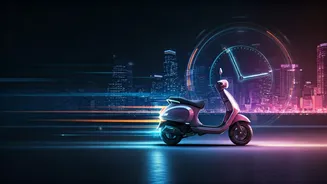
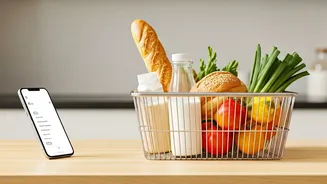
The most vivid example of this new economy is the explosion of quick commerce in India. Platforms like Blinkit, Zepto, and Swiggy Instamart have transformed consumer habits by promising delivery in minutes, not days. This model thrives on fulfilling immediate needs, whether it's a last-minute ingredient for dinner, a quick snack, or a forgotten daily essential. The impact is profound; quick commerce is not just stealing market share but is actually driving incremental demand by making impulse buys easier than ever. Analysts project the market to grow exponentially, moving beyond metro cities into Tier-2 and Tier-3 towns, fuelled by rising smartphone penetration and a growing appetite for instant gratification. This hyper-fast model is reshaping what consumers consider 'normal,' putting immense pressure on all retailers to speed up.
Beyond Speed: The Seamless Omnichannel Experience
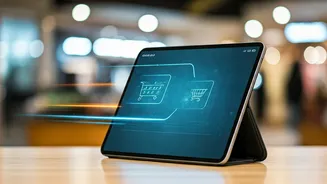
While quick commerce grabs headlines, true convenience extends far beyond delivery speed. It’s about creating a unified and fluid experience across all platforms—a concept known as omnichannel retail. In India, where a majority of shoppers research online before buying, often while physically in a store, blending digital and physical is crucial. Successful retailers allow customers to buy online and pick up in-store, check real-time inventory at a local branch, or enjoy easy, channel-agnostic returns. Companies like Reliance Retail and Tata Cliq are investing heavily in integrating their online presence with their physical stores, using technology to create a single, cohesive customer journey. With studies showing 77% of Indian shoppers prefer buying from an omnichannel brand, it is clear that the future belongs to retailers who erase the lines between online and offline worlds.
The Hidden Costs of Effortless
The relentless pursuit of convenience is not without its challenges and trade-offs. For one, there's the question of cost. While many consumers indicate a willingness to pay for convenience, the line is thin. A recent survey showed that while half of Indian consumers pay convenience fees, a staggering 78% would prefer platforms that don't charge them, creating a delicate balance for businesses. Furthermore, the high-speed logistics required for quick commerce create immense operational pressures, particularly for smaller businesses and traditional kirana stores that struggle to compete. There are also questions about the sustainability of the model, both financially for the companies burning cash to acquire customers and for the gig economy workers powering these instant deliveries.
A Permanent Shift in Value
The trend is clear: convenience is no longer a luxury but a fundamental expectation shaping the future of Indian retail. Technology, particularly AI and machine learning, will play an even bigger role, with a majority of retailers planning to integrate these tools by 2030 to offer hyper-personalized and predictive shopping experiences. The government's Open Network for Digital Commerce (ONDC) also aims to democratize e-commerce, potentially enabling smaller players to compete on a more level playing field. This shift forces every business, big or small, to ask a critical question: how much is our customer's time worth? In a world where consumers can get almost anything in minutes, saving someone's time might just be the most valuable service a retailer can offer.