
Why Venus Is Your Perfect City Planet
Light pollution is the enemy of stargazing, washing out all but the brightest objects. Fortunately, Venus is one of those objects. It’s the second planet from the Sun and wrapped in thick, highly reflective clouds that bounce a tremendous amount of sunlight
back into space. Because of this, Venus shines more brilliantly than any star in the night sky. Its apparent magnitude, a measure of brightness, can reach an incredible -4.8, while the brightest stars hover around magnitude -1.5 (lower numbers are brighter). This exceptional brightness means Venus can often be seen even from light-saturated city centers. Unlike stars, which twinkle, Venus typically shines with a steady, unwavering silvery light, making it easier to distinguish.
Know When and Where to Look: September 2026
Timing is everything. Venus orbits closer to the Sun than Earth, so it always appears near the Sun in our sky. This means you can only spot it for a few hours after sunset or before sunrise. Throughout September 2026, Venus is a dazzling “Evening Star,” visible in the western sky shortly after sunset. It will be at its absolute brightest for the year around September 18-22, making it an unmissable beacon. Look to the west as twilight deepens. Early in the month, you can spot it near the bluish star Spica. On the evening of September 14, a beautiful crescent moon will appear very close to Venus, creating a stunning celestial pair for about an hour after the sun goes down. As the month progresses, Venus will appear lower on the horizon each evening, so catching it during that post-sunset window is key.
Choose Your Urban Observing Post
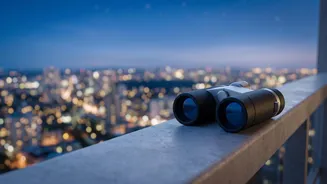
While Venus is bright, your location still matters. The goal is to minimize direct, glaring lights in your line of sight and get as clear a view of the horizon as possible. An open park, a sports field, or even a high floor of an apartment building can work well. If you're in a backyard, simply turning off your own porch and garden lights can make a noticeable difference. Use buildings or trees as natural shields to block the glare from streetlights. Higher ground is always a bonus, as it lifts you above some of the densest layers of ground-level light and atmospheric haze. Find a spot with an unobstructed view to the west to catch Venus after sunset this September.
Let Your Eyes Adapt to the Dark
One of the most crucial steps for any urban astronomer is giving your eyes time to adjust. Even in a city, your eyes have a natural ability to become more sensitive to low light, a process called dark adaptation. It can take 20 to 30 minutes for your pupils to fully dilate and for your eyes to build up the necessary light-sensitive pigments. During this time, avoid looking at bright screens, especially your phone. If you need a light, use a red flashlight, as red light has the least impact on your night vision. You’ll be surprised by how much more you can see after giving your eyes a chance to properly adjust to the ambient darkness.
Use Technology to Your Advantage
You don’t need to be an expert to navigate the sky. There are many fantastic and user-friendly astronomy apps that can help you locate Venus in seconds. Apps like SkyView Lite, Star Walk 2, and Stellarium use your phone's GPS and compass to show you a real-time map of the sky. You simply point your phone towards the sky, and the app will identify the stars, constellations, and planets you're looking at. This is especially helpful in a city where fewer reference stars are visible. These apps can confirm you’re looking at Venus and not a passing airplane, and they can also alert you to interesting events, like its close approach with the Moon on September 14.