



Our Solar System’s Icy Attic
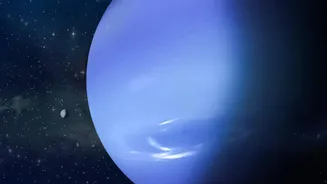
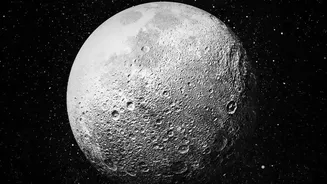
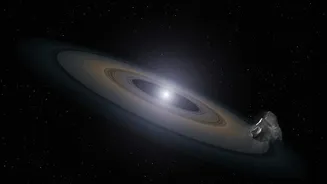
Think of the Kuiper Belt as our solar system’s vast, frozen attic. It’s a donut-shaped region of space that begins just beyond the orbit of Neptune, about 4.5 billion kilometres from the Sun. Unlike the rocky asteroid belt between Mars and Jupiter, the Kuiper Belt is
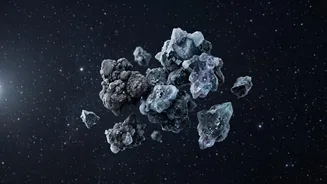
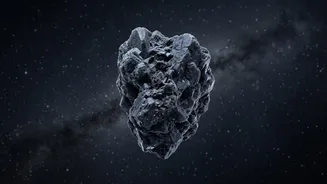
filled with trillions of icy bodies, remnants from the formation of the solar system. These objects, known as Kuiper Belt Objects (KBOs), range from tiny frozen grains to dwarf planets like Pluto. For a long time, scientists believed this region was a relatively static deep freeze. The main part of the belt was thought to peter out around 50 astronomical units (AU) from the Sun—where one AU is the distance from Earth to the Sun. New findings, however, are challenging that notion.
A Lonely Detective on a Long Journey
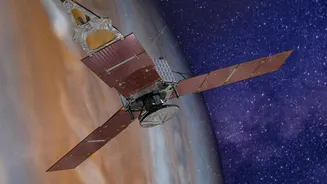
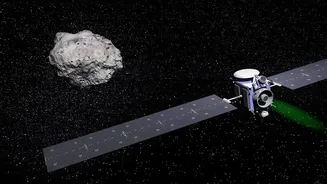
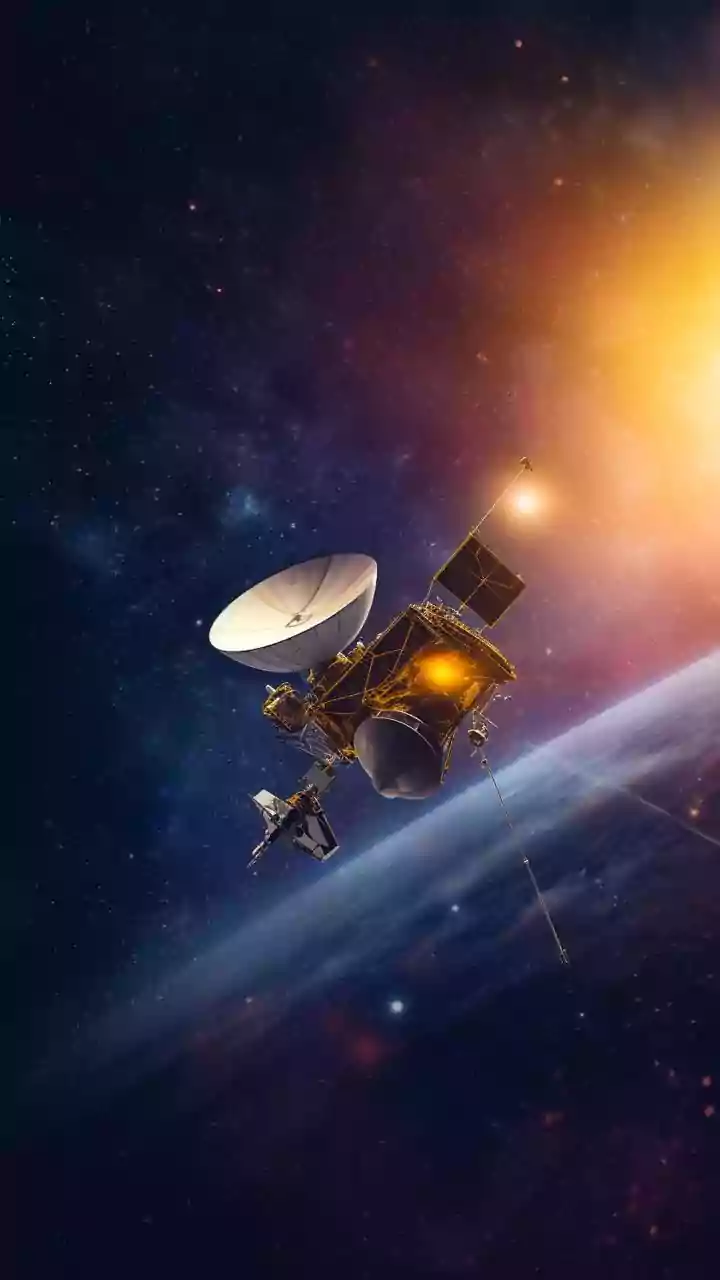
The key witness in this cosmic mystery is NASA's New Horizons spacecraft. Launched in 2006, this remarkable probe undertook a nine-year, five-billion-kilometre journey to give humanity its first close-up look at Pluto in 2015. But its mission didn't end there. It continued deeper into the Kuiper Belt, flying past a primitive KBO named Arrokoth in 2019, the most distant object ever explored up close. All along its journey, New Horizons has been making groundbreaking measurements of its environment. One of its key tools is the Venetia Burney Student Dust Counter (SDC), an instrument designed and built by university students to detect microscopic dust particles. This cake-pan-sized device has become the most distant operating dust detector in space history.
An Unexpected Dust Storm
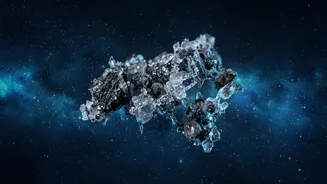
As New Horizons travelled between 45 and 55 AU from the Sun, a region where existing models predicted the dust should start to thin out, the SDC instrument found the opposite. It detected significantly more dust impacts than expected. This cosmic dust is thought to be the frozen debris from collisions between larger KBOs, much like sawdust is created in a workshop. The higher-than-expected dust density suggests that there is more activity—and therefore more material—in this region than previously accounted for. The findings, published in the Astrophysical Journal Letters, point to one of two fascinating possibilities: either the main Kuiper Belt extends much farther out than 50 AU, perhaps as far as 80 AU or more, or there could be a second, undiscovered belt beyond the one we know.
Why These Tiny Grains Matter
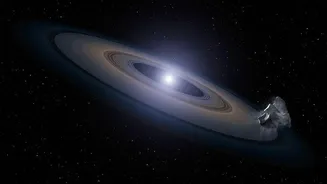
This discovery is about more than just dust; it’s about understanding the very architecture of our solar system. Dust particles are the building blocks of planets. Studying their distribution and composition provides vital clues about how planetary systems form and evolve. The unexpected dust suggests a larger population of colliding objects, which reshapes our map of the solar system's outer edge. According to Alex Doner, the lead author of the study, 'The idea that we might have detected an extended Kuiper Belt… offers another clue in solving the mysteries of the solar system's most distant regions'. This knowledge doesn't just apply to our home system; it helps astronomers interpret the dusty disks they observe around other stars, which could be cradles for new planets.
The Continuing Mission to the Frontier
Now hurtling toward 60 AU from the Sun, New Horizons continues its mission, acting as our sole scout in this remote territory. Each new measurement from the SDC provides data that simply cannot be gathered from Earth. Mission scientists are even using ground-based telescopes to search the path ahead of the spacecraft, hoping to spot another KBO for a potential future flyby, though it remains a long shot. As it ventures further, New Horizons may eventually cross a threshold into a region dominated by interstellar dust—particles from beyond our solar system entirely. For now, it continues to send back invaluable data from the cosmic frontier, revealing that even the emptiest-looking parts of space are full of secrets waiting to be discovered.