





A Telescope Spanning Two Continents
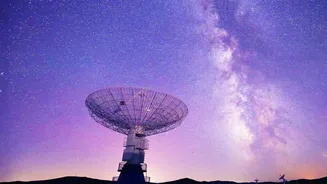
The Square Kilometre Array isn't a single telescope but a vast, interconnected network of thousands of antennas spread across two remote locations. This global observatory, with its headquarters in the UK, operates two main sites chosen for their extreme
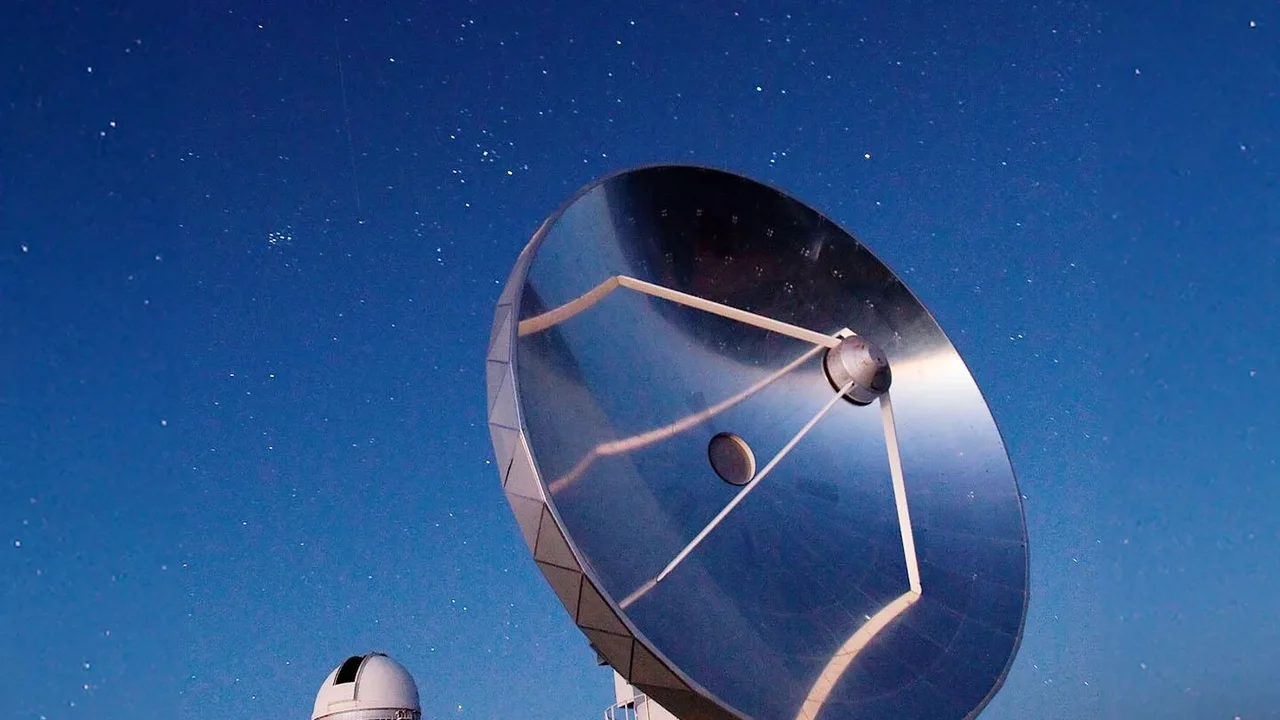
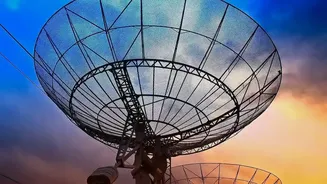
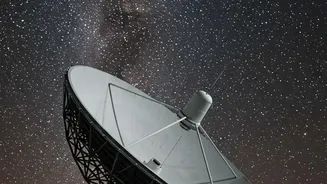
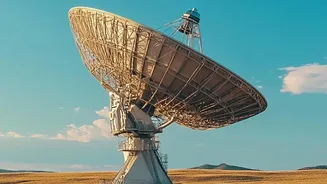
radio quietness: the Karoo desert in South Africa and the Murchison region of Western Australia. The South African site, SKA-Mid, will feature hundreds of classic dish antennas, including the 64-dish MeerKAT precursor array. Meanwhile, Australia will host SKA-Low, a sprawling array of over 130,000 Christmas tree-like antennas. This two-pronged approach allows astronomers to observe the cosmos across a wide range of radio frequencies. Construction on this mega-project officially began in late 2022, marking a new era in our quest to understand the universe.
Listening for the Cosmic Dawn
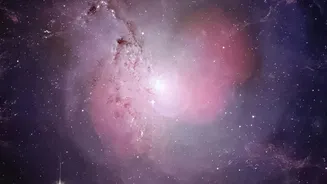
The primary target for the SKA is a mysterious period known as the Cosmic Dawn. For millions of years after the Big Bang, the universe was a dark, featureless place filled with a fog of neutral hydrogen gas. The Cosmic Dawn, which occurred a few hundred million years later, is when the very first stars and galaxies ignited, flooding the cosmos with light for the first time. This light began to ionize the surrounding hydrogen gas, creating bubbles that grew and eventually merged, transforming the entire universe in an event called the Epoch of Reionization. Studying this era is crucial because it holds the secrets to how the first celestial structures formed and set the stage for the universe we see today. The SKA is being built to detect the faint, residual signals from this transformative period.
The Faint Whisper of Ancient Hydrogen
The specific signal astronomers are hunting for is the faint radio emission from that primordial neutral hydrogen. Neutral hydrogen atoms naturally emit radio waves at a specific wavelength of 21 centimetres. As the universe has expanded over 13 billion years, this ancient signal has been stretched to much longer wavelengths, now measuring several meters. Detecting this incredibly faint and stretched-out signal is a primary goal. The challenge is immense; the signal is billions of times weaker than the radio noise we generate on Earth from sources like FM radio, television broadcasts, and mobile phones. This is why the SKA's telescopes are located in some of the most remote, radio-quiet zones on the planet, shielded from human-generated interference.
Unprecedented Sensitivity and Power
To pick out this ancient whisper from the cosmic noise, the SKA relies on a technique called interferometry, combining the data from thousands of individual antennas to function as a single, colossal telescope. With a planned collecting area of up to one square kilometre, the SKA will be over 50 times more sensitive than any existing radio telescope. The sheer volume of data is staggering. The signals are collected and then sent to a Central Signal Processor, the 'brain' of the telescope, which combines and processes the information. This requires supercomputing power trillions of times greater than the technology that sent the first astronauts to the Moon. This incredible sensitivity will not only allow scientists to map the Cosmic Dawn but also to make discoveries in fields ranging from gravitational waves to the nature of dark energy.
India's Crucial Role in the Project
India is a full member of the SKA project, playing a significant role from the early design phases to the current construction. The National Centre for Radio Astrophysics (NCRA) in Pune coordinates the efforts of more than 20 Indian institutions. A major Indian contribution was leading the design and development of the Telescope Manager, the complex software system that will act as the nerve centre for the entire observatory, controlling and monitoring all telescope functions. India is also contributing to the digital signal processing hardware for the SKA-Low telescope in Australia and will host a regional data centre to process and store a portion of the vast data stream for its scientific community. With a commitment of ₹1,250 crore, India's involvement secures access for its scientists to one of history's greatest scientific endeavours.