


The Universe's Favourite Colour
Much of the visible universe is composed of hydrogen. When this abundant gas is energized by the radiation from nearby stars, it emits light at a very specific wavelength: 656.2 nanometres. This particular shade of deep red is known as Hydrogen-alpha,
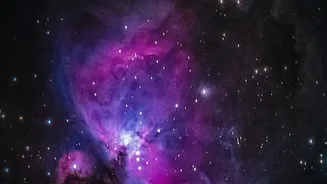
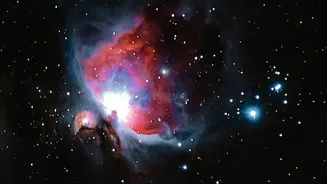
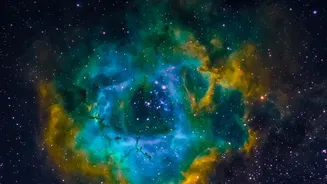
or H-alpha. It is the signature glow of emission nebulae, the sprawling stellar nurseries where new stars are born. These clouds of gas and dust, like the famous Orion Nebula or Lagoon Nebula, are rich in H-alpha light. For an astrophotographer, capturing this specific wavelength is essential to revealing the true structure, depth, and fiery beauty of these cosmic clouds. Without sensitivity to H-alpha, images of these objects appear faint, washed out, and lacking their most dramatic feature.
Your Camera's Built-In Blind Spot
A standard, off-the-shelf DSLR or mirrorless camera is engineered to see the world the way our eyes do. To achieve this, manufacturers place a filter pack directly in front of the camera's digital sensor. A key component of this pack is an infrared (IR) cut filter. Its job is to block infrared light, which the human eye cannot see, to prevent unwanted colour casts and ensure photos look natural. The problem for astrophotographers is that this filter is a little too aggressive. In its effort to block IR light, it also cuts out a significant portion of the deep-red visible spectrum, right where the critical 656nm H-alpha line resides. Standard cameras may only allow 20-25% of H-alpha light to reach the sensor, effectively muting the vibrant reds of the cosmos.
The Crucial Modification
To solve this problem, photographers turn to a physical modification of the camera. The procedure involves carefully disassembling the camera body to access the sensor and removing the stock IR cut filter. This is a delicate operation often performed by specialised companies. Once the filter is out, the photographer has two main options. The first is a 'full-spectrum' modification, where the filter is removed and replaced with clear glass to maintain the camera's focus. This makes the sensor sensitive to ultraviolet, visible, and infrared light. The second, and more common for colour astrophotography, is to replace the stock filter with one specifically designed to pass the H-alpha wavelength while still blocking unwanted UV and IR light. This is often called an 'astro-modification'.
Unlocking a Redder Universe
With the restrictive factory filter gone, a modified camera's sensor becomes dramatically more sensitive to H-alpha emissions. An astro-modified camera can have a sensitivity to H-alpha that is four times greater (or more) than a stock camera. This heightened sensitivity allows photographers to capture the faint, ruby-red light of nebulae with significantly shorter exposure times, which reduces digital noise and improves overall image quality. The difference is striking; where an unmodified camera might capture a pale, ghost-like wisp, a modified camera reveals a brilliant, detailed, and vividly red structure. This single change transforms the camera from a general-purpose device into a powerful scientific instrument for capturing the cosmos.
Considerations and Alternatives
Modifying a camera is not without its trade-offs. A full-spectrum or astro-modified camera will no longer produce 'normal' colours for daytime photography without special adjustments or external filters to correct the white balance. Refractive optics like camera lenses and telescopes can also struggle to focus UV and IR light at the same point as visible light, which can lead to soft images or star bloat in full-spectrum cameras unless a UV/IR cut filter is used in the imaging train. For those hesitant to modify their existing camera, a growing market of pre-modified cameras and dedicated, cooled astronomy cameras offers a ready-to-use solution. These products provide the same H-alpha sensitivity without the need for a DIY approach, giving enthusiasts a direct path to capturing the universe's hidden red glow.