






Why Your Kiwi Vines Need a Strong Trellis
Kiwifruit doesn't grow on a tree; it grows on a vigorous, woody vine. These vines are not self-supporting and can become incredibly heavy, especially once they are laden with fruit. A single mature vine can produce up to 100 pounds of fruit, creating
a significant load. A sturdy support structure, or trellis, is essential. It lifts the vines off the ground, which improves air circulation, reduces the risk of disease, and allows sunlight to reach the leaves and developing fruit. Furthermore, a well-designed trellis makes the essential tasks of pruning and harvesting much more manageable. It is best to build and install your trellis before you even plant the vines to avoid disturbing the roots later on.
Planning for a Budget-Friendly Build
The most common and effective designs for home gardens are the T-bar trellis and the wall-mounted espalier. A T-bar trellis uses vertical posts with a horizontal crossbar at the top, allowing vines to spread out and hang down. This is ideal for open garden spaces. For smaller yards, an espalier-style trellis built against a sunny wall or sturdy fence is a great space-saver. When choosing a location, find the sunniest spot in your garden, as kiwis need plenty of light. For wood, pressure-treated pine is a very common and affordable option. However, if your budget allows, naturally rot-resistant woods like cedar are an excellent choice because they are long-lasting and don't require chemical treatments, which is a plus when growing edible plants. Cedar is also lighter than pressure-treated lumber, making it easier to work with.
Building a Simple T-Bar Trellis
A T-bar trellis is a classic, robust design perfect for supporting the weight of mature kiwi vines. For a basic structure, you will need two 4x4 posts (about 8-10 feet long), one 2x4 or 2x6 crossbar for each post (about 4-5 feet long), high-tensile galvanized wire (12-gauge is recommended), and concrete mix for stability. First, dig holes for your main posts, spacing them about 15 to 20 feet apart. The holes should be deep enough to bury at least 2 feet of the post, ensuring the structure stands about 6 feet tall. Set the posts in the holes and secure them with concrete for maximum stability, as kiwi vines get very heavy. Once the concrete has set, attach the horizontal crossbars to the top of each post to form a 'T' shape. Finally, stretch several strands of the galvanized wire between the crossbars. You'll want at least three wires: one at the center and one near each end of the crossbars. These wires are what the kiwi vines will be trained to grow along.
An Alternative: The Wall-Mounted Trellis
If you are short on space, a wall-mounted trellis is an excellent alternative that keeps the project simple and low-cost. This design works by creating a framework of horizontal wires along a sunny wall or fence. To build one, you will need several sturdy eye bolts and galvanized wire. Decide on the height and width of your trellis and install the eye bolts directly into the wall or fence posts at regular intervals. Typically, you'll want rows of wire spaced about 18 to 24 inches apart vertically. Once the eye bolts are secure, run the wire through them horizontally, making sure to pull it as taut as possible. Using turnbuckles at one end of each wire run can help you easily tighten the wires if they sag over time. This 'espalier' style not only supports the plant but also creates a beautiful living wall feature in your garden.
Training Your Vines and Long-Term Care
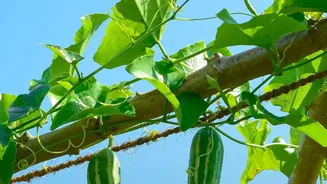
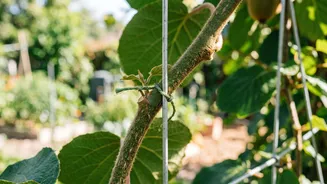
Once your trellis is built, the goal is to train a single, strong central shoot to grow vertically up to the wires. You can loosely tie it to a temporary stake to guide it straight up. Remove any side shoots that sprout from the main trunk as it grows. Once the main vine reaches the trellis wires, you can select two strong lateral branches to train in opposite directions along the wires. These will become the permanent 'cordons' or arms of your plant. From these main arms, fruiting shoots will develop. Regular pruning is key to managing the vine's vigorous growth and encouraging a good harvest. Each year, you will also want to check your wooden trellis for any signs of wear or rot, ensuring it remains strong enough to support your productive kiwi vines for years to come.