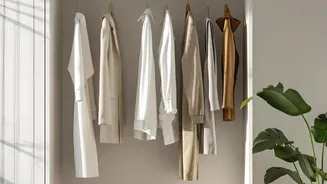







Start with a Ruthless Declutter
A crammed wardrobe is a paradise for moisture. With no room for air to circulate, humidity gets trapped between fabrics, creating a breeding ground for mould and mildew. The first step is to take everything out. Sort your clothes into three piles: keep,
store for another season, and donate. Be honest about what you actually wear. This is also the perfect time to deep clean the empty wardrobe. Wipe down all interior surfaces and let it air out completely, preferably on a rare sunny day. A clean, spacious closet is your first line of defence.
Rethink Your Storage Strategy
Once you've decided what to keep, think about how to store it. Avoid using plastic bags or cardboard boxes for long-term storage, as they can trap moisture and even attract pests. Instead, opt for breathable cotton storage bags or garment covers, especially for delicate fabrics like silk or heavily embroidered pieces. For seasonal items you won't touch until winter, vacuum-sealed bags can be a great space-saving option that also keeps moisture out. The key is to ensure that whatever you use allows for some level of air exchange or is completely airtight to prevent humidity from seeping in.
Maximise Air Circulation
Airflow is the arch-nemesis of dampness. An overstuffed closet prevents air from moving, allowing moisture to settle. When hanging clothes, leave a small gap between each hanger to allow air to pass through. If your wardrobe is against an exterior wall, try to leave a small space between the wall and the furniture to prevent moisture transfer. On very humid days, consider leaving your wardrobe doors slightly ajar to encourage ventilation. A small, portable fan pointed towards the closet can also work wonders in circulating air and keeping the interior dry.
Bring in the Moisture Absorbers
After creating space, it’s time to actively combat any remaining humidity. You don’t need to rush out and buy an expensive dehumidifier; many effective solutions are already in your home. Small pouches of silica gel are excellent moisture absorbers and can be placed in corners and drawers. For a DIY approach, place sticks of chalk, a small bag of salt, or charcoal briquettes inside the wardrobe. These materials naturally draw moisture from the air, helping to keep your clothes dry and fresh. Remember to replace them periodically as they become saturated.
Use Natural Fresheners and Repellents
With moisture comes the risk of musty odours and insects. Traditional Indian homes have long used natural methods to combat this. Dried neem leaves placed in corners are an age-old trick to keep microbes at bay. Camphor balls or naphthalene balls are also highly effective, working as both a pest repellent and a moisture absorber. For a pleasant fragrance, consider placing a small muslin bag filled with ground coffee, dried orange peels, or cotton balls dipped in essential oils like lavender or tea tree inside your closet. This final touch ensures your clothes smell fresh, not stale.
Be Vigilant with Laundry
Your organisational efforts will be wasted if you introduce dampness back into the wardrobe. This is the golden rule of monsoon clothes care: ensure every single item is completely bone-dry before it goes back inside. Even slightly damp clothes can raise the humidity level in the entire closet, undoing all your hard work. During the monsoon, it can be difficult to sun-dry clothes. If you're drying them indoors, make sure the room is well-ventilated. Running a hot iron over clothes just before storing them can also help remove any final traces of residual moisture.