



Let’s Talk About That Number
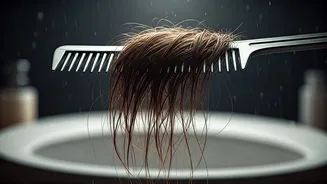
First, let's address the alarming number. Seeing a clump of hair in your brush can feel like you’re losing hundreds of strands at once. While losing exactly two hundred strands might be an exaggeration for most, an increase in hair fall during humid seasons
is a very real phenomenon. A healthy person typically sheds between 50 to 100 hairs per day as part of the natural hair growth cycle. During periods of high humidity, or for individuals with other contributing factors, this number can certainly increase. The key isn't to panic about a specific number, but to understand why it's happening and how to manage the seasonal shift in your hair’s health.
The Basic Science Of Your Hair
To understand how humidity wreaks havoc, we need a quick lesson in hair anatomy. Each hair strand is primarily made of a protein called keratin, held together by chemical bonds. There are strong, permanent bonds (disulfide bonds) that give your hair its basic shape and strength. But there are also weaker, temporary bonds called hydrogen bonds. Think of them as temporary scaffolding. There are millions of these bonds in your hair, and they are easily broken by water and reformed as your hair dries. This is why you can temporarily straighten curly hair with heat or set wet hair in a new style.
How Humidity Hijacks Your Hair
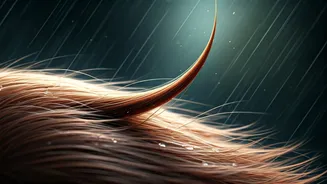
When the air is humid, it’s saturated with water molecules. Your hair, being porous, eagerly absorbs this moisture. This excess water gets in between the keratin strands and forms a massive number of new hydrogen bonds, causing the hair shaft to swell up. This is why hair becomes frizzy and poofy in humid weather—it's literally swollen with water. This swelling process stretches and lifts the outer protective layer of the hair, the cuticle. A swollen, roughed-up hair strand is significantly weaker, more elastic, and far more susceptible to breaking from simple actions like brushing, combing, or even just running your hands through it. This breakage is often mistaken for hair falling from the root.
The Scalp Connection: Attacking the Roots
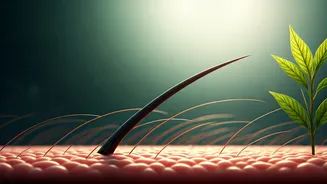
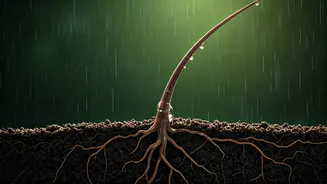
While much of the damage happens to the hair shaft, humidity doesn’t spare your scalp. The headline’s mention of “hair roots” isn’t entirely off the mark. A warm, moist scalp is the perfect breeding ground for bacteria and fungi, including Malassezia globosa, the fungus often associated with dandruff. An overgrowth of these microorganisms can lead to scalp inflammation, itchiness, and folliculitis (inflammation of the hair follicles). An unhealthy, inflamed scalp environment can disrupt the hair growth cycle and weaken the follicle's grip on the hair root, leading to genuine shedding—hair falling out from the root itself. So, humidity delivers a one-two punch: it weakens the hair strand, causing breakage, and creates a scalp environment that can lead to increased shedding.
Fighting Back Against Frizz and Fall
You can't change the weather, but you can protect your hair. Start with a clean scalp. Use a gentle, sulfate-free anti-dandruff shampoo once or twice a week to keep the fungal population in check. Avoid heavy, oily conditioners near the roots, which can trap moisture and worsen scalp issues. Instead, focus conditioner on the mid-lengths and ends. A final rinse with cool water can help seal the hair cuticle. When styling, use a lightweight, anti-humidity serum or spray. These products work by coating the hair with silicones or other polymers that form a barrier, preventing moisture from entering the hair shaft. Lastly, be gentle. Avoid tight hairstyles that pull on weakened roots and use a wide-tooth comb instead of a brush on wet hair.