

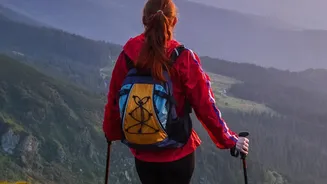

From Ski Training to Fitness Trend
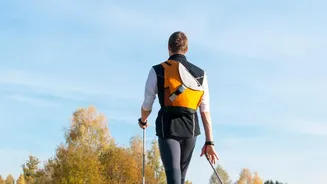
Originating in Finland as an off-season training method for cross-country skiers, Nordic walking uses specially designed poles to engage the upper body and core, transforming a regular walk into a much more comprehensive exercise. Studies show this method engages
up to 90% of your body's muscles, compared to about 50% with standard walking. The result is a higher calorie burn, improved posture, and increased strength in your arms, shoulders, and back, all without placing extra stress on your joints.
The Core Principle: Propulsion, Not Support
The most common mistake beginners make is treating the poles like hiking or trekking poles, planting them in front for balance. In Nordic walking, the poles are not for support; they are for propulsion. The correct technique involves planting the pole tip between your front and back foot. As you step forward with your left foot, your right arm swings forward, planting the pole. You then push off firmly from the pole as your arm swings past your hip. This push is what propels you forward and engages your upper body muscles. Think of it as pushing the ground away behind you.
Mastering the Grip and Release
Another crucial element is the hand technique. Holding a death grip on the pole handle restricts your arm's range of motion. The correct form involves a 'grip and release' motion. You grip the handle firmly as you plant the pole and begin to push off. As your arm swings backward past your body, you should open your hand, releasing your grip. The specialised glove-like strap keeps the pole attached to your hand, allowing you to fully extend your arm for maximum propulsion before your hand swings forward again to repeat the motion. This fluid movement is key to an efficient stride.
Common Mistakes and How to Fix Them
Beyond misusing the poles for support, several other habits can undermine your workout. Maintaining an upright posture with a slight forward lean from the ankles is vital; hunching over or bending at the waist can cause back strain. Another frequent error is using the wrong arm-leg coordination. If you find your right arm and right leg are moving forward together, simply drop your hands, let the poles drag by their straps, and walk naturally for a few paces to reset your rhythm. Your body's natural cross-lateral movement (opposite arm and leg) is the correct foundation.
Choosing the Right Equipment
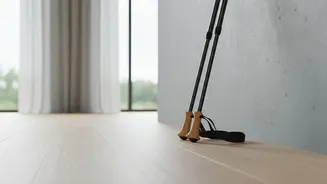
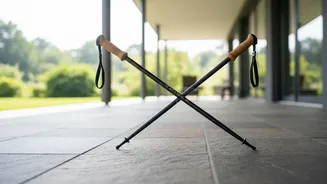
Your technique can only be as good as your tools. Nordic walking poles are different from trekking poles; they are typically lighter and feature a distinct strap system designed for the push-off technique. Pole length is critical. A common formula is to multiply your height in centimetres by 0.68. If poles are too short, you might slouch; if they're too long, you can strain your shoulders. For beginners, adjustable-length poles can be a versatile option, and many experts recommend poles with at least 50% carbon content to absorb vibrations from the pavement.