




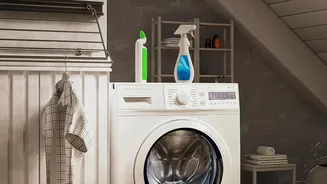


The Unseen Flood of Moisture
The primary issue with drying laundry inside is simple: water. A single load of washed clothes can hold over two litres of water, and as the garments dry, all that moisture evaporates directly into your living space. This process can dramatically increase
the humidity level in a room, sometimes by up to 30 percent. The World Health Organization recommends keeping indoor humidity between 40 and 60 percent for optimal health and comfort. Consistently drying laundry indoors without proper ventilation can easily push humidity levels well beyond that healthy range, creating an environment that feels damp, stuffy, and less comfortable.
An Open Invitation for Mould
When humidity climbs, your home becomes a perfect breeding ground for mould and mildew. These fungi thrive in damp, warm conditions and can grow on walls, ceilings, around windows, and behind furniture. This is more than just an aesthetic problem. Mould releases microscopic spores into the air that, when inhaled, can trigger or worsen a host of health issues. For individuals with asthma, allergies, or compromised immune systems, this can lead to increased coughing, wheezing, sneezing, and even more serious respiratory infections like aspergillosis. In a country like India, where the monsoon season already brings a battle against dampness, adding more moisture to indoor air only compounds the risk.
Welcoming Unwanted Houseguests
Mould isn't the only unwelcome guest that loves a humid home. Dust mites, a common trigger for allergies and asthma, also flourish when relative humidity is high. These tiny creatures feed on dead skin cells and thrive in bedding, carpets, and upholstered furniture. By creating a damp environment, you are essentially rolling out the welcome mat and encouraging their population to grow. This can lead to an increase in allergy symptoms like itchy eyes, a runny nose, and skin rashes, affecting the overall comfort and well-being of your family.
What's in the Air You Breathe?
Beyond water vapour, drying clothes can also release chemicals into your home's air. Many laundry detergents and fabric softeners contain fragrances and other chemicals known as Volatile Organic Compounds (VOCs). As your clothes dry, these VOCs are released from the fabric and can contribute to indoor air pollution, which is often significantly higher than outdoor air pollution. For those with chemical sensitivities or respiratory conditions, this can lead to irritation and discomfort.
Strategy 1: Ventilate, Ventilate, Ventilate
The most crucial step to combat indoor humidity is ventilation. Whenever you are drying clothes, create a path for the moisture-laden air to escape. Open a window in the room, even if it's just a crack, especially during the first few hours of drying when the most water is released. If you have an exhaust fan in a bathroom or kitchen, use it. Creating this airflow prevents the moisture from getting trapped inside your home and settling on surfaces.
Strategy 2: Choose Your Drying Zone Wisely
Where you dry your clothes matters. Avoid drying laundry in bedrooms or main living areas where you spend most of your time. Instead, designate a single, smaller room for the task, like a bathroom or a utility area, and keep the door closed to contain the humidity. This prevents moisture from spreading throughout the entire house. Position the drying rack away from walls to allow air to circulate freely around the clothes, which also helps prevent mould from forming on the wall itself.
Strategy 3: Upgrade Your Laundry Routine
A few small changes to your laundry process can make a big difference. Before hanging your clothes, use an extra spin cycle on your washing machine. This will remove significantly more water, meaning less moisture needs to evaporate indoors and drying time is reduced. When placing clothes on the rack, give each item plenty of space. Overcrowding traps moisture and slows down the entire process.
Strategy 4: Use Helpful Tools
If you frequently dry clothes indoors, investing in a dehumidifier can be a game-changer. These appliances actively pull moisture from the air, collecting it as water in a tank, which helps maintain a healthy humidity level and speeds up drying time. For a lower-cost solution, simply placing a fan near the drying rack can significantly improve air circulation and help clothes dry faster. During colder months, a heated airer can also be an efficient option, drying clothes quickly while adding gentle warmth to the room.