
The Heartland's Devotional Sweets
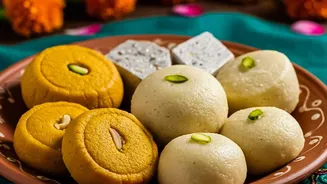
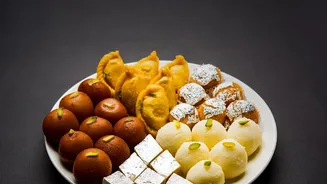
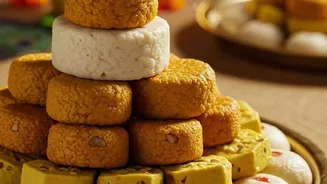
In the Braj region of Uttar Pradesh, encompassing Mathura and Vrindavan where Krishna spent his youth, the food is deeply connected to his life story. The star is undoubtedly the Mathura Peda. Made by slowly roasting milk solids (khoya) until they caramelise
into a rich, brown delicacy, it is a fragrant offering that defines the region’s celebrations. Another essential prasad, especially for those fasting, is Dhaniya Panjiri. This unique preparation involves roasting coriander seed powder in ghee and mixing it with powdered sugar, makhana (fox nuts), and dried fruits. Unlike typical wheat-based panjiris, its aromatic and warm flavour is distinct and specifically associated with this festival. To complete the devotional platter, Panchamrit is prepared—a sacred concoction of five nectars: raw milk, yogurt, honey, sugar, and ghee. This mixture is used for the ritual bathing of the deity's idol and then distributed as prasad, symbolizing divine blessings.
Maharashtra’s Savoury Gopalkala
In Maharashtra, Janmashtami celebrations are synonymous with the energetic spectacle of Dahi Handi, and the food reflects this communal spirit. The quintessential dish is Gopalkala, also known as Dahikala. This savoury preparation is a humble yet flavorful mix that evokes the image of Krishna sharing a meal with his cowherd friends. It’s a no-cook recipe made by combining flattened rice (poha) with yogurt, cucumber, fresh coconut, roasted peanuts, and a simple tempering of ghee, cumin seeds, and green chillies. Some variations also include fruits like pomegranate or soaked chana dal. Gopalkala is the very dish that is often placed inside the Dahi Handi pot, making it central to the day’s most iconic ritual. Its cool, refreshing, and nutritious profile makes it a perfect community food, meant to be shared and enjoyed by all.
Bengal's Monsoon Delicacy: Taler Bora
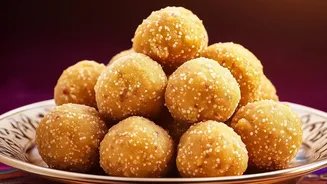
Travel east to West Bengal, and Janmashtami is heralded by the sweet fragrance of Taler Bora, or fried palm fritters. The festival coincides with the monsoon season when the 'taal' or Asian palmyra palm fruit ripens. This link between seasonality and devotion is at the heart of Bengali celebrations. The ripe fruit is pulped, a laborious process that yields a thick, aromatic juice. This pulp is then mixed with rice flour, semolina, grated coconut, and jaggery or sugar to form a batter, which is deep-fried into small, golden-brown spheres. The resulting fritters are slightly dense, fragrant, and irresistibly sweet. A popular Bengali rhyme even depicts Krishna’s foster father, Nanda, dancing with joy after eating Taler Bora, forever linking this seasonal treat to the happiness of Krishna's birth.
South India’s Crispy Offerings: Seedai and Murukku
In Southern states like Tamil Nadu and Kerala, the festival, known as Krishna Jayanthi or Gokulashtami, features a delightful spread of carefully shaped savoury and sweet snacks. The most iconic of these are Seedai—tiny, crispy balls made from rice flour. They come in two primary forms: Uppu (salt) Seedai, which is savoury, and Vella (jaggery) Seedai, which is sweet and includes coconut and cardamom. Preparing these requires skill, as the dough must be just right to prevent the fritters from bursting in the hot oil. Alongside Seedai, you'll find Thattai, a flat, crispy disc made from a similar rice flour dough seasoned with chilli and sesame seeds, and Kai Murukku, a hand-twisted savoury spiral that is both an art form and a delicacy. These snacks, representing a perfect balance of sweet and savoury, are offered as naivedyam before being shared among family.