
From Science Fiction to a Career Path
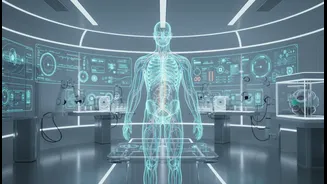
At its core, bioastronautics is the study of how space travel affects living organisms, especially humans. It’s an interdisciplinary field that merges biology, medicine, and engineering to solve the fundamental challenges of keeping people alive and healthy
beyond Earth. This involves everything from designing life support systems and space habitats to understanding the physiological impact of microgravity, such as muscle and bone loss, and the psychological effects of long-term isolation. Essentially, as humanity prepares to travel further and for longer, bioastronautics specialists are the people ensuring our bodies are ready for the journey.
The Gaganyaan Effect and National Pride
Much of this newfound interest can be traced back to the Indian Space Research Organisation's (ISRO) ambitious plans. The Gaganyaan mission, India's quest to send its own astronauts into orbit, has acted as a powerful catalyst. This national endeavour has not only ignited a sense of pride but has also created a tangible demand for experts who can ensure the safety and well-being of Indian astronauts. ISRO itself has acknowledged that inspiring the youth is a key benefit of the programme. As India aims to join the elite club of nations with human spaceflight capabilities, a new generation is responding to the call, eager to contribute to this historic milestone.
New, Prestigious Pathways Emerge
Recognising this need, Indian institutions are stepping up. A landmark development is the recent launch of India's first Postdoctoral Fellowship Programme in Bioastronautics, a collaboration between ISRO's Human Space Flight Centre (HSFC) and the Sree Chitra Tirunal Institute for Medical Sciences and Technology (SCTIMST). Announced in July 2026, this two-year programme is designed specifically to build a domestic talent pool in space medicine. The fellowship, open to candidates with medical and PhD qualifications, aims to provide researchers with a deep understanding of the physiological changes that occur during space travel. The launch of such a highly-specialised, first-of-its-kind programme in India signals a clear and prestigious career track where none existed before.
A Booming Private Space Sector
The excitement isn't limited to government initiatives. Since the Indian space sector opened to private investment in 2020, it has experienced explosive growth. With projections valuing the industry at $44 billion by 2033, hundreds of startups have emerged, working on everything from building rockets to satellite development. Companies like Skyroot Aerospace and Agnikul Cosmos are making headlines, creating a vibrant ecosystem of innovation and, crucially, jobs. This commercial boom provides alternative and varied career paths for graduates, making a degree in a space-related field more viable and attractive than ever before. The growth from just a handful of startups to over 400 in a few years illustrates a landscape ripe with opportunity.
The Allure of an Interdisciplinary Challenge
Bioastronautics also holds a unique appeal for graduates from diverse academic backgrounds. The field is not just for aerospace engineers. It requires expertise from doctors, biologists, psychologists, and material scientists, among others. This interdisciplinary nature means that students from various streams can find a place within the space industry, broadening its appeal. It presents a complex and exciting challenge that requires collaborative problem-solving, attracting a generation of graduates who are keen to work on cutting-edge projects that push the boundaries of human knowledge. The mission to sustain life in space is a puzzle with many pieces, offering a role for a wide range of specialists.