





The Rule Linking Pollution to Your Policy
A crucial but often overlooked regulation from India's insurance authority, the IRDAI, directly connects your vehicle's PUC certificate to your motor insurance policy. Following a Supreme Court directive aimed at curbing vehicular pollution, the IRDAI mandated
that insurance companies must verify a valid PUC certificate before issuing or renewing a motor insurance policy. This isn't a suggestion; it's a binding rule. If your vehicle's PUC has expired, your insurer is legally obligated to deny your renewal request. This measure ensures that only road-worthy and environmentally compliant vehicles receive insurance coverage, turning the PUC from a simple pollution check into a gateway for your vehicle's financial protection.
How an Expired PUC Can Void Your Claim
The real financial danger extends beyond policy renewal and into the realm of insurance claims. In the event of an accident, your insurance company has the right to reject your claim if your vehicle did not have a valid PUC certificate at the time of the incident. Insurers view the lack of a valid PUC as a deliberate violation of the law. Motor insurance policies contain clauses that absolve the company from liability if the vehicle is used for illegal purposes or is not maintained as per legal requirements. Driving without a valid PUC falls squarely into this category. The surveyor assigned to inspect your damaged vehicle will check for all mandatory documents, including the PUC. If it's found to be expired or missing, your claim for 'Own Damage' — the cost to repair your own vehicle — is at high risk of being repudiated, leaving you to cover the entire expense out of pocket.
Own Damage vs. Third-Party Claims
It's important to understand how a lapsed PUC affects different types of claims. The most immediate impact is on 'Own Damage' (OD) claims. This component of a comprehensive policy covers damage to your own car or bike. Since this is a contract between you and the insurer, your failure to comply with the law (by not having a PUC) gives the insurer grounds to deny the claim. However, the situation is slightly different for 'Third-Party' (TP) liability claims. The law prioritises compensating the third-party victim of an accident. Therefore, the insurer will typically pay the third party's claim for injury or property damage. But the story doesn't end there. The insurance company can then invoke its right to recover the entire amount it paid to the third party directly from you, the owner of the non-compliant vehicle. So, while the victim gets compensated, you ultimately bear the financial burden.
A Simple Guide to Staying Compliant
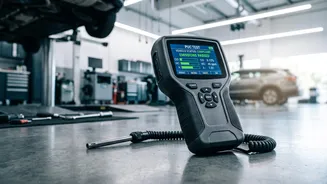
Ensuring your PUC certificate is always valid is a simple and inexpensive process. For new BS-IV and subsequent-norm vehicles, the first PUC is valid for one year, after which it must be renewed every six months. You can get a PUC test done at any authorised emission testing centre, which are commonly found at petrol pumps and workshops. The cost is nominal, typically ranging from ₹60 to ₹100 depending on the vehicle type. The process is automated and linked to the central Vahan database, ensuring the data is recorded digitally. You can also check the status of your PUC certificate online through the Parivahan portal using your vehicle's registration number. Setting a recurring reminder on your phone is a small step that can prevent major financial headaches down the line.
The Dual Consequences of Non-Compliance
Ignoring your PUC expiry date has two major consequences. First, you are liable for a penalty under the Motor Vehicles Act, 1988. Traffic police can issue a challan if you're caught driving without a valid certificate. This can result in fines and, in some cases, even imprisonment or suspension of your driving license for repeat offences. Second, and arguably more significant, is the insurance risk. You will be unable to renew your motor insurance, leaving you legally unable to drive. And if you are involved in an accident during the lapsed period, you face the very real prospect of your insurance claim being denied, turning a manageable incident into a financial catastrophe. The small cost and effort of renewing your PUC pales in comparison to the potential costs of non-compliance.