

What Is Poor Knee Alignment?
Proper knee alignment means that when you bend your leg, your knee tracks directly over your second toe. Poor alignment, however, often shows up as 'knee valgus', where the knee collapses inward toward the midline of your body. This creates a knock-kneed
appearance during movements like squatting or landing from a jump. The opposite, though less common during exercise, is a varus alignment, where the knee bows outward. This dynamic misalignment isn't just about looks; it fundamentally changes how forces travel through your leg, placing immense stress on parts of the knee joint that weren't designed to handle it.
The Link to Joint Wear and Inflammation
Think of your knee joint like a car's tyre. If the alignment is off, you get uneven wear. When your knee collapses inward (valgus), it overloads the outer (lateral) part of the joint. Over thousands of repetitions, this uneven pressure wears down the protective cartilage on that side faster. This accelerated wear and tear is a direct pathway to osteoarthritis, a degenerative joint condition characterized by pain, stiffness, and reduced mobility. This physical damage also triggers a biological response: chronic inflammation. The stressed tissues send out signals that create swelling and sensitivity, contributing to persistent pain long after your workout is over.
Common Exercises That Expose Weakness
Certain exercises are notorious for revealing poor knee alignment. Bodyweight and weighted squats are primary examples; as you lower down, watch for that inward knee drift. Lunges, including forward, reverse, and curtsy variations, also challenge single-leg stability and can easily lead to valgus collapse if your form isn't controlled. High-impact movements like box jumps or even running are other critical moments. The landing phase is where poor neuromuscular control often becomes most apparent, leading not just to long-term wear but also to a higher risk of acute injuries like ACL tears.
Why It Happens: It’s Often Not Your Knees
Interestingly, the root cause of poor knee alignment often isn't the knee itself. The knee is a 'middleman' joint, caught between the hip and the ankle. More often than not, knee valgus is a symptom of weak hip muscles, specifically the gluteus medius. This muscle, located on the side of your hip, is responsible for stabilizing your pelvis and preventing your thigh from rotating inward. When it's weak or inactive—a common issue for people who sit for long periods—it can't do its job, and the knee pays the price. Limited ankle mobility can also contribute, forcing the knee to compensate.
How to Correct Your Form and Build Strength
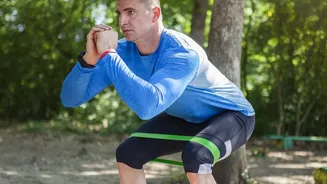
Improving your alignment involves a two-pronged approach: retraining your movement patterns and strengthening the muscles that support them. Start by performing squats in front of a mirror to get visual feedback. Consciously focus on keeping your knees aligned with your feet. To build the necessary strength, incorporate exercises that target the gluteus medius. Clamshells, side-lying leg raises, banded side steps ('monster walks'), and glute bridges are all excellent choices. These movements teach your brain and muscles to work together, a process called neuromuscular control, which is key to making good alignment automatic and protecting your joints in the long run.