




What is the Bharatiya Antariksh Station?
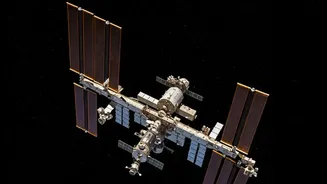
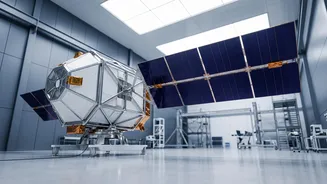
The Bharatiya Antariksh Station (BAS) is a planned modular space station that will be constructed and operated by the Indian Space Research Organisation (ISRO). Envisioned as a 52-tonne orbital outpost, it will circle the Earth at an altitude of about
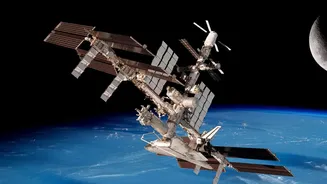
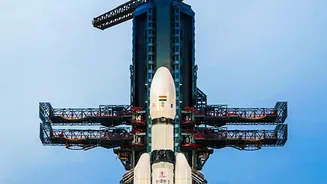
400-450 kilometres. The station is designed to be assembled in space, piece by piece, much like the International Space Station (ISS). The current timeline targets the launch of the first module, BAS-01, in 2028 aboard an LVM3 rocket. The complete five-module station is planned to be operational by 2035. Once complete, it will be able to host three to four astronauts for long-duration missions lasting three to six months, serving as India's dedicated laboratory in the sky.
A Stepping Stone to Deeper Space
The BAS isn't an endgame; it's a crucial stepping stone. The entire project is deeply intertwined with the Gaganyaan mission, India's flagship human spaceflight programme. Gaganyaan is developing the critical technologies needed to safely transport astronauts to orbit and back, including the human-rated launch vehicle, life support systems, and crew escape mechanisms. Mastering these skills is a prerequisite for building and operating a space station. In turn, the station will serve as a vital platform to test technologies and study the long-term effects of microgravity on the human body. This knowledge is essential for India’s even grander ambitions, including the goal of landing an Indian astronaut on the Moon by 2040. The station will be a testbed for docking, in-orbit refueling, and habitation systems required for future interplanetary missions.
The Scientific and Economic Engine
A permanent platform in microgravity unlocks immense scientific potential. The BAS will function as a world-class laboratory for research that is impossible on Earth. Scientists will be able to conduct long-duration experiments in fields like biotechnology, materials science, pharmaceuticals, and human physiology. This could lead to breakthroughs in medicine, the development of new materials, and a deeper understanding of fundamental science. Beyond pure research, the project is expected to be a powerful engine for economic growth. Building a space station requires contributions from a wide range of high-tech industries, from robotics and electronics to life support and advanced manufacturing. This will foster innovation, boost private sector participation in the space economy, and create thousands of skilled jobs.
India's Declaration on the World Stage
Beyond the science and technology, building a space station is a profound geopolitical statement. Successfully establishing a permanent human presence in orbit would place India in an exclusive club of spacefaring nations, alongside the United States, Russia, and China. It signifies a transition from being a nation capable of spaceflight to one that can sustain a long-term presence. This enhances India's strategic autonomy, ensuring it does not have to depend on other nations for access to space-based research platforms. It also elevates India's role as a leader in the Global South, creating opportunities for international collaboration and partnerships with other nations on future space endeavours. As the era of the ISS nears its end, having a national station positions India to be a key player in shaping the future of space exploration.