





A Flower from an Ancient Sea
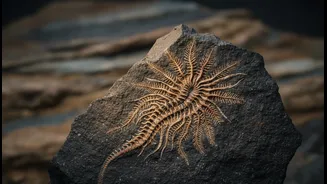
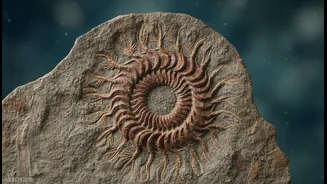
Paleontologists are celebrating an extraordinary glimpse into life during the Ordovician Period, thanks to the fossil of a creature called Dendrocrinus simcoensis. This animal, a type of crinoid, lived over 450 million years ago, long before animals walked
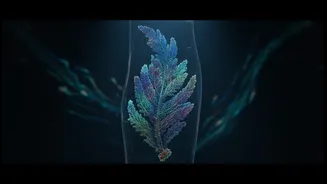
on land. Crinoids are relatives of modern starfish and sea urchins, often resembling underwater flowers with a stem-like body anchored to the seafloor and feathery arms that filter food from the water. While their fossilised skeletal plates are common, this particular specimen, unearthed near Quebec City, held an incredible secret: preserved soft tissue.
The Miracle of Preservation
Finding any soft tissue—like skin, organs, or muscles—in a fossil is incredibly rare. These parts almost always decay long before the fossilisation process can begin. For soft tissue to survive, conditions must be perfect. The animal needs to be buried almost instantly in fine sediment, which cuts off oxygen and stops both decay and scavengers. In this case, researchers believe the crinoid’s delicate feeding structures, known as tube feet, were preserved through a process called pyritization, where minerals replaced the organic material. According to Dr. Lena Cole, one of the University of Oklahoma paleontologists who studied the fossil, preservation like this is “truly one in a million.” Out of millions of crinoid fossils found, this is only the second time soft tissue has ever been identified.
A New Window into Evolution
So, why does this matter? The preserved tube feet offer a direct look at the biology of an animal from a pivotal time in Earth's history. This period, the Ordovician, saw a massive explosion in marine biodiversity known as the Great Ordovician Biodiversification Event, which established the groundwork for modern ecosystems. By studying the anatomy of these ancient structures, scientists get more than just a picture of a long-dead animal; they get clues about how it lived and fed. The researchers noted that the arrangement of this crinoid’s tube feet is quite different from that of its modern relatives, suggesting that these ancient creatures may have had unique feeding strategies and occupied different ecological niches than their descendants. It’s a crucial piece of the puzzle in understanding how life in the oceans has evolved over hundreds of millions of years.
The Hidden Treasures in Museums
One of the most charming parts of this story is where the fossil was found: not on a windswept dig site, but in the collection of a small, community-supported museum in Montréal. The specimen had been stored at the Musée de paléontologie et de l'évolution, its full importance unrecognised until visiting researchers Dr. Cole and Dr. David Wright took a closer look. This highlights the vital role of museum collections, both large and small, in scientific discovery. They are libraries of natural history, holding specimens that can yield new secrets decades later with the help of new technologies or a fresh set of expert eyes. Discoveries aren't always made with a pickaxe; sometimes they happen with a careful re-examination of what we already have.