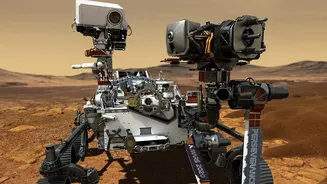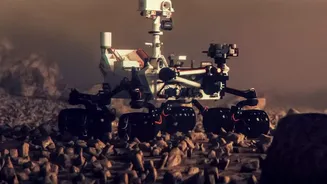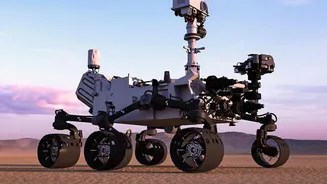





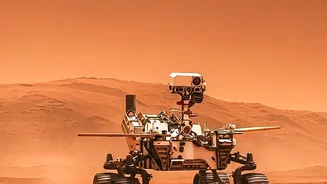

NASA's Perseverance rover is diligently collecting rock and soil samples on Mars, but the hardest part is getting them home. Now, the agency has revealed a new strategy to tackle one of the most complex robotic missions ever attempted.
A New Plan for a Historic Task
NASA has officially
kickstarted a new initiative for its Mars Sample Return (MSR) program, naming it the Perseverance Sample Retrieval Architecture, or PSRA. Announced on November 9, 2026, by Tiffany Morgan, the director of NASA's Mars Exploration Program, this represents a significant strategic reset. The core purpose of the PSRA is to develop a revised, robust plan for retrieving the precious samples collected by the Perseverance rover and delivering them safely to Earth. The effort is a response to mounting concerns over the previous plan's ballooning cost and extended timeline.
Why Was a Reset Needed?
The long-standing Mars Sample Return mission, a joint effort with the European Space Agency (ESA), has faced major headwinds. Independent reviews flagged significant issues, projecting the cost to be as high as $11 billion with a return date pushed back to 2040. NASA itself deemed this original estimate too expensive and the timeline unacceptable. The complexity and cost of the multi-part mission, which involved a separate lander and a fetch rover, had become a serious obstacle, even threatening to pull funds from other high-priority NASA science missions. The PSRA is designed to go back to the drawing board, learning from past reviews to create a more feasible architecture.
The PSRA Strategy Team
The new PSRA is not just a name change; it's a formal process to redefine the mission from the ground up. A dedicated strategy team is set to kick off its work in January 2027. Their mandate is to assess mission requirements, review lessons learned from previous plans, and evaluate current technological capabilities and acquisition options. The team's final report, containing impartial recommendations for a new mission architecture, is expected in the winter of 2027-2028. This methodical approach aims to balance ambition with realism, ensuring the mission is achievable within a reasonable budget and timeframe, with some analysts suggesting a cost closer to $8 billion and a return as early as 2035 might be feasible under a new plan.
The Ultimate Scientific Prize
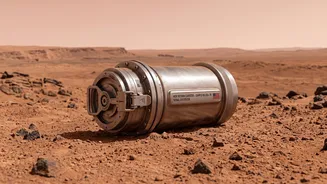
The reason for this monumental effort lies in the unprecedented scientific value of the samples. Since landing in February 2021, the Perseverance rover has been exploring Jezero Crater, a site believed to be an ancient lakebed. It has collected a carefully chosen set of rock cores, soil (regolith), and even atmospheric samples in 38 special tubes. These samples, particularly the fine-grained sedimentary rocks, are considered the best chance to find preserved biosignatures—telltale signs of ancient microbial life. Bringing them back to Earth would allow scientists to use stateofate laboratory equipment, far more powerful than any instrument that can be sent to Mars, to analyze their chemistry and mineralogy in exquisite detail. This analysis could revolutionize our understanding of Martian history, its potential for past life, and the evolution of rocky planets in our solar system.
A New Kind of Space Race
There's another factor driving NASA's renewed push: international competition. China is making significant progress on its own Mars sample return mission, named Tianwen-3. Chinese space officials are targeting a 2028 launch for a complex mission designed to collect and return samples to Earth by 2031. This ambitious timeline puts pressure on NASA to finalize its own plans and maintain its leadership role in planetary exploration. The PSRA initiative is not just about bringing rocks home; it's about executing a landmark scientific achievement that has been a top priority for decades.