






The Runner's Dilemma: When Pavement Betrays You
For dedicated runners, there’s nothing more frustrating than having a training schedule interrupted by bad weather. Slick, rain-soaked pavement increases the risk of slips and falls, which can lead to everything from minor scrapes to significant injuries.
Beyond the obvious danger, running in wet conditions often means altering your gait to maintain stability. This can lead to inefficient form, slower times, and potential strain on your joints and muscles. Instead of compromising your workout or risking an injury, consider this the perfect opportunity to embrace an indoor alternative that offers a different, yet equally potent, set of benefits.
Enter the Kettlebell: Your All-Weather Powerhouse
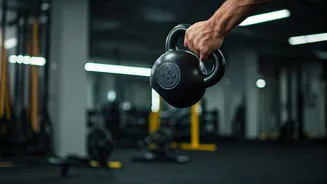
The kettlebell is a compact, cannonball-shaped weight that can deliver a full-body workout in minimal space. Its premier move, the kettlebell swing, is a dynamic, explosive exercise that has gained a reputation as one of the most efficient movements in fitness. Often called a perfect exercise, it blends strength training and cardiovascular conditioning into one fluid motion. Unlike many workouts that isolate specific muscles, the swing engages your entire posterior chain—the network of muscles on the back of your body, including your glutes, hamstrings, and back. This makes it an incredible tool for building power, endurance, and core stability, all from the safety of your living room.
Swings vs. Strides: A Head-to-Head Comparison
While running is a fantastic cardiovascular exercise, kettlebell swings offer a unique combination of benefits. The explosive nature of the swing trains your body for power and speed, which can improve athletic movements like jumping and even make you a more powerful runner. It's a high-intensity interval training (HIIT) session packed into a single move, elevating your heart rate rapidly. Studies have shown that kettlebell workouts can provide enough stress to improve aerobic capacity, similar to running. While running burns more calories minute-for-minute if the perceived effort is the same, the swing has the added benefit of being a low-impact exercise. With your feet planted firmly on the ground, you avoid the repetitive stress on your knees and spine that can sometimes accompany road running.
Mastering the Move: The Perfect Kettlebell Swing
Proper form is crucial to get the benefits and avoid injury. The kettlebell swing is a hip hinge, not a squat. Think of pushing your hips straight back, not bending your knees to go down. Stand with your feet shoulder-width apart. Hinge at your hips, keeping your back flat, and grip the kettlebell with both hands. Hike the kettlebell back between your legs, as if snapping a football. Then, explosively drive your hips forward, squeezing your glutes to propel the bell upward. Your arms should act like ropes, guiding the bell, not lifting it. The power comes entirely from your hips. The bell should float up to about chest height before you guide it back down into the next repetition.
Common Mistakes and How to Fix Them
Three common errors derail beginners. The first is making it a squat by bending the knees too much instead of hinging at the hips. The second is using your arms to lift the weight, which strains the shoulders and negates the power of the hips. To fix this, think of your arms as 'noodles'. The third mistake is hyperextending or leaning too far back at the top of the swing, which places stress on the lower back. At the peak of the swing, your body should form a straight, tall line. Focusing on a powerful glute squeeze at the top will help you finish in a strong, stable position.
Your First Indoor Swing Session
Ready to try it? A great way to start is with an interval-based workout. You don't need a lot of time to get a fantastic cardio and strength session. Try this simple structure: perform two-handed kettlebell swings for 30 seconds, focusing on explosive and perfect form. Then, rest for 30 seconds. Repeat this for 10-15 minutes. This HIIT format keeps your heart rate elevated and allows for short bursts of maximum effort, followed by a brief recovery. As you get more comfortable, you can increase the work time or decrease the rest time. The key is to maintain good form throughout, even as you begin to fatigue.