


The Growing Threat Above
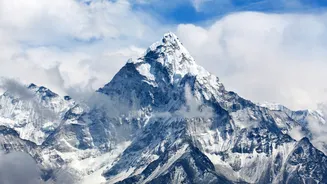
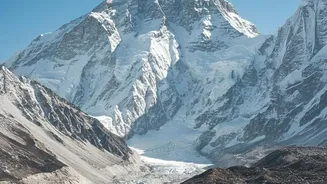
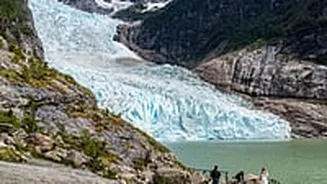
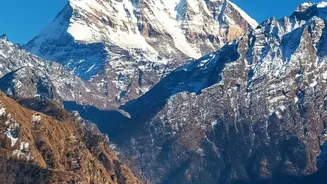
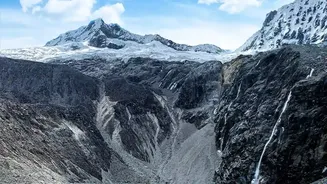
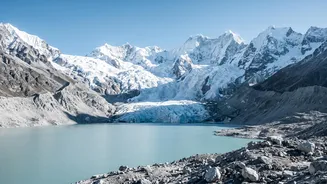
High in the Himalayas, as glaciers retreat due to warming temperatures, they leave behind vast quantities of meltwater. This water often collects in depressions, forming large bodies of water known as glacial lakes. These are not the placid lakes you
might imagine; they are often held back by unstable, natural dams made of loose rock and debris left behind by the receding glacier, called a moraine. Think of them as massive, elevated reservoirs with fragile walls, silently growing larger year by year as the ice continues to melt. The number and size of these lakes have been increasing rapidly, turning them into ticking time bombs perched above vulnerable downstream communities.
Climate Change: The Main Culprit
The primary driver behind this increased risk is climate change. Nepal's Himalayas are warming at a rate faster than the global average, accelerating glacier melt. This rapid melting does two dangerous things simultaneously: it adds enormous volumes of water to existing glacial lakes, and it can also destabilize the frozen ground (permafrost) that helps hold the moraine dams together. As the lakes swell, the pressure on these naturally weak dams intensifies, pushing them closer to the breaking point. This phenomenon is not unique to Nepal, but the sheer number of glaciers and the density of the population living downstream make the region exceptionally vulnerable.
The Sudden Trigger for Disaster
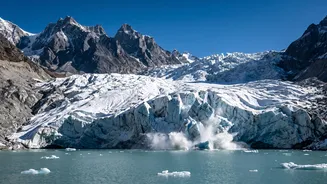
A moraine dam can fail with terrifying speed. The trigger for this failure, which leads to a Glacial Lake Outburst Flood (GLOF), can be one of several events. A large chunk of ice breaking off from the parent glacier and crashing into the lake can create a massive wave that overtops the dam. An earthquake, common in the tectonically active Himalayas, can shake the unstable moraine, causing it to collapse. Even heavy rainfall or a landslide into the lake can be enough to breach the natural barrier. Once the dam is breached, the failure is often catastrophic. The initial trickle of water quickly erodes the loose material, widening the gap in minutes and allowing the entire lake to drain in a sudden, violent burst.
A Wall of Water and Debris
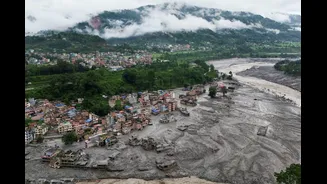
A GLOF is not just a flood of water; it's a terrifying, fast-moving torrent of water, mud, ice, and boulders. Peak discharges can be many times greater than a normal monsoon flood, with the surge capable of reaching depths of 50 metres in what was previously a small stream. This destructive slurry can travel for hundreds of kilometres, destroying everything in its path: villages, bridges, roads, and crucial hydropower plants. The sheer force erodes riverbanks, causing further landslides and compounding the destruction. For those downstream, there is often little to no warning, making these events incredibly deadly.
Nepal's Vulnerable Valleys
Nepal has a history of devastating GLOF events, with at least 24 recorded in the past. Valleys like the Solukhumbu, home to Mount Everest, and the regions around the Trisuli River are particularly at risk. Communities settle in these valleys for agriculture and to support the tourism industry, often unaware of the specific dangers looming in the mountains above. Past GLOFs, such as the 1985 Dig Tsho event, have demonstrated the catastrophic potential. While some high-risk lakes like Imja Tsho have undergone engineering work to lower their water levels, dozens of potentially dangerous lakes remain, and new ones are forming all the time.
An Ongoing Challenge
Tackling the threat of GLOFs is a monumental challenge. Scientists and organizations like the International Centre for Integrated Mountain Development (ICIMOD) are working to identify and monitor the most dangerous lakes using satellite imagery and field research. For some of the highest-risk lakes, complex and expensive engineering projects to create controlled outlets can lower the water level and reduce the pressure. However, the sheer number of lakes and the remote, difficult terrain make comprehensive mitigation nearly impossible. Developing effective early warning systems for downstream communities is a critical, life-saving step, but predicting the exact moment a moraine dam will fail remains incredibly difficult.