





The Rise of Gourmet Pet Meals
In India, the pet food market is booming, with a noticeable shift towards premium and super-premium options. As more people treat their pets like cherished family members, they are willing to spend more on what they believe is the best nutrition available.
This trend, known as pet humanisation, has led to an explosion of products marketed with terms like “artisanal,” “boutique,” and “natural.” The packaging is slick, the ingredient lists sound delicious enough for human consumption, and the price tags are often significantly higher. This premiumisation is driven by a desire to provide the absolute best for our companions, but it's crucial to ask: are we paying for better nutrition or just better marketing?
Nutrition 101: The Un-Fancy Basics
Before getting swayed by marketing, it’s vital to understand what your pet actually needs. At its core, a “complete and balanced” diet provides all the necessary nutrients in the right proportions for a specific life stage (puppy/kitten, adult, senior). These non-negotiable basics include: Proteins, which provide essential amino acids—the building blocks for muscles, organs, and a healthy immune system. Cats, as obligate carnivores, have stricter protein needs than omnivorous dogs, including a requirement for taurine from animal sources. Fats are a concentrated energy source and are essential for a healthy coat, skin, and organ function. Carbohydrates provide energy and dietary fibre. While often villainised, digestible carbs like corn or rice are valuable energy sources when properly cooked. Finally, vitamins and minerals are critical for countless bodily functions, from bone health to metabolic processes. These five components are the foundation of any healthy pet diet, regardless of price.
Decoding the Pet Food Label
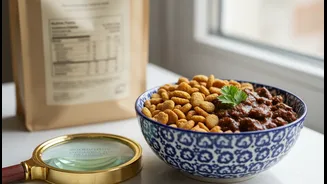
Learning to read a pet food label is your best defence against misleading marketing. Ingredients are listed in descending order by weight, so the first few items make up the bulk of the food. Look for a specific protein source, like “chicken” or “lamb,” listed first. However, be aware of marketing tricks. A food named “Beef Dog Food” must contain at least 95% beef, but a “Beef Dinner” only needs 25%, and a product “with Beef” may have as little as 3%. More important than the ingredient list is the Nutritional Adequacy Statement. This statement confirms that the food meets the standards set by regulatory bodies like AAFCO (The Association of American Feed Control Officials) or FEDIAF (The European Pet Food Industry Federation) for a specific life stage. If a bag doesn't have this statement, it's not a complete meal.
The Pitfalls of Fad Diets
Many fancy foods are built on trends that lack scientific backing. Grain-free diets, for example, became incredibly popular, but they have been linked to a serious heart condition called Dilated Cardiomyopathy (DCM) in dogs. The concern is that ingredients used to replace grains, like peas and lentils, may interfere with the absorption or synthesis of vital nutrients like taurine. Similarly, diets featuring exotic proteins like kangaroo or bison might sound appealing, but they can make it harder to manage food allergies later in life and have also been associated with DCM. Terms like “by-product” are often misunderstood. High-quality by-products, such as organ meats like liver and kidney, are actually nutrient-dense and are a natural part of a carnivore's diet.