



A New Cosmic Census
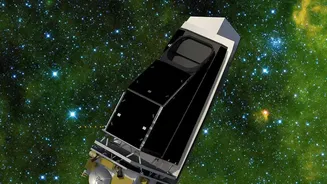
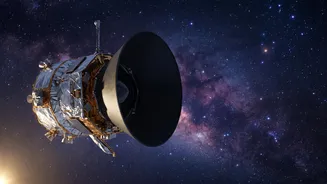
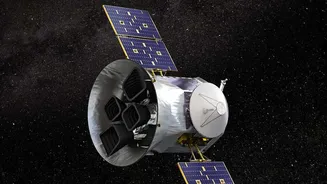
The Spectro-Photometer for the History of the Universe, Epoch of Reionization and Ices Explorer, or SPHEREx, is a space observatory with a monumental task: to conduct an all-sky survey four times over its two-year mission. Unlike telescopes like the James
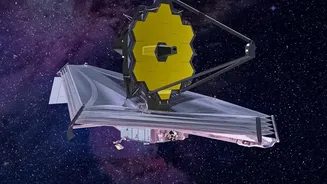
Webb Space Telescope (JWST) that perform deep, targeted observations of small sections of the sky, SPHEREx is a wide-angle surveyor. Its job is to create a massive 3D map of the cosmos, collecting data on over 450 million galaxies and 100 million stars in our own Milky Way. Developed by a team including NASA's Jet Propulsion Laboratory (JPL) and Caltech, this mission acts as a cosmic census-taker, cataloging the positions and properties of hundreds of millions of objects to build an unprecedented map of the universe's large-scale structure. This vast dataset will be made publicly available, serving as a rich resource for scientists worldwide.
Seeing the Universe in 102 Colors
The key to SPHEREx's power is its ability to see the universe in near-infrared light, which is invisible to the human eye. It will map the entire sky in 102 different infrared 'colors,' or wavelengths, far exceeding the resolution of previous all-sky maps. This technique, called spectroscopy, splits light into its component wavelengths, much like a prism creates a rainbow. Each chemical element and molecule has a unique spectral fingerprint, allowing scientists to determine the composition of distant objects. Furthermore, infrared light is crucial for peering through cosmic dust that can obscure visible light and for observing the most distant galaxies, whose light has been stretched into the infrared spectrum by the expansion of the universe. This allows SPHEREx to chart not only what the universe is made of, but also how it's arranged in three dimensions.
Probing the Big Bang
One of the mission's primary goals is to investigate cosmic inflation, the theory that the universe expanded exponentially in the first fraction of a second after the Big Bang. This explosive event is thought to have left subtle imprints on the distribution of matter across the cosmos. The galaxies we see today are not randomly scattered; they form a vast cosmic web of clusters, filaments, and voids. By creating a detailed 3D map of how hundreds of millions of galaxies are positioned relative to one another, SPHEREx will search for statistical patterns that can help scientists differentiate between various models of inflation. This will provide crucial clues about the physical processes that literally put the 'bang' in the Big Bang.
Tracing the Origins of Life's Ingredients
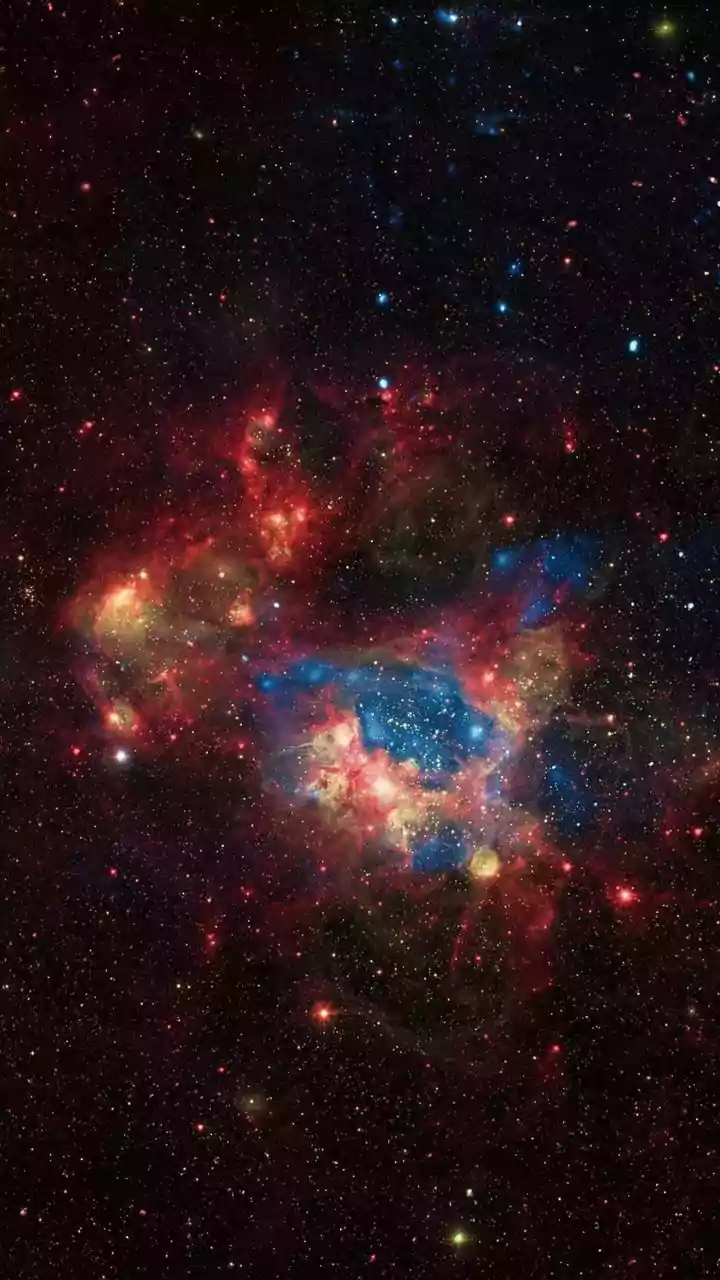
Closer to home, SPHEREx will hunt for the origins of water and organic molecules, which are essential ingredients for life as we know it. Most of the water in the universe is believed to exist as ice, coating tiny dust grains within vast, cold molecular clouds where stars and planets are born. By surveying these stellar nurseries throughout the Milky Way, SPHEREx will map the abundance and distribution of these crucial ices. Recent findings from the mission have already revealed vast 'interstellar glaciers' in star-forming regions like Cygnus X. While JWST can study these ices in high detail for a few targets, SPHEREx's all-sky survey provides a large-scale statistical map, showing where the raw materials for future planets and potentially life are located across our galaxy.