







A Nation's Lofty Goal
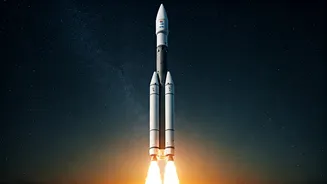
The Gaganyaan programme is one of India's most ambitious scientific undertakings. The objective is to launch a crew of three astronauts into a Low Earth Orbit of 400 kilometres, keep them there for up to three days, and bring them back safely to Earth.
If successful, India will join the elite club of nations—the United States, Russia, and China—with independent human spaceflight capability. This is not just about national prestige; it's about establishing long-term capabilities for space exploration, microgravity research, and advanced technology development. But sending humans to space is exponentially more complex and risky than launching satellites. Every system, from the launch vehicle to the crew capsule, must be proven reliable beyond any doubt.
The Crucial Role of Uncrewed Flights
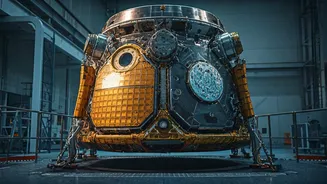
Before any astronaut boards the Gaganyaan capsule, ISRO has planned a series of extensive tests, central to which are multiple uncrewed missions. These flights are full-scale dress rehearsals, designed to validate every critical system in real-world conditions. The first uncrewed flight, designated G1, is slated for the latter half of 2026. This will be followed by at least two more uncrewed missions to demonstrate the reliability and repeatability of the systems. Recent statements from ISRO officials have emphasized that these timelines are flexible, contingent entirely on technical progress and exhaustive safety assessments, with the first crewed mission now targeted for 2027.
Meet Vyommitra, the Humanoid Forerunner
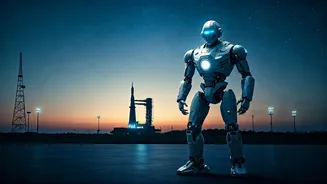
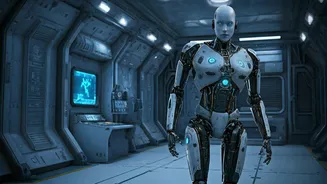
A key passenger on the uncrewed flights will be Vyommitra, a sophisticated humanoid robot developed by ISRO. The name, derived from the Sanskrit words for "space" and "friend," aptly describes its role. Vyommitra is not merely a dummy; it's an advanced, semi-humanoid robot capable of mimicking astronaut functions. It will operate switch panels, monitor the cabin's environment, and communicate with ground control. By simulating human presence, Vyommitra will provide invaluable data on how the life support systems, crew interfaces, and the overall module perform in the harsh environment of space, helping ISRO validate the capsule's habitability before a human crew steps inside.
The Gauntlet of Safety Tests
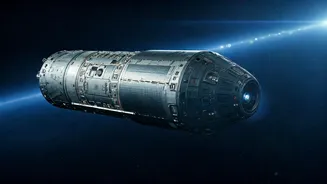
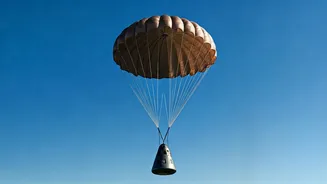
The proof of safety extends far beyond orbital flights. ISRO is conducting a battery of tests covering every conceivable failure scenario. A cornerstone of this is the Crew Escape System (CES), designed to jettison the crew module away from the rocket in case of an emergency during launch. Another critical component is the parachute system, which is essential for slowing the capsule's descent for a safe splashdown. ISRO has already conducted several Integrated Air Drop Tests (IADT), where a simulated crew module was dropped from a helicopter to validate the complex sequence of parachute deployments. These tests, along with thousands of ground-based assessments of structural integrity and propulsion systems, form the foundation of the mission's safety-first philosophy.
Why Patience Is a Virtue in Spaceflight
In the high-stakes world of human spaceflight, there are no shortcuts. Every system must be human-rated, a designation that signifies the highest levels of reliability and redundancy. The process is deliberately slow and methodical because a single failure can be catastrophic. ISRO officials have repeatedly stated that ensuring astronaut safety is the absolute priority, taking precedence over any timeline. The organisation is drawing lessons from decades of global spaceflight history, where haste has led to tragedy. This cautious, systematic approach ensures that when Indian astronauts, or 'Gaganyatris,' finally launch, they will be flying on a vehicle that has been tested, validated, and proven to be as safe as humanly possible.