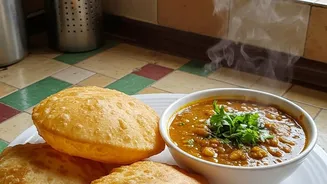




There is a special kind of joy in watching a puri puff into a perfect golden sphere. But there's also a unique disappointment when it comes out flat, dense, and oily. The secret to avoiding that sad outcome lies in one crucial variable: the oil.
The Lukewarm Oil Trap
The most
common mistake in making puris at home is not getting the oil hot enough. When the oil is lukewarm, the puri dough sits in it for too long before it starts to cook. Instead of quickly sealing the outside, the dough begins to absorb the oil like a sponge. This leads to a puri that is heavy, greasy, and dense. If the oil is not hot enough, the puri also won't puff up, as the rapid burst of steam needed for inflation never happens. The result is a flat, oily disc — a far cry from the light, airy bread you were hoping for. This is why a simple frying pan with inconsistent heat is often the culprit behind failed puris.
The Science of the Perfect Puff
So, why does hot oil work so well? The magic happens at the intersection of heat, water, and dough. When a rolled-out puri hits oil at the correct temperature—ideally between 180°C and 190°C (350°F to 375°F)—the moisture on the surface of the dough instantly vaporizes. This creates a barrier of steam that pushes back against the oil, preventing it from seeping into the dough. This rapid sealing of the surface traps the remaining moisture inside. As that trapped moisture turns to steam, it expands dramatically, causing the puri to inflate into its signature balloon-like shape. This entire process happens in seconds, creating a crisp exterior while keeping the inside soft and steamy. It is this quick, violent dehydration of the surface that is the key to a light, non-greasy puri.
Finding the Golden Temperature
You don't have to guess when your oil is ready. The most reliable method is to use a deep-fry thermometer to monitor the temperature. Aim for a consistent heat of around 180°C to 190°C. If you don't have a thermometer, you can use the traditional test: drop a tiny piece of dough into the oil. If it sizzles and rises to the surface immediately without browning too quickly, your oil is ready. If it sinks or bubbles sluggishly, the oil is too cold. If it turns dark brown almost instantly, the oil is too hot and will burn the puri before it can puff. Taking a moment to test the temperature is the single most important step before you start frying.
Tips for Temperature Stability
Maintaining that perfect temperature is just as important as reaching it. The biggest enemy of steady heat is overcrowding the pan. Frying too many puris at once causes the oil temperature to drop significantly, leading to greasy results. Fry one or two puris at a time, allowing the oil to come back up to temperature between batches. Using a heavy-bottomed pan, like a cast-iron kadhai or a Dutch oven, also helps retain heat and keep the temperature more stable than a thin pan. Finally, choose the right oil. An oil with a high smoke point, such as groundnut, sunflower, rice bran, or canola oil, is essential for deep-frying as it can handle the high heat without breaking down.
It's Not Just the Oil
While oil temperature is paramount, a few other factors contribute to the perfect puri. Ensure your dough is firm and stiff, not soft like roti dough, as a softer dough can absorb more oil. Also, roll the puris evenly to a thickness of about 1.5 to 2 millimeters. If they are too thin, they may become crispy like a papad, and if they are too thick, they may not cook through or puff properly. Finally, use a small amount of oil rather than dry flour when rolling out your puris. This prevents burnt flour particles from contaminating your frying oil and sticking to subsequent puris.