


The Unseen Enemy: Carbon Dioxide
The single greatest threat to breathable air in a sealed environment like a spacecraft is the crew itself. Every breath an astronaut exhales releases carbon dioxide (CO2). On Earth, this is no problem; the planet's vast atmosphere and plant life easily
absorb it. In a tiny capsule, however, CO2 buildup is a serious and potentially lethal threat. Early space missions, like the Mercury and Apollo programs, used a straightforward solution: expendable canisters filled with lithium hydroxide. As cabin air passed through these canisters, the chemical would react with and trap the CO2. The downside was that once the canister was full, it had to be replaced and discarded, a solution that is not sustainable for long-duration outposts far from Earth.
The Regenerative Revolution on the ISS
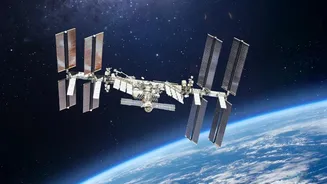
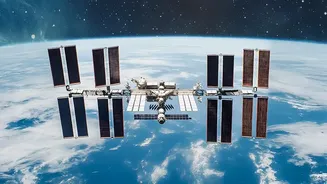
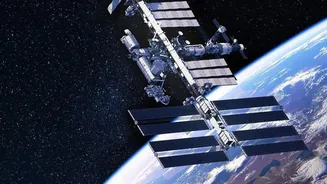
The International Space Station (ISS), a permanent outpost in low Earth orbit, required a more sustainable solution. This led to the development of the Carbon Dioxide Removal Assembly (CDRA). The CDRA is a regenerative system, meaning it doesn’t rely on disposable canisters. Instead, it uses beds of a porous, crystalline material called zeolite. The system works in a clever two-step process. First, air is passed through one set of zeolite beds that are designed to trap water vapor, and then through a second set that specifically adsorbs CO2 molecules, letting the clean air pass through. The real genius is in the regeneration: while one half of the system is actively scrubbing the air, the other half is being heated and exposed to the vacuum of space, which purges the captured CO2 overboard. The two sides then alternate, allowing for continuous, uninterrupted operation.
More Than Just CO2: The Contaminant Cocktail
Astronauts aren't just battling their own breath. The enclosed atmosphere of a space station is a complex cocktail of hundreds of other trace chemical contaminants. These volatile organic compounds (VOCs) are constantly off-gassing from every surface: the plastics in electronics, the paint on the walls, and even from the astronauts' own bodies. To manage this, the ISS employs a Trace Contaminant Control System (TCCS). This multi-stage unit acts like the station's liver, continuously filtering the air. It uses a large bed of activated charcoal to trap heavier molecules, followed by a high-temperature catalytic oxidizer that essentially burns off the remaining, smaller contaminants, converting them into harmless substances like CO2 and water, which can then be managed by other systems. The importance of the TCCS was highlighted in late 2024 when cosmonauts detected a toxic smell after a resupply vehicle docked; the system was crucial in quickly purifying the air and ensuring the crew's safety.
The Deep Space Challenge: No Resupply, No Room for Error
For future deep space outposts, like the lunar Gateway or a habitat on Mars, the principles of air revitalization are the same, but the stakes are much higher. There are no quick resupply missions to bring spare parts or fresh filters. This demands a new generation of life support systems that are even more reliable, efficient, and self-sufficient. Engineers are focused on creating 'closed-loop' systems that recycle everything. NASA's Air Revitalization team is developing technologies that not only remove CO2 but also prepare it to be broken back down into oxygen. Future systems for the lunar Gateway, a collaboration between NASA, ESA, and other international partners, will need to be incredibly robust. Japan's JAXA, for example, is providing vital life support systems for the I-HAB module.
The Future of Fresh Air in Space
The next leap in air scrubbing technology may not involve filters at all. Some research, building on technology used on the ISS, focuses on photocatalytic oxidation, which uses UV light and a catalyst to destroy airborne contaminants at a molecular level, turning them into harmless water vapor. Other advanced concepts include using liquid sorbents or electrochemical membranes that can 'pump' CO2 out of the air without bulky mechanical parts. These innovations aim to create systems that are smaller, lighter, and consume less power — critical metrics for any piece of hardware destined for a long journey through deep space. The ultimate goal is to create an artificial ecosystem that flawlessly mimics Earth, providing safe, breathable air for the pioneers who will take humanity's next giant leap.