






The Rulebook vs. Reality
On paper, the process for choosing the Secretary-General seems straightforward. According to Article 97 of the UN Charter, the General Assembly, which includes all 193 member states, appoints the leader based on a recommendation from the 15-member Security
Council. This creates a two-stage process that appears to give every nation a voice. However, the charter's brief text leaves much to interpretation, allowing decades of custom and backroom dealing to shape the real process. For most of the UN's history, the selection happened almost entirely behind closed doors, with the General Assembly's role limited to rubber-stamping the Security Council's single, pre-decided candidate.
The Decisive Power of the P5 Veto
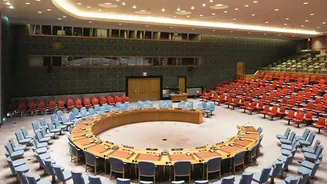
The true center of power lies with the Security Council’s five permanent members (P5): China, France, Russia, the United Kingdom, and the United States. Any one of these nations can veto a candidate, effectively ending their bid. This means a prospective Secretary-General must be acceptable, or at least not objectionable, to all five global powers. To gauge support, the council holds informal secret ballots known as 'straw polls'. In these polls, ballots from P5 members are a different color, allowing them to signal a potential veto without formally casting one. A 'discourage' vote from a P5 member is a fatal blow, ensuring that only candidates who won't challenge the interests of the world's most powerful nations can advance.
A Push for Transparency
Growing frustration with the opacity of the selection led to significant reforms in 2015. Championed by a coalition of smaller states and civil society groups, these changes introduced a more open and inclusive process. For the first time, member states were formally invited to nominate candidates, who then submitted vision statements and participated in public dialogues with the General Assembly. This allowed the broader UN membership and the public to engage with the candidates and their platforms in an unprecedented way. The successful 2016 selection of António Guterres, which followed these new procedures, was hailed as a step forward for transparency.
Old Habits Die Hard
Despite these reforms, the fundamental power dynamic remains unchanged. The P5's veto is still the ultimate gatekeeper. The selection process for the term beginning in 2027 has highlighted this tension. While public hearings have occurred, the crucial decisions are still happening in private Security Council meetings, with straw polls revealing deep divisions among the permanent members. As of late November 2026, the P5 have failed to coalesce around a single candidate, with reports suggesting that the US, Russia, and China are using their veto threats to block front-runners and shape the outcome to suit their geopolitical interests. This has stalled the process and raised concerns that the post may be unfilled when the current term ends on December 31.