




Perched on the banks of the Hooghly, Kolkata’s skyline is a testament to its layered past. Often called the 'London of India', this nickname hints at a deep-rooted history that shaped its very foundation, architecture, and soul.
A Tale of Two Empires
The story begins when Calcutta,
as it was then known, became the capital of British India in 1772. For over a century, it was the administrative and commercial heart of the British Empire in the East, often called its 'second city' after London itself. This status meant that the British invested heavily in creating a capital that would reflect their power and prestige, modeling its infrastructure and grand buildings on European, particularly London's, standards. This frenzied construction, a mix of civic pride and imperial ambition, laid the groundwork for the city's enduring comparison to the British capital.
Monuments of a Bygone Era
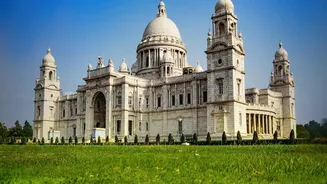
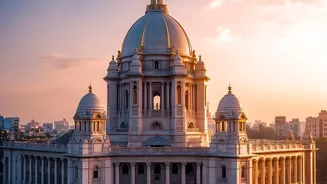
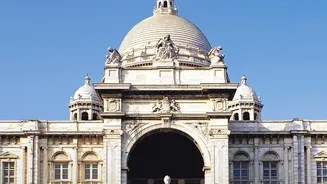
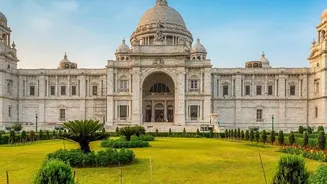
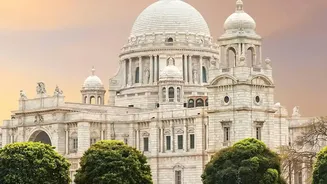
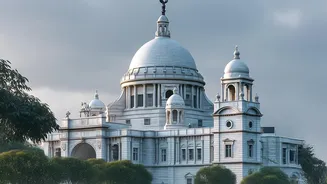
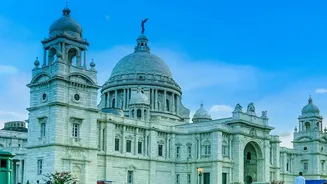
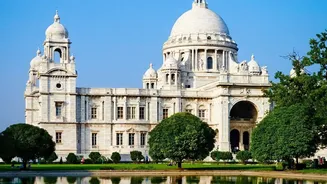
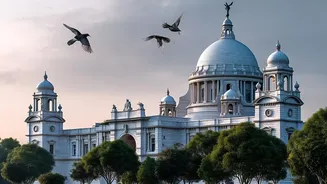
The most visible link between the two cities is Kolkata's stunning colonial architecture. Grand structures built in Neoclassical, Gothic Revival, and Victorian styles still dominate parts of the city, giving it a distinctly European feel. The magnificent Victoria Memorial, a marble monument to Queen Victoria, mirrors the grandeur of London's royal landmarks. St. Paul's Cathedral, with its Indo-Gothic design, and the Calcutta High Court's Gothic Revival structure are other prime examples of this architectural echo. Wealthy Bengali families and British officials built numerous palatial mansions, earning Kolkata another title: 'City of Palaces'.
Life on the River
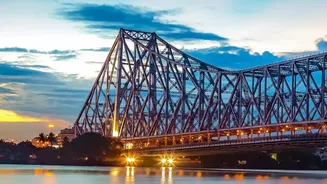
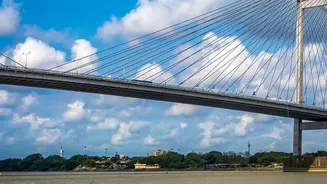
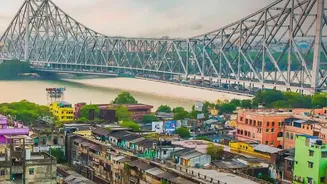
Just as London grew along the River Thames, Kolkata's development is intrinsically linked to the Hooghly River. The Hooghly, a distributary of the Ganges, was the main artery for trade and transport, allowing the East India Company to establish its trading post and for the city to flourish as a major port. The bustling ghats, riverside promenades, and old warehouses that line its banks evoke a visual memory of London's own historic riverside landscape. The iconic Howrah Bridge, an engineering marvel, serves as Kolkata’s defining symbol, much like Tower Bridge does for London.
Beyond the Buildings
The similarities extend beyond stone and water. Kolkata is the only city in India that still operates a tram network, a mode of transport that adds to its old-world European charm. The city’s intellectual heritage, centered around the culture of 'adda' (leisurely, intellectual conversations), is often compared to the historic salon culture of European capitals. Furthermore, the legacy of British social life persists in the city’s numerous gentlemen's clubs, some of which are the oldest outside of the British Isles, and a passion for sports like horse racing and golf.
Forging a Modern Identity
While the 'London of India' nickname is a proud nod to its rich history, modern Kolkata is a city with a soul entirely its own. It is celebrated as the 'Cultural Capital of India' and the 'City of Joy', titles that speak to its vibrant arts scene, literary prowess, and the warmth of its people. While some lament that many of the magnificent colonial era buildings are crumbling from neglect, there is also a growing recognition of the city's unique identity, which fuses its colonial past with a distinctly Bengali character. The city is no longer just a reflection of a bygone empire but a dynamic metropolis navigating its complex heritage while looking to the future.