




A Monumental Shift in Vision
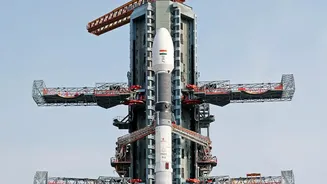
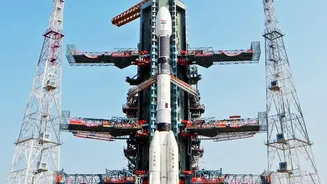
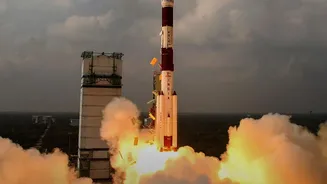
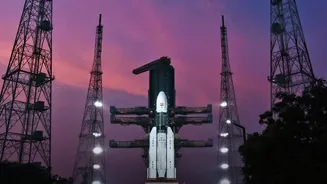
For decades, ISRO was the sole custodian of India's space ambitions, from building rockets to launching satellites. Private companies were largely limited to being component suppliers. This model brought incredible success, including missions to the Moon
and Mars, establishing India as a formidable space power. However, in June 2020, the government initiated historic reforms to open the sector. The goal was no longer just for ISRO to lead, but to create a thriving ecosystem where private players could innovate, build, and launch independently. This pivot was formalised in the Indian Space Policy 2023, which aims to augment India's space capabilities by fostering a robust commercial industry. The new strategy clearly defines roles: ISRO will focus on advanced research and development, while the private sector, now termed Non-Governmental Entities (NGEs), takes on end-to-end operational activities.
The Twin Engines: IN-SPACe and NSIL
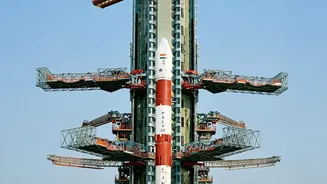
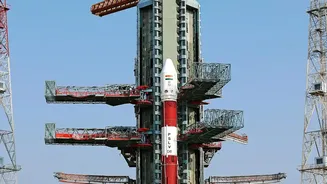
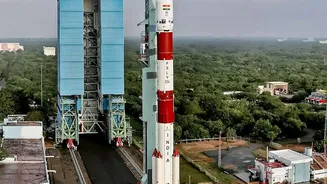
To manage this new era, two key bodies were created. The Indian National Space Promotion and Authorisation Centre (IN-SPACe) acts as a single-window agency to promote, authorise, and supervise all private space activities. Think of it as the ultimate enabler and regulator, helping startups navigate the complex process of building and launching space hardware, and even providing access to ISRO's world-class facilities. Its counterpart is NewSpace India Limited (NSIL), ISRO's commercial arm. Established in 2019, NSIL's mandate is to commercialise ISRO's proven technologies. It handles everything from producing workhorse rockets like the PSLV and SSLV through industry consortiums to marketing launch services and satellite-based applications to global customers. Together, IN-SPACe and NSIL form the institutional backbone for India's commercial space aspirations, one enabling private innovation and the other monetising public investment.
The Private Sector Boom
The policy shift has triggered an explosion in private space entrepreneurship. From fewer than a dozen startups a few years ago, India now boasts over 400 private space enterprises. Companies like Skyroot Aerospace, which achieved India's first privately developed orbital rocket launch with its Vikram-1, and Agnikul Cosmos, known for its 3D-printed rocket engines, are leading the charge. Others, like Pixxel (Earth observation) and Bellatrix Aerospace (satellite propulsion), are building out a diverse and integrated commercial ecosystem. This boom is attracting significant investment, with liberalised Foreign Direct Investment (FDI) rules now allowing up to 100% in component manufacturing, 74% in satellite manufacturing, and 49% in launch vehicles.
The Economic Take-Off
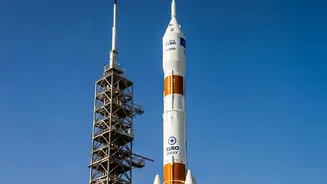
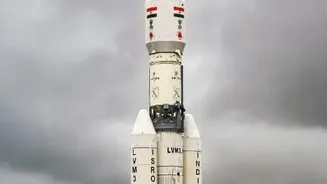
The impact of this strategy is already measurable. India's space economy, valued at around $8.4 billion, is projected to surge to over $40 billion by the next decade. The country's share of the global space market, currently a modest 2-3%, is targeted to reach 8-10% by 2033. This growth isn't just about launching rockets. It's about the burgeoning market for satellite-based services in communication, navigation, weather forecasting, agriculture, and national security. Successful commercial missions for international clients like OneWeb, where ISRO's LVM3 rocket proved its reliability and cost-effectiveness, have significantly boosted India's credibility in the lucrative global launch market.