



A New Identity Beyond Frugal Engineering
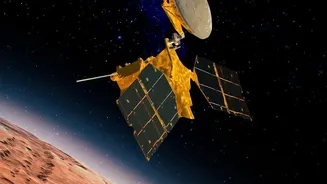
Think of ISRO, and you might picture the stunningly low-cost Mars Orbiter Mission or the successful Chandrayaan moon landings that captured the world's attention. These missions cemented the agency's identity as a workhorse, capable of achieving ambitious
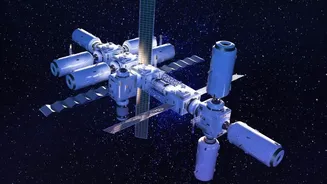
goals on a shoestring budget. But the global space landscape is changing. It's no longer just about getting there; it's about what you can do once you're in orbit. Recognizing this shift, India is steering its space program toward a new era of technological sovereignty, aiming to become a leader not just in launch services but in the cutting-edge technologies that will define the next space race. This means moving from being a service provider to a high-tech innovator, with plans for a human spaceflight in 2027, a space station by 2035, and a crewed lunar mission by 2040.
Making Satellites Think for Themselves
One of the cornerstones of this new push is the development of "intelligent satellites." This isn't science fiction; it's about embedding artificial intelligence and machine learning directly onto the spacecraft. Traditionally, satellites are giant data collectors, beaming massive amounts of raw information back to Earth for processing. This creates a bottleneck, limited by bandwidth and processing time. ISRO's plan, detailed by experts at recent technology conclaves, is to integrate on-board processing and edge computing. This would allow satellites to analyze data in space, identify what's important, and send back only actionable intelligence. For a country like India, the applications are immense: faster and more effective disaster management, real-time agricultural monitoring, and smarter urban planning. It also has significant national security implications, enabling faster threat detection and surveillance without relying on ground-based analysis.
The Promise of Unhackable Communication
Another futuristic technology at the heart of ISRO's strategy is quantum communication. In an age of widespread cyber threats, securing data is paramount, especially for sensitive military and financial information. Quantum communication offers the promise of truly unhackable channels. Unlike traditional encryption, which can theoretically be broken by powerful computers, quantum key distribution (QKD) relies on the principles of quantum physics. Any attempt to intercept the communication inherently disturbs it, immediately alerting the sender and receiver. ISRO has already successfully demonstrated free-space quantum communication over short distances and is now working to integrate this technology into its satellite networks. The goal is to create a secure layer for everything from military communications and banking transactions to protecting critical infrastructure from cyberattacks, a crucial step in strengthening India's national security architecture.
The Big Picture: A New Global Contender
ISRO's investment in AI and quantum technology isn't happening in a vacuum. It’s part of a broader strategy to secure India's place as a major space power alongside the United States, China, and a burgeoning private sector led by companies like SpaceX. The Indian government has opened up the space sector to private participation, leading to a boom in startups working on everything from rockets to satellite components. This public-private synergy is designed to accelerate innovation and expand India's share of the global space economy. While ISRO officials maintain their focus is on national priorities rather than direct competition, the message is clear: India is building the capacity to operate independently and collaboratively on its own terms. With plans for dozens of new satellites, including a dedicated constellation for defense surveillance, India is signaling its ambition to be not just a participant, but a leader in the technologically advanced, and increasingly crowded, theater of space.