

College Street: A Paradise for Bibliophiles
Known affectionately as 'Boi Para' or the 'Colony of Books', College Street is a testament to Kolkata's intellectual soul. Spanning nearly a kilometre, it's the world's largest second-hand book market. Here, makeshift stalls and storied bookshops line
the pavements, their shelves overflowing with everything from rare first editions to the latest academic texts. The air buzzes with the quiet energy of treasure hunters searching for literary gold. The street is anchored by some of India's most prestigious academic institutions, including Presidency University and the University of Calcutta, whose colonial-era buildings add to the scholarly atmosphere. No visit is complete without stopping at the Indian Coffee House. This iconic hall, a historic meeting point for luminaries like Rabindranath Tagore and Satyajit Ray, still hums with impassioned debate over endless cups of coffee. It’s a place to refuel, listen, and soak in the city's living intellectual heritage.
Park Street: The City's Entertainment Epicentre
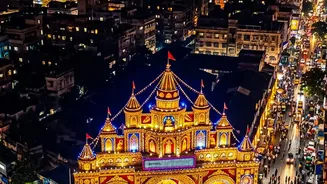
Once called Burial Ground Road, Park Street transformed itself from a quiet stretch leading to cemeteries into the city's premier destination for dining and nightlife. Its name comes from a deer park that once belonged to Sir Elijah Impey, a former Chief Justice. During the mid-20th century, Park Street was the undisputed heart of Kolkata's vibrant Western music scene, with legendary venues like Mocambo, Trincas, and Peter Cat hosting jazz and cabaret nights that became the talk of the town. Today, that legacy endures. The street, officially renamed Mother Teresa Sarani, remains a bustling hub of restaurants, pubs, and shops housed in grand colonial-era buildings. During Christmas and New Year's Eve, the entire stretch is illuminated with festive lights, drawing crowds from all over the city for its celebratory atmosphere. It’s a street that perfectly blends its glamorous past with a dynamic present.
Bowbazar: A Melting Pot of Commerce and Culture
Bowbazar, whose name is now Bipin Behari Ganguly Street, is one of Kolkata's oldest and most diverse neighbourhoods. One theory suggests its name is a British mispronunciation of 'Bohu Bazar' (many markets), while another attributes it to a bazaar gifted to a daughter-in-law ('bou'). This area historically served as a 'grey town', a middle ground between the British 'White Town' and the Bengali 'Black Town', becoming home to Chinese, Jewish, Parsi, and Anglo-Indian communities. This rich multiculturalism is still palpable today. The street is most famous for its seemingly endless rows of jewellery shops, making it the city's primary hub for gold and ornaments. Just off the main road, you'll find Bow Barracks, a distinctive enclave of red-brick buildings that were originally built as a garrison mess during World War I and are now home to a large part of the city's Anglo-Indian community.
Sudder Street: The Globetrotter's Gateway
For decades, Sudder Street has been the classic starting point for backpackers and international travellers arriving in Kolkata. This narrow lane, conveniently located near the Esplanade metro station and the iconic New Market, is packed with budget-friendly guesthouses, many situated in charming, old colonial buildings. The street has a bohemian, transient energy, with a constant flow of visitors from around the world. It’s a hub of activity, featuring small eateries, travel agencies, and currency exchange kiosks catering to a global crowd. While its gritty and bustling nature can feel intense, it offers an unfiltered glimpse into the city's cosmopolitan spirit. The street also has its own literary connection; Rabindranath Tagore is said to have lived here for a time and penned some of his work in a building just off the main lane.
Dalhousie Square: The Colonial Core
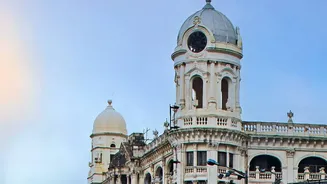
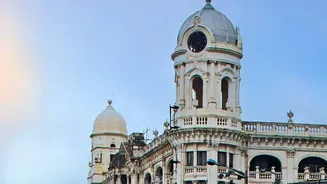
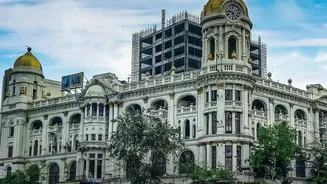
Now known as B.B.D. Bagh, this area is the historical and administrative heart of colonial Kolkata. A walk around the square is like stepping into a different era, with a dense concentration of imposing heritage buildings that once housed the power of the British Empire. Key landmarks include the magnificent General Post Office (GPO) with its towering dome, the stately St. John's Church, and the formidable Writers' Building, which was the seat of governance. The entire area was the nerve centre of British commercial and administrative control, and its grand architecture was designed to project imperial power. Today, it remains a bustling central business district, but the echoes of its past are everywhere, from the architecture to the broad streets designed for parades and processions.