



A Bridge to Another World
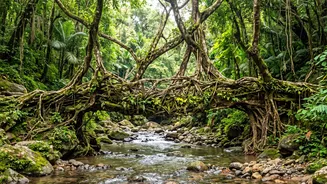
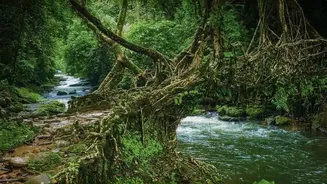
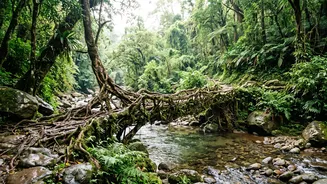
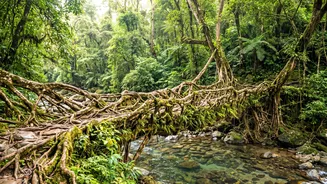
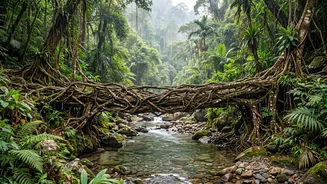
Meghalaya’s living root bridges, or 'jingkieng jri', are not built, but grown. For centuries, the indigenous Khasi and Jaintia tribes have guided the aerial roots of the Ficus elastica (rubber fig) tree across rivers and ravines, patiently weaving them
into sturdy, living structures. These bridges are a marvel of natural engineering, created out of necessity to navigate the region's heavy monsoons, which can wash away conventional bamboo or wooden structures. Some of these bio-engineered wonders are over 200 years old and can support the weight of 50 people at once. The most famous of these is the magnificent double-decker root bridge in Nongriat village, a testament to the profound harmony between humans and nature. Reaching it involves a significant trek of over 3,000 steps, but the reward is an experience that feels straight out of a fantasy novel.
The Homestay Advantage
The perfect complement to the natural wonder of the root bridges is the warmth of a local homestay. In villages like Nongriat, Mawlynnong (dubbed 'Asia's Cleanest Village'), and around Cherrapunji (Sohra), homestays are the predominant form of accommodation, and for good reason. They offer more than just a place to sleep; they provide a genuine connection to the local culture. For a fraction of the cost of a hotel, you get a clean, comfortable room, delicious home-cooked Khasi meals, and the invaluable guidance of your hosts. This arrangement not only makes the trip highly affordable but also ensures your money directly supports the local community. It’s an immersive experience that allows you to see Meghalaya through the eyes of its people, sharing stories and gaining insights you'd never find in a standard hotel.
Planning Your Budget Adventure
Meghalaya is surprisingly accessible for budget travellers. The biggest expense is typically transport, but even that can be managed. The most common starting point is Guwahati, Assam, from where you can take a shared taxi to Shillong, Meghalaya's capital. From Shillong, shared sumos and taxis connect to major hubs like Cherrapunji. For a solo backpacker, a realistic daily budget can be as low as ₹1,000-₹1,500, covering a homestay bed, local food, and shared transport. A 5-day trip can be comfortably managed within a budget of ₹10,000 to ₹16,000 per person if you plan smartly. Homestays in key areas can cost anywhere from ₹800 to ₹2,000 per night for a room, while simple, local meals are very affordable. Remember to carry enough cash, as ATMs are scarce in remote villages.
What to Know Before You Go
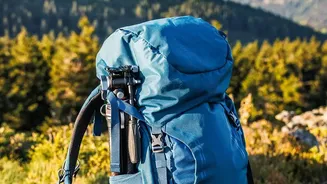
The best time to visit Meghalaya for clear skies and comfortable trekking weather is during the winter months, from October to February. However, the monsoon season (June to September) showcases the waterfalls in their full, thunderous glory and brings out the lush greenery, though trekking can be more challenging. Treks to the root bridges, especially the one in Nongriat, require a good level of physical fitness. The path is steep and involves thousands of steps. Pack light, wear comfortable trekking shoes with good grip, and carry a reusable water bottle. A light rain jacket is a good idea, as showers can be unpredictable. Most importantly, travel with an open mind and a spirit of respect for the local culture and the pristine environment you are privileged to experience.