




NASA’s New Eye on the Cosmos
Prepare for a new vision of the universe. NASA is scheduled to launch the Nancy Grace Roman Space Telescope in August 2026. Named after NASA's first Chief of Astronomy, this next-generation observatory is a cosmic surveyor of epic proportions. With a field
of view 200 times larger than the Hubble Space Telescope's infrared camera, Roman will create vast panoramas of the universe, mapping millions of galaxies and discovering thousands of new exoplanets. Its primary mission is to tackle two of the biggest mysteries in cosmology: dark energy and dark matter. By studying how the distribution of galaxies has changed over cosmic history, scientists hope to understand the force that is accelerating the expansion of our universe. The telescope arrived at Kennedy Space Center in June 2026 for its final launch preparations aboard a SpaceX Falcon Heavy rocket.
A Daring Sample Heist from a Martian Moon
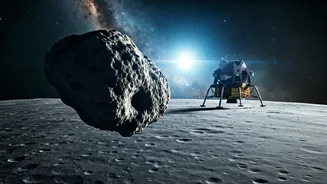
Japan's Aerospace Exploration Agency (JAXA) is embarking on one of the most audacious sample-return missions ever attempted. The Martian Moons eXploration (MMX) mission, scheduled to launch in late 2026, will travel to Mars, but its target is the planet's largest and most mysterious moon, Phobos. The probe will land on Phobos, collect at least 10 grams of surface material, and then return it to Earth for analysis in 2031. The historic goal is to solve the puzzle of where Mars's moons came from. Are they captured asteroids, or are they remnants from a giant impact on Mars itself? By studying these samples, scientists hope to gain unprecedented insight into the formation of the Martian system and the early history of our solar system. The mission is an international collaboration, with contributions from NASA and European space agencies.
Europe’s Asteroid Crash Scene Investigator
In late 2026, the European Space Agency’s (ESA) Hera spacecraft will arrive at the Didymos binary asteroid system for a unique mission: to conduct a detailed post-impact survey. This is the crucial follow-up to NASA's DART mission, which successfully slammed a spacecraft into the smaller asteroid, Dimorphos, in 2022 to alter its orbit. Hera will act as a cosmic detective, mapping the impact crater, measuring the mass of Dimorphos, and precisely charting its new orbit around Didymos. This will turn the DART experiment into a well-understood and repeatable planetary defence technique. By studying the aftermath of the impact, Hera will provide invaluable data to help scientists protect Earth from potentially hazardous asteroids in the future, making it humankind's first probe to rendezvous with a binary asteroid system.
China's Advanced Lunar Explorer
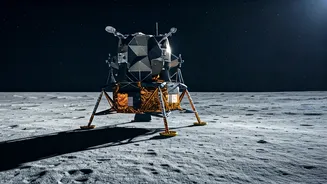
China is also aiming for the Moon in 2026 with its Chang'e 7 mission. This robotic lander and rover are heading for the Moon's south pole, a region of intense scientific interest. The mission's primary goal is to search for water ice in the permanently shadowed craters near the pole. This ice, untouched for billions of years, could hold clues about the early solar system and serve as a vital resource for future human explorers. Chang'e 7 is a complex mission, reportedly including a lander, a rover, and even a small, flying 'hopper' designed to explore the inside of a shadowed crater—a place no mission has gone before.
India's Uncrewed Test for Human Spaceflight
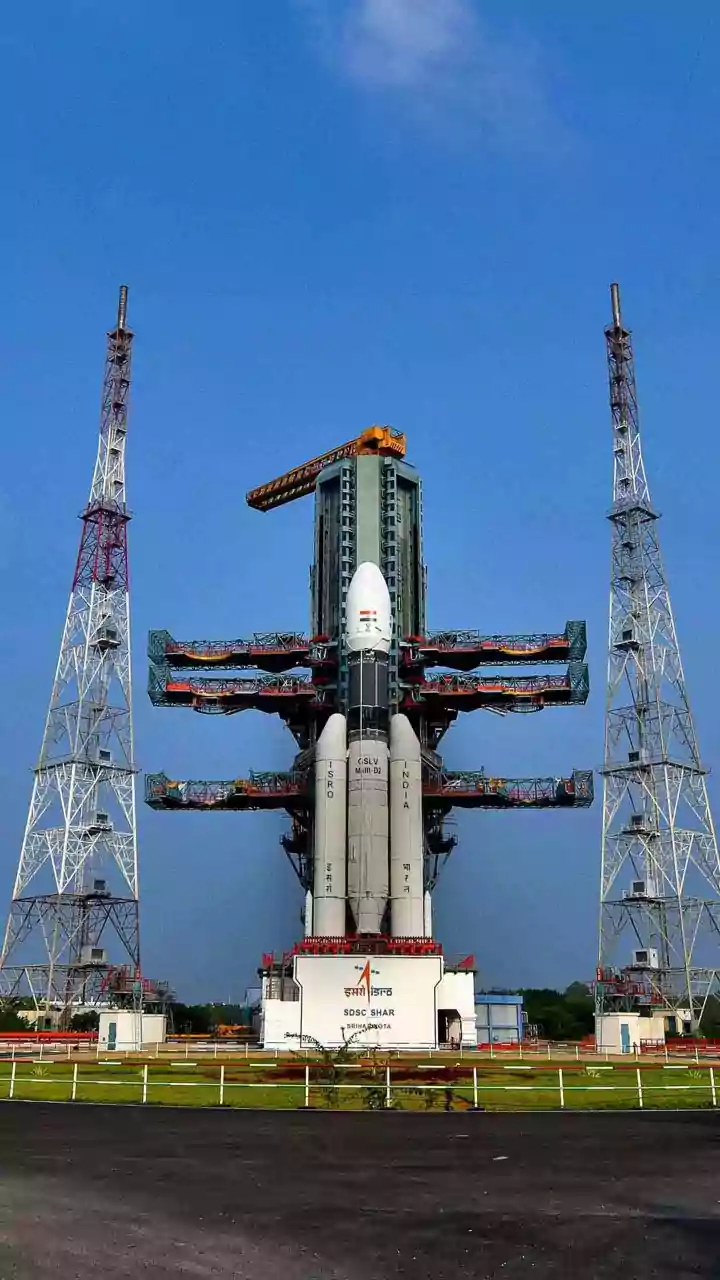
While many missions look outward, ISRO's focus in 2026 is on a critical step for its own human spaceflight ambitions. The uncrewed Gaganyaan-1 (G1) orbital flight is scheduled for the second half of 2026. This mission will see the Gaganyaan spacecraft, launched on a human-rated LVM3 rocket, test all its systems in orbit. Onboard will be Vyommitra, a humanoid robot, to simulate the presence of an astronaut. This flight is a vital precursor to India sending its own astronauts into space, validating the crew module, life-support systems, and re-entry technologies. It marks a major milestone in India's journey to becoming a spacefaring nation with human launch capabilities.