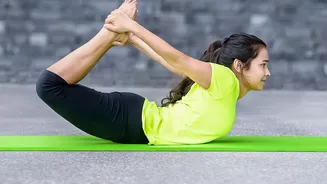








What is the Hidden Lotus Pose?
Baddha Padmasana, also known as the Bound or Hidden Lotus Pose, is an advanced seated posture that builds upon the classic Lotus Pose (Padmasana). In Sanskrit, 'Baddha' means 'bound' or 'locked'. The pose involves first sitting in a full lotus, with each
foot resting on the opposite thigh. From there, you wrap both arms behind your back to grasp the big toe of the opposite foot. This intricate 'bind' creates a firm, locked-in posture that requires significant flexibility and is said to help turn one's awareness inward, making it a powerful pose for meditation.
The Foundation: Understanding 'Basic' Yoga
Before we can appreciate the complexity of the Hidden Lotus, it's important to define 'basic' yoga. For beginners, yoga is about building a foundation. This involves learning fundamental poses like Mountain Pose (Tadasana), Child's Pose (Balasana), Downward-Facing Dog (Adho Mukha Svanasana), and Warrior poses (Virabhadrasana). The primary goals at this stage are to improve general flexibility, build foundational strength, and, most importantly, connect movement with breath. Basic yoga focuses on safe alignment and developing body awareness, preparing the practitioner for a more demanding practice over time.
The Great Divide: Flexibility and Mobility
The most significant difference lies in the level of flexibility required. Basic poses gently build flexibility over time. The Hidden Lotus, however, demands an extraordinary range of motion simultaneously in multiple joints. Practitioners need deep external rotation in the hips to achieve the lotus leg position, flexible knees and ankles to do so safely, and incredibly open shoulders to create the bind behind the back. Attempting this without adequate preparation can lead to injury, which is why beginner poses focus on gradually opening these areas rather than forcing them into an extreme position.
Strength and Stability
While basic yoga certainly builds strength through poses like Plank and Warrior, the strength required for Baddha Padmasana is more about stability and control. The core must be engaged to maintain an erect spine while the arms are bound. The muscles around the shoulders and back are not just stretching; they are actively working to hold the bind. This is a more integrated form of strength, where different muscle groups must work in harmony to maintain the posture's integrity, unlike the more isolated muscle engagement in many foundational poses.
Mind and Breath: The Internal Practice
In beginner yoga, the focus is often on learning to breathe deeply and consciously through simple movements. In an advanced pose like Hidden Lotus, the breathwork (Pranayama) and mental focus (Dharana) are far more intense. The physical constriction of the pose makes deep breathing more challenging, requiring a highly developed sense of breath control. Furthermore, holding such a complex asana demands complete mental stillness and concentration. While a beginner might focus on not falling over in Tree Pose, an advanced practitioner in Hidden Lotus is working to calm the mind and enter a meditative state.
A Word of Caution: Who Should Avoid This Pose?
As Shilpa Shetty herself has advised, the Hidden Lotus is not for everyone. This pose should be strictly avoided by anyone with knee, ankle, hip, or shoulder injuries. People suffering from sciatica or significant back problems should also refrain from attempting it. The journey to an advanced pose like Baddha Padmasana is a long-term one, built on consistent practice and patience. For beginners, inspiration should be taken from the dedication, not the destination. It's recommended to work with a qualified instructor to progress safely.