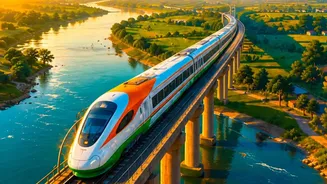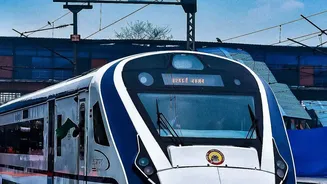





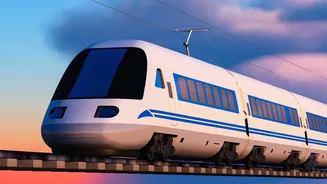
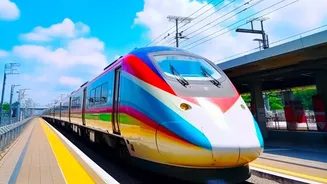
The dream of riding a bullet train in India is speeding closer to reality. A key section of the country's first high-speed rail corridor between Surat and Vapi is targeted for a 2027 launch, marking a pivotal moment for national infrastructure.
The First Milestone: Surat to Vapi
The first
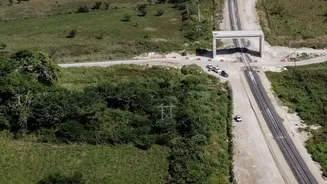
operational stretch of India's inaugural bullet train project is planned to connect the bustling industrial hubs of Surat and Vapi in Gujarat. Railway Minister Ashwini Vaishnaw has confirmed that this section is slated to begin passenger services in the latter half of 2027. This phased approach allows the National High Speed Rail Corporation Limited (NHSRCL), the body implementing the project, to commence operations on sections where construction is most advanced. Progress in Gujarat has been notably swift, with significant work on piers, viaducts, and stations already completed. The initial focus is on the Surat-Bilimora section, about 50 km long, where trial runs are expected to take place by mid-2027 after the recent energisation of the overhead power lines. This will pave the way for the commercial opening of the larger Surat-Vapi route.
The Bigger Picture: Mumbai-Ahmedabad Corridor
This initial launch is a critical part of the much larger Mumbai-Ahmedabad High-Speed Rail (MAHSR) corridor, a massive undertaking spanning approximately 508 kilometres. The project aims to slash travel time between India's financial capital and Gujarat's largest city to just under two hours, a dramatic reduction from the current eight to nine hours by road. The full corridor will feature 12 stations across Maharashtra and Gujarat. The project is being developed with technical and financial assistance from Japan, utilising its world-renowned Shinkansen technology, known for its impeccable safety and punctuality. While the full line's completion is targeted for 2029, the 2027 launch in Gujarat serves as a tangible proof of concept and a major morale booster for the ambitious plan.
Overcoming Significant Hurdles
The journey to this point has not been without its challenges. The project, first announced years ago, faced significant delays, particularly with land acquisition in Maharashtra. For nearly two and a half years, progress in the state was stalled pending permissions. The COVID-19 pandemic further impacted timelines, meaning serious construction only began in earnest in 2021. In addition to land issues, engineers have tackled formidable tasks, including the construction of India's first undersea rail tunnel. This 21-km tunnel, with a 7-km section under Thane Creek, is one of the most complex parts of the project, requiring meticulous and slow-paced work. The faster progress in Gujarat is a key reason why the first operational section will be located there.
An Indigenous Push and Advanced Technology
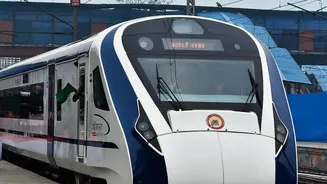
Beyond the Japanese partnership, the project has a strong 'Made in India' component. While initial plans involved importing trainsets, India is now developing its own indigenous bullet train. The B28 trainset, designed for speeds of 280 kmph, is being manufactured jointly by the Integral Coach Factory (ICF) and BEML. The first body frame has been completed and is undergoing structural testing, with track trials expected by mid-2027. There are also plans for a faster B35 trainset for the future. The infrastructure itself is also high-tech, using a sophisticated 2x25 kV overhead electrification system common in global high-speed networks. To minimise disruption for local communities, hundreds of thousands of noise barriers are being installed along the route.
More Than Just Speed: The Economic Impact
The bullet train is expected to be a game-changer for the entire region. Beyond just connecting two major cities, it promises to spark economic growth along the corridor. The project is already a significant source of employment during its construction phase. Once operational, the high-speed link will enhance connectivity for smaller cities like Vapi, Surat, and Bilimora, making them more attractive for businesses and residents. Improved transport links are a proven catalyst for real estate development and commercial investment. The creation of a high-speed corridor is also a statement of intent, positioning India as a country capable of executing world-class, technologically advanced infrastructure projects that can redefine mobility and economic geography for decades to come.