







A New, More Volatile Monsoon
For generations, the monsoon has been a predictable, life-giving force across India. However, climate change is rewriting this ancient script. Scientists have observed a significant shift in rainfall patterns: a decrease in the number of rainy days but
a sharp increase in the intensity of precipitation. Studies show that long, moderate spells of rain are becoming less common, replaced by what are essentially mini-cloudbursts. This means that the same amount of rain that might have once fallen over several days can now be concentrated into a few hours, creating a scenario of jarring contrasts—long dry periods punctuated by extreme, flood-inducing downpours.
Why Intense Bursts Mean More Floods
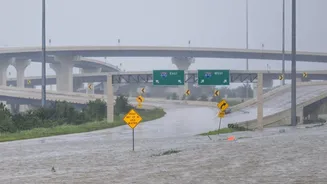
It seems counterintuitive: how can shorter periods of rain lead to worse flooding? The answer lies in the ground's ability to absorb water. After prolonged dry spells, the soil becomes hard and less permeable. When a massive volume of rain falls suddenly, the ground cannot soak it up fast enough. Instead, the water immediately becomes surface runoff, overwhelming natural and man-made drainage systems. This phenomenon is particularly dangerous in urban areas. Cities, with their vast expanses of concrete and asphalt, have very little permeable surface to begin with. When a short, intense burst of rain hits, the water has nowhere to go. Stormwater drains, many designed decades ago for much lower rainfall intensities of 12-20 mm per hour, are now being confronted with deluges of 50 to 100 mm per hour, leading to rapid and severe waterlogging.
The Urban Nightmare of Flash Flooding
India's rapidly growing cities are on the front line of this new climate reality. Unplanned urbanisation has often involved building over floodplains, lakes, and wetlands—natural sponges that once absorbed excess rainwater. As a result, cities like Mumbai, Delhi, and Bengaluru are now highly vulnerable. For example, Mumbai’s storm drains, dating back to the 1860s, were designed for 25 mm of rain per hour but now face bursts exceeding 100 mm. Similarly, Delhi's 1976 drainage plan is no match for recent events where the city received more rain in a single day than its entire monthly average. This combination of outdated infrastructure and intense rainfall is turning routine monsoon showers into recurring urban disasters, causing immense economic damage and disrupting millions of lives.
A Scientific Consensus
The link between global warming and this increased rainfall intensity is well-established. Warmer air can hold more moisture—about 7% more for every 1°C rise in temperature. This supercharged atmosphere, combined with a warmer Arabian Sea, means that when conditions are right for rain, the downpours are far more extreme. Research from institutions like the Indian Institute of Technology (IIT) Gandhinagar confirms this trend, projecting that short, three-hour rainfall peaks could increase by 20-25% as global temperatures rise. Scientists warn that this is a structural shift in the monsoon system, not a temporary anomaly.
Adapting to a New Reality
Tackling this challenge requires a fundamental shift in how we manage water and plan our cities. Simply measuring the total seasonal rainfall is no longer an adequate gauge of flood risk. The focus must move to managing the intensity and duration of rainfall events. Experts argue that India needs to urgently update its infrastructure design standards for storm drains, roads, and housing. This includes investing in scientifically designed drainage systems, restoring urban wetlands and lakes to act as buffer zones, and developing better early warning systems for flash floods. Moving from a reactive, crisis-management approach to one of proactive resilience is critical for protecting lives and livelihoods in this new era of a more chaotic and powerful monsoon.