



Why Is Everyone Picking Up Poles?
Originally developed in Finland as a summer training method for cross-country skiers, Nordic walking has evolved into a global fitness movement. Its recent surge in popularity is no accident. It perfectly aligns with a growing desire for accessible, outdoor
activities that deliver significant health returns without the high impact of running. The exercise engages up to 90% of the body's muscles, compared to about 50% with regular walking, leading to a calorie burn that can be anywhere from 20% to over 60% higher. It's an efficient way to combine cardiovascular exercise with a muscle workout for your shoulders, arms, core, and legs, all while being gentle on the joints.
The Technique That Unlocks Results
The magic of Nordic walking isn't just in carrying poles; it's in using them to propel yourself forward. The fundamental motion mimics cross-country skiing. As you step forward with one foot, the opposite arm swings forward to plant the pole. The key is to plant the pole between your feet, or slightly behind your front foot, at an angle. From there, you push off the pole, extending your arm fully behind you. This push-off is what engages your upper body and core, turning a simple walk into a total-body exercise. A crucial part of this is the hand motion: you grip the pole as your arm swings forward and then open your hand slightly as you push off, letting the pole swing from the specialized glove-like strap.
Common Mistakes and How to Fix Them
As with any technical sport, beginners often make a few common errors that can limit the benefits and even cause strain. One of the biggest is planting the poles too far in front of the body, like a hiker using trekking poles for stability. This acts as a brake, slows you down, and puts unnecessary stress on your joints. Another frequent misstep is using only the elbows for the arm swing instead of moving from the shoulder, which fails to engage the larger back and core muscles. Many newcomers also maintain a constant, tight grip on the poles, preventing the 'grip and release' motion that is essential for a fluid, powerful push-off. Finally, using poles that are the wrong height—too short and you'll slouch, too long and you risk shoulder strain—is a simple but critical mistake to avoid.
Choosing the Right Gear Is Half the Battle
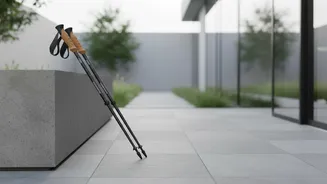
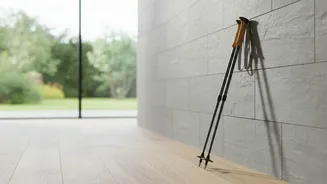
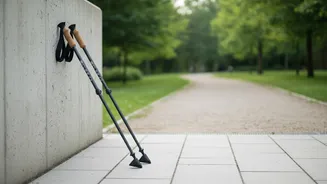
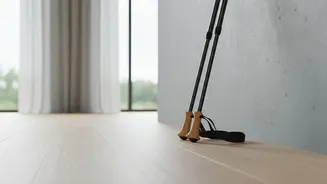
You can't do Nordic walking effectively with just any poles. Trekking poles, designed for stability on uneven terrain, are not the right tool for the job. Nordic walking poles are different; they are lightweight and come with a specific strap system, often a glove-style attachment, that allows for the proper push-off technique. When it comes to length, a widely accepted formula is to multiply your height in centimeters by 0.68 to find a reliable starting point. For beginners, it's often better to go slightly shorter if you're between sizes. Material also matters. While aluminum poles are available, those with at least some carbon content are better at absorbing vibrations, which protects your wrist and elbow joints from repetitive impact.